


Current Molecular Medicine - Volume 25, Issue 9, 2025
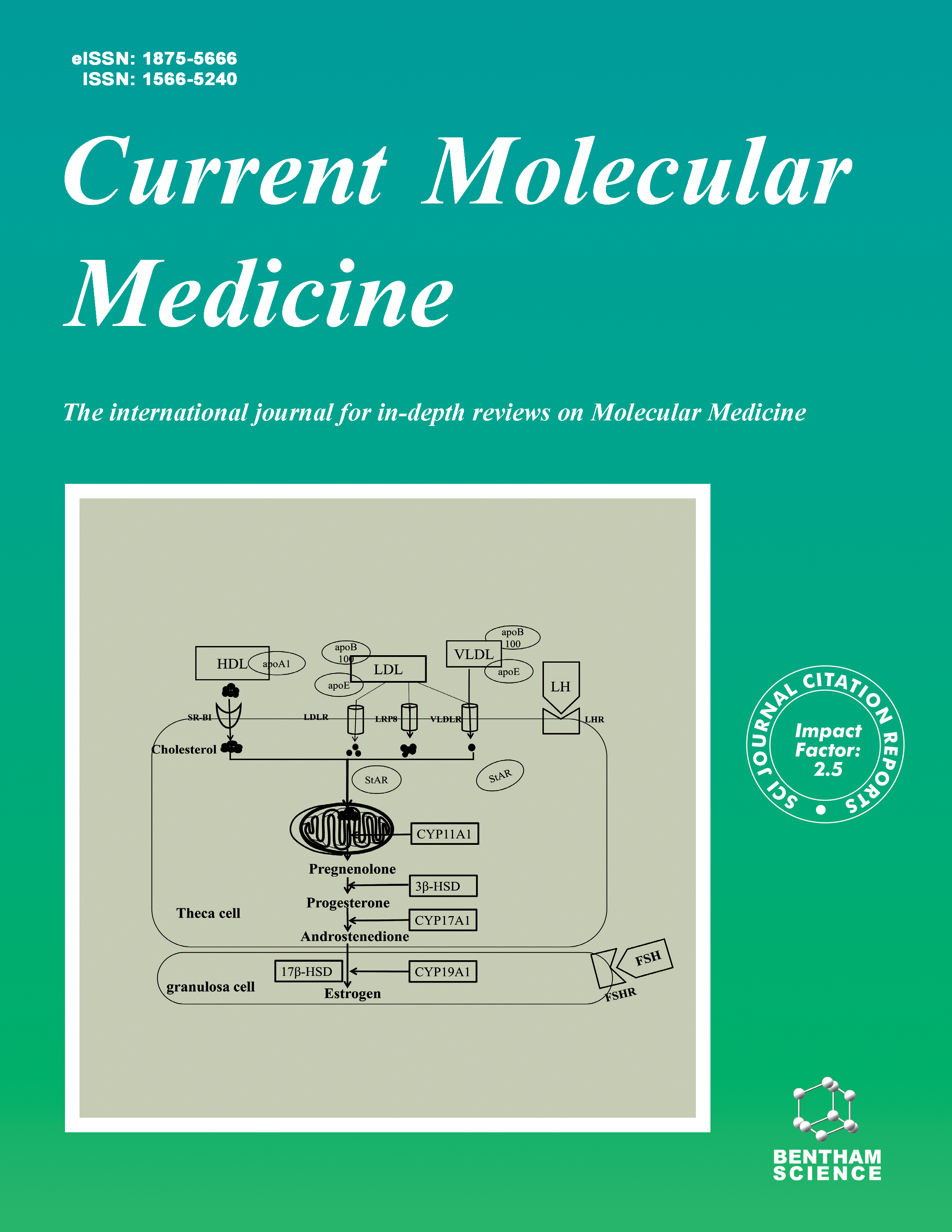
Volume 25, Issue 9, 2025
-
-
Advances in the Study of the Pathogenesis of Vogt-Koyanagi-Harada Syndrome
More LessAuthors: Meng-nan Wang, Lin Zhang, Hong-Yan Zhou, Wei Zhong, Hong Zhang, Miao-Miao Bi, Li Wang and Jia LuVogt-Koyanagi-Harada syndrome (VKHS) is a common type of uveitis characterized by the invasion of melanocyte-rich tissues. In recent years, the incidence of VKHS has been increasing yearly, and its specific pathogenesis has not yet been elucidated. However, its pathogenesis has been a hot topic of research. The clinical course of VKHS is characterized by the early involvement of the posterior segment of the eye, including exudative retinal detachment, optic papillitis, bilateral diffuse chorioretinitis, etc. If treated improperly or with delayed treatment, the inflammation may gradually spread to the anterior segment of the eye, leading to vision loss or even vision. This study examines the pathogenesis of VKHS. It reviews the progress of research on the pathogenesis of VKHS, which will help to improve the understanding of VKHS and provide a reference for subsequent studies.
-
-
-
CircRNA in Digestive Diseases: Recent Advances in Fundamental Mechanism and Clinical Potential
More LessAuthors: Yuanye Ji, Shun Zhang, Ting Cai, Liyun Fu, Qinzhi Deng and Peng ZhuCircular RNAs (circRNAs), a class of non-coding RNAs characterized by their closed-loop structure, are widely present in the body and exhibit greater stability compared to conventional linear RNAs. With the development of molecular biology, circRNAs are gradually considered as a prognostic indicator and therapeutic target for various diseases. Research on the mechanism of circRNA in various diseases has become an important direction. In addition, digestive diseases are becoming more common as people's eating habits change, and the incidence and mortality of severe digestive system tumors are increasing year by year. The study of circRNA in digestive diseases provides us with a new way to improve the diagnosis and treatment of digestive diseases. This article provides a comprehensive review of the research literature on circRNAs in digestive system diseases over the past five years (2019-2023) and covers aspects such as circRNA functions and underlying mechanisms. CircRNA has been implicated in a variety of digestive diseases. In these diseases, circRNA primarily acts as a microRNA (miRNA) sponge, interacting with miRNA to regulate the expression levels of genes associated with signaling pathways, and there is abundant research on the effects of circRNAs on drug resistance, cell proliferation, invasion, apoptosis, and poor prognosis. This article aima to discuss the current status of research on circular RNA and its key areas in digestive system diseases. The review aims to provide valuable insights for further research on the role of circular RNA in digestive system diseases and a reference for subsequent research.
-
-
-
Associations between Gut Microbiota and Microbial Metabolites in Adjuvant-induced Arthritis Rats with Moist Heat Arthralgia Spasm Syndrome
More LessAuthors: Yehong Sun, Chunxia Gong, Lingyu Pan, Hui Jiang, Weidong Chen and Yongzhong WangBackgroundRheumatoid arthritis (RA) is a chronic systemic autoimmune disease. According to traditional chinese medicine (TCM) syndromes theory, moist heat arthralgia spasm syndrome is the most prevalent syndrome of RA patients in the active period. However, the mechanism of alteration of gut microbiota in RA with moist heat arthralgia spasm syndrome has not been reported until now.
ObjectiveThis study focused on the alteration of gut microbiota in adjuvant-induced arthritis (AA) rats with moist heat arthralgia spasm syndrome, elaborated its regulation mechanism, and analyzed the associations between gut microbiota and microbial metabolites.
MethodsThe disease-syndrome combination rat model of RA with moist heat arthralgia spasm syndrome was constructed with AA under damp-heat stimulating. Enzyme-linked immunosorbent assay (ELISA) was used to measure serum biochemical indicators. Damages of ankle joints were observed using hematoxylin and eosin (H&E). 16 small ribosomal subunit RNA (16S rRNA) gene sequencing was conducted to assess the gut microbiota composition and function on feces from rats. Alterations in fecal metabolites profiling were evaluated by fecal metabolomics through liquid chromatography-mass spectrometry (LC-MS) and gas chromatography-mass spectrometry (GC-MS). Pearson correlation analysis was performed to explore the associations of altered gut microbiota and microbial metabolites in Model rats.
ResultsThe imbalance of gut microbiota in Model rats was accompanied by metabolic disorders. Lactobacillus, Prevotellaceae_NK3B31_group, Allobaculum, Prevotellaceae_UCG_001, Alloprevotella, and Dubosiella were found to be dominant genera in Model rats. In total, 357 metabolites were significantly altered in Model rats and predominantly enriched into fatty acid degradation and glycerophospholipid metabolism. Pearson correlation analysis showed that TNF-α and IL-1β were associated with Prevotellaceae_Ga6A1_group and 3R-hydroxy-docosan-5S-olide, alpha-N-(3-hydroxy-14-methyl-pentadecanoyl)-ornithine, 17-methyl-trans-4,5-methylenenona-decanoic acid, Semiplenamide F.
ConclusionThe key differential microbiota genera and differential microbial metabolites may become important targets for the treatment of RA and provide the theoretical basis for exploring the pathogenesis of RA.
-
-
-
M2-like Macrophages-derived CCL17 Promotes Esophageal Squamous Cell Carcinoma Metastasis and Stemness via Activating CCR4-mediated ERK/PD-L1 Pathway
More LessAuthors: Chun Jin, Liangliang Lu, Jian Gao and Ling ChenBackground and objectiveHigh morbidity, high mortality and poor prognosis of esophageal squamous cell carcinoma (ESCC) highlights the urgent need for novel therapeutic strategies against ESCC. The current study addresses the precise role of M2-like macrophages-derived CCL17 in ESCC progression and to thoroughly elucidate the intrinsic molecular mechanisms.
MethodsIn this work, for functional experiments, Eca109 cells cultivated in M2-CM were treated with anti-IgG (50 µg/ml) or anti-CCL17 (50 µg/ml) to expound the tumor-promoting effects of M2-like macrophage-derived CCL17 in ESCC. Moreover, for rescue experiments, Eca109 cells were treated with CCL17 (50 ng/ml) and/or CCR4 antagonist AZD2098 (20 µM) to probe whether CCL17 could influence the malignant behaviors including migration, invasion and stemness of ESCC cells via activating CCR4/ERK/PD-L1 pathway.
ResultsMarkedly enhanced CCL17 secretion was observed in M2-like macrophages. CCL17 bound to CCR4 to activate ERK/PD-L1 signaling. M2-like macrophages-derived CCL17 facilitated ESCC cell migration and invasion and enhanced stemness characteristics of ESCC cells, which were partially reserved by AZD2098 treatment. The tumor-promoting effects of M2-like macrophages-derived CCL17 on ECSS was depended on the activation of CCR4/ERK/PD-L1 pathway.
ConclusionTo conclude, M2-like macrophages-derived CCL17 could facilitate ESCC cell migration and invasion and enhance stemness characteristics of ESCC cells via activating CCR4/ERK/PD-L1 signaling.
-
-
-
NEDD4 Knockdown Suppresses Human Endometrial Stromal Cell Growth and Invasion by Regulating PTGS2-Mediated Ferroptosis in Endometriosis
More LessAuthors: Jianting Lao, Panwei Hu, Yiting Wan, Mengmeng Shu, Jing Chen and Hong YangBackgroundEndometriosis (EM) is a gynecological disease characterized by the benign growth of endometrial tissue outside the uterus. Upregulation of neuronally expressed developmentally downregulated 4 (NEDD4) has been reported to accelerate endometrial cancer progression.
ObjectivesWe explored whether abnormal expression of NEDD4 is correlated with EM.
MethodsEndometrial tissue in patients without endometriosis was used to develop the original generation of endometrial stromal cells (ESCs). Different types of endometrial tissue of patients with endometriosis were used to measure the expression of NEDD4 by immunohistochemistry (IHC) and western blotting. Its biological functions in ESCs were investigated using a cell counting kit-8 assay, fluorescein diacetate (FDA) staining, and Transwell invasion assays. Additionally, its involvement in ferroptosis was assessed by measuring Fe2+, malondialdehyde (MDA), glutathione (GSH), and reactive oxygen species (ROS) levels and the expression of ferroptosis markers.
ResultsCompared with normal controls, NEDD4 levels were significantly elevated in the endometrial tissue of patients with EM. Furthermore, NEDD4 expression was higher in the ectopic endometrium than in the eutopic endometrium. NEDD4 knockdown reduced the viability and invasive capacity of ESCs, increased Fe2+, MDA, and ROS levels, and decreased GSH content. Further analysis revealed that NEDD4 knockdown promoted ferroptosis in ESCs by increasing the expression of prostaglandin-endoperoxide synthase 2 (PTGS2). As an E3 ubiquitin ligase, NEDD4 reduced PTGS2 protein levels by accelerating its ubiquitination and subsequent proteasomal degradation.
ConclusionThese findings suggest that inhibiting NEDD4 reduces ESC growth and invasion in EM by regulating PTGS2-dependent ferroptosis.
-
-
-
Combination Antitumor Activation of Anlotinib with Radiofrequency Ablation in Human Medullary Thyroid Carcinoma
More LessAuthors: Zhou Zhao, Xue Ma, Yuanmeng Li, Shi-hui Zhou, Li-E Zang, Fan Feng and Naishi LiIntroductionCurrently, Medullary Thyroid Carcinoma (MTC) is considered a kind of rare neuroendocrine tumor, and molecular-targeted drugs have previously been used for MTC treatment. However, the prognosis of MTC patients is still unsatisfactory. In the present work, we aimed to explore the antitumor activity of the molecularly targeted drug anlotinib in combination with radiofrequency ablation on MTC.
Methods44 MTC clinical specimens were involved. The targets of anlotinib in malignant cells were examined by qPCR. We cultured MTC cells line TT and treated with a series of concentration of TKIs. Then measure the inhibitory rates of TT cell survival. We established a subcutaneous tumorigenic model in nude mice to examine the antitumor effects of anlotinib combined with different RFA conditions.
ResultsThe targets of anlotinib were clearly expressed in MTC tissue specimens, and the expression level of these factors was much higher in MTC clinical specimens than in nontumor tissues. At the same time, anlotinib or Radiofrequency Ablation (RFA) showed clear antitumor activity against the MTC cell line TT (TT cells) and the tumor tissue it formed.
ConclusionThese results indicated that the combination of anlotinib with RFA could be a promising therapeutic strategy for MTC treatment.
-
-
-
SUMOylation Inhibitors Exert a Protective Effect on Oxidative Damage in Retinal Pigment Epithelial Cells Through the Keap1/Nrf2/ARE Signaling Pathway
More LessAuthors: Yilei Liang, Xin Jia, Fangyuan Zheng, Yifan Wang, Yijia Fan, Haiyu Zhang, Ziyao Dang and Lifei WangPurposeTo investigate the effect of the SUMOylation inhibitor TAK981 on hydrogen peroxide (H2O2)-induced oxidative damage in human retinal pigment epithelial cells (ARPE-19) and its regulatory mechanism.
MethodsAn oxidative damage model of ARPE-19 cells induced by H2O2 was established, and 1, 2, and 5 μM TAK981 solutions were administered for intervention respectively. Normal cells were used as the control group. The viability of the cells in each group was detected by the methyl thiazolyl tetrazolium (MTT) method. The levels of superoxide dismutase (SOD) and malondialdehyde (MDA) in each group of cells were detected by biochemical methods. The levels of IL-1β and TNF-α produced by each group of cells were detected by enzyme-linked immunosorbent assay (ELISA). The protein expression levels of Nrf2, HO-1, NQO-1, Keap1, and Sumo1 in each group of cells were detected by Western blotting. In addition, 2 μM TAK981 and 2 μM TAK981 combined with 10 μM ML385 (an Nrf2 inhibitor) were administered to H2O2-induced ARPE-19 cells, and the levels of SOD and MDA, IL-1β and TNF-αwere detected again.
ResultsThe viability of the ARPE-19 cells decreased with increasing H2O2 concentration (F=19.158, P<0.001). H2O2 treatment at 350 μM was the concentration at which the cells essentially reached half inhibition (IC50), and the cell oxidative damage model was successfully established. After intervention with TAK981, cell survival increased significantly (F=0.098, P<0.001). The differences between the 2 μM and 5 μM TAK981 groups and the model group were statistically significant (all P<0.01). Compared with those in the normal group, the MDA content in the model group increased, the SOD activity decreased, and the release levels of IL-1β and TNF-α increased (all P<0.01). Compared with those in the model group, the MDA content in the TAK981 group decreased, the SOD activity increased, and the release levels of IL-1β and TNF-α decreased. The differences between the 2 μM and 5 μM TAK981 groups were statistically significant (P<0.05). Compared with those in the normal group, the protein expression levels of Nrf2, HO-1 and NQO-1 in the model group were greater, whereas the protein expression levels of Keap1 and Sumo1 were lower (all P<0.05). Compared with those in the model group, the protein expression levels of Nrf2, HO-1 and NQO-1 in the TAK981-treated group continued to increase, whereas the protein expression levels of Keap1 and Sumo1 continued to decrease. The differences in the 5 μM TAK981 group were statistically significant (P<0.05). In addition, after the combined intervention of TAK981 and ML385 on H2O2-induced cells, compared with the TAK981-only intervention on H2O2-induced cells, the cell viability increased, the MDA content increased, the SOD activity decreased, and the IL-1β and TNF-α release levels increased. The differences were statistically significant (P<0.05).
ConclusionThe SUMOylation inhibitor TAK981 activates the Keap1/Nrf2/ARE signaling pathway, enhances the activity of antioxidant enzymes, and reduces the production of oxidative stress products and inflammatory factors, thereby exerting a protective effect on H2O2-induced oxidative damage in ARPE-19 cells. Therefore, it is suggested that intervention in SUMO regulation can be used as a new therapeutic target in the AMD disease model, in order to delay the development of AMD by reducing the oxidative damage of RPE.
-
-
-
Benzopyrene Aggravates Nonalcoholic Liver Fatty Diseases in Female Mice Via the AHR/ERα Axis
More LessAuthors: Yongkang Wu, Jing Xie, Qing Tao, Lina Tan, Xiangyu Zhu and Jin YongObjectiveNonalcoholic fatty liver disease (NAFLD) is a prevalent liver condition worldwide, and the statistics show that men have a higher incidence and prevalence than women, but its toxicological mechanism is not completely clear. This research is intended to explore the role of BaP in NAFLD and to study how the environmental pollutant BaP influences the AHR/ERα axis to mediate the progression of NAFLD.
MethodsIn this study, we established NAFLD models in vivo and in vitro by treating HepG2 cells with a high-fat diet and Oleic acid (OA) in C57BL/6J mice. Liver injury indexes ALT, AST, and lipid metabolism indexes TG and TC were evaluated to verify the success of modeling. Then, the model was treated with BaP, and the mRNA and protein expressions of CYP1A1, ERα, and SREBP-1c were evaluated by RT-PCR and WB, and the changes of liver fat were evaluated by HE and oil red O staining. Next, BaP was added into the cells treated with or without estradiol (E2), and the lipid metabolism in the cells was evaluated by oil red O staining, and whether the above levels of CYP1A1, ERα and SREBP-1c were changed.
ResultsOur results show that after exposure to BaP, ERα protein levels in mice and cells are inhibited, mRNA and protein levels of SREBP-1c are reduced, and lipid metabolism processes are obstructed. The addition of E2 can reduce the increase of SREBP-1c mRNA and protein expression induced by OA, and reduce the deposition of lipids in cells. However, BaP treatment can weaken the action of E2 and destroy the protection of E2 in cells.
ConclusionThe results showed that E2 could reduce SREBP-1c mRNA and protein levels. BaP can stimulate AHR, leading to the degradation of ERα protein, reducing the binding of E2 to ERα, and aggravating the progression of NAFLD. This reveals the toxicological mechanism by which environmental pollutant BaP influences E2 to mediate NAFLD, and provides strong evidence for differences in NAFLD between the sexes.
-
-
-
Plasma Sphingomyelin Levels Mediate the Causal Relationship Between Gut Microbiota and Myocardial Interstitial Fibrosis: A Mendelian Randomization Study
More LessAuthors: Mingjun Yu, Xingxiao Huang, Beibei Gao and Jinyu HuangBackgroundPrior studies established associations between gut microbiota and myocardial interstitial fibrosis. Nevertheless, the causal relationships and potential intermediaries remain unknown. Thus, we employed a Mendelian randomization strategy to explore whether gut microbiota causally influence myocardial interstitial fibrosis and to assess whether plasma metabolites serve as potential intermediaries in this pathway.
MethodsA two-sample Mendelian randomization approach was performed, utilizing genome-wide association studies to examine the causal relationship between gut microbiota (n= 18,340) and myocardial interstitial fibrosis (n=41,505). Additionally, an investigation was conducted to determine the potential mediation by four plasma metabolites (n=8,299) via a two-step Mendelian randomization analysis. Inverse variance weighted method was the primary method employed in Mendelian randomization, and complementary analyses were conducted alongside to enhance the robustness of the results.
ResultsMendelian randomization analysis indicated suggestive associations of three microbial taxa with myocardial interstitial fibrosis. The most significant taxon was the genus Faecalibacterium (β [SE], -0.1272 [0.0347], P = 0.0002). Reverse Mendelian randomization analyses revealed no evidence of myocardial interstitial fibrosis affecting these three microbial taxa. In the two-step Mendelian randomization analysis involving four plasma metabolites, it was found that plasma sphingomyelin levels mediated the causal effects of genus Faecalibacterium on myocardial interstitial fibrosis (proportion mediated = 14.2%, 95% CI = 1.4-27.0%).
ConclusionThe study validates the causality between particular gut microbial taxa and myocardial interstitial fibrosis, and suggests that plasma sphingomyelin might mediate this association. These findings offer a novel perspective on myocardial interstitial fibrosis prevention, and underscore the significance of plasma sphingomyelin in human health and disease.
-
Volumes & issues
-
Volume 25 (2025)
-
Volume 24 (2024)
-
Volume 23 (2023)
-
Volume 22 (2022)
-
Volume 21 (2021)
-
Volume 20 (2020)
-
Volume 19 (2019)
-
Volume 18 (2018)
-
Volume 17 (2017)
-
Volume 16 (2016)
-
Volume 15 (2015)
-
Volume 14 (2014)
-
Volume 13 (2013)
-
Volume 12 (2012)
-
Volume 11 (2011)
-
Volume 10 (2010)
-
Volume 9 (2009)
-
Volume 8 (2008)
-
Volume 7 (2007)
-
Volume 6 (2006)
-
Volume 5 (2005)
-
Volume 4 (2004)
-
Volume 3 (2003)
-
Volume 2 (2002)
-
Volume 1 (2001)
Most Read This Month
