


Current Molecular Medicine - Volume 25, Issue 12, 2025
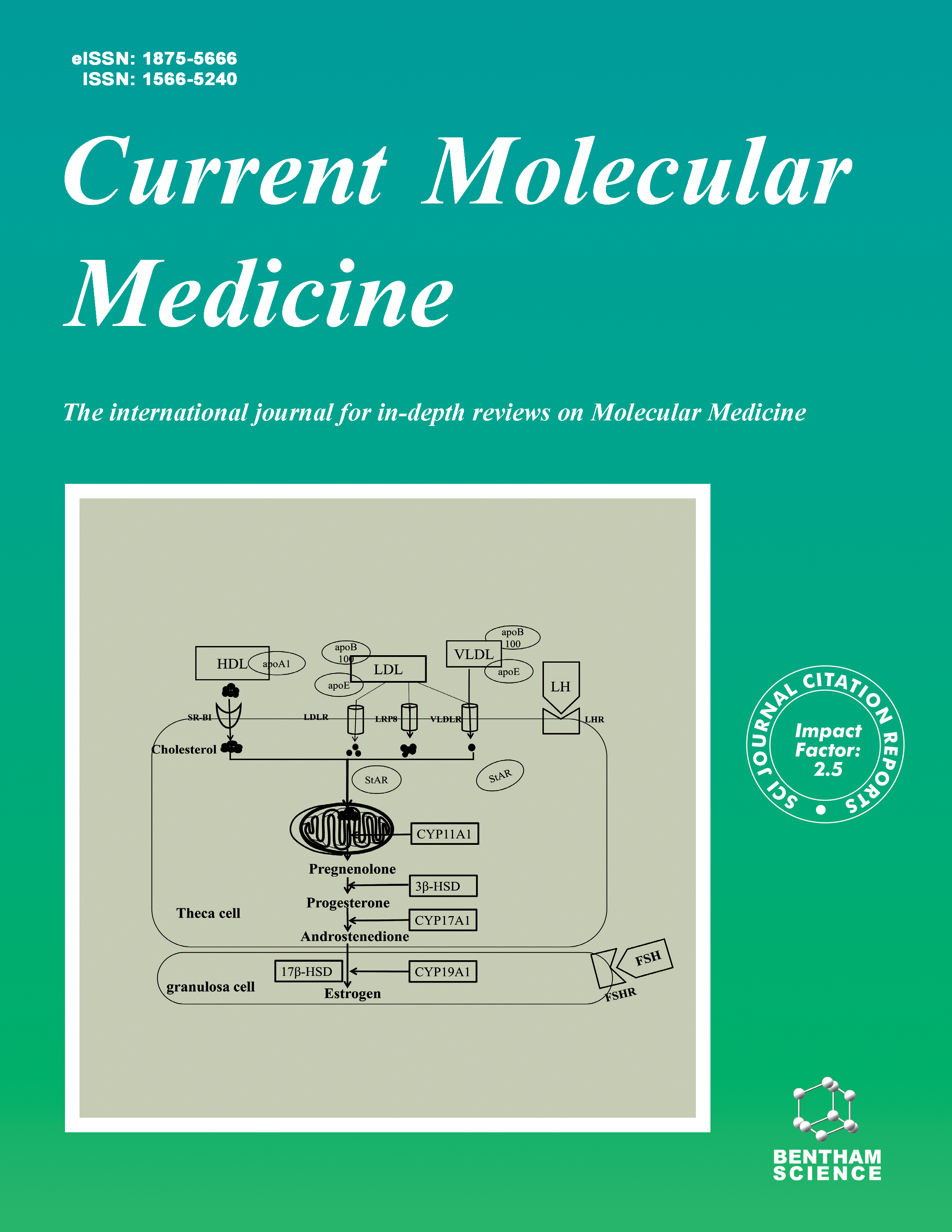
Volume 25, Issue 12, 2025
-
-
LncRNA-DANCR: A Key Player in Colorectal Cancer Development and Progression
More LessColorectal Cancer (CRC) is a significant global health issue, being the third most common cancer worldwide and the second most frequent cause of cancer-related deaths. It occurs when cells in the colon or rectum grow uncontrollably, often developing from precancerous polyps. Genetic predisposition and environmental factors, such as diet and lifestyle, contribute to the disease. Recent research has focused on molecular targeted therapies and non-coding RNAs, particularly long non-coding RNAs (lncRNAs), which play a critical role in regulating CRC development and progression. DANCR interacts with microRNAs, proteins, and mRNAs, influencing gene expression and stability. DANCR functions as a promoter of tumor growth, invasion, metastasis, proliferation, migration, apoptosis, disease progression, and prognosis in various cancers. In CRC, DANCR influences both progression and clinical outcomes. This review aims to comprehensively explore the current knowledge regarding DANCR in CRC, including its molecular characteristics, expression patterns, and involvement in regulatory mechanisms, as well as its potential use as a diagnostic, prognostic, and therapeutic tool.
-
-
-
Triple Negative Breast Cancer Heterogeneity and Tumour Microenvironment-based Model Systems’ Focus on Druggable Targets
More LessAuthors: Shreyasi Kundu and P.K. SureshFifteen to twenty percent of all cases of breast cancer are TNBC (triple negative breast cancer) and exhibit heterogenic features due to their diverse molecular characteristics. Additionally, their aberrant cell cycling behavior contributes to their metastatic capabilities and aggressive nature. TNBC is the only molecular subtype, which lacks the expression of hormone receptors, like estrogen receptor (ER), progesterone receptor (PR), and human epidermal growth factor receptor 2 (HER-2). Hence, it is recalcitrant to hormone therapy. Also, the complex and evolving tumour microenvironment (TME) comprises blood vessels, stromal cells, immune cells, metabolic factors, extracellular matrix (ECM), and an integrated perspective of their interconnections as well as their variability with respect to TNBC progression needs to be comprehended for biomarker/druggable target(s) development and/or their validation. Such TME-based model systems can help us understand the relationship between the different TME components that affect tumour growth and metastasis. This review also catalogs biomarkers and TNBC behaviour within the TME. Also, this review discusses and analyses models that replicate various tumour subtypes that can be correlated with variability in treatment responses, thereby facilitating a better understanding of TNBC heterogeneity. Thus, by identifying biomarkers and constructing model systems, we can augment efforts to overcome treatment failure and poor outcomes in TNBC patients. These subtype-specific TNBC model systems, mirroring the intricacies of the TME, have the potential to provide a feasible and innovative approach to target TNBC cells. This review will facilitate the ongoing global efforts to develop efficacious and safe “tailor-made” drugs for TNBC patients.
-
-
-
2-DG Promotes the Proliferation, Differentiation, Migration, and Resistance to Oxidative Stress of Mesenchymal Stem Cells through Hippo Signaling
More LessAuthors: Liang Dong and Lang LiBackgroundHippo signaling regulates the behavior and fate of mesenchymal stem cells (MSCs), which are crucial for the repair and cure of acute respiratory distress syndrome (ARDS). However, whether 2-deoxy-D-glucose (2-DG), a specific activator of Hippo signaling, would further enhance the reparative effect of MSCs in ARDS remains unclarified.
ObjectiveThis study aimed to determine whether 2-DG could promote the proliferation, differentiation, migration, and resistance to oxidative stress of mouse bone marrow-derived MSCs (mBMSCs).
MethodsmBMSCs were isolated from C57BL/6 mice and differentiated into alveolar type II epithelial (ATII) cells by noncontact coculture. The specific activator and inhibitor 2-DG and 4-[(5,10-dimethyl-6-Oxo-6,10-dihydro-5h-pyrimido[5,4-B]thieno[3,2-E][1,4]diazepin-2-Yl)amino]benzenesulfonamide (XMU-MP-1) were used to activate and inhibit Hippo signaling, respectively. Oxidative stress-induced injuries were induced by H2O2 treatment.
ResultsWe observed that 2-DG activated Hippo signaling and promoted mBMSC proliferation in a dose-dependent manner. 2-DG also promoted the differentiation of mBMSCs into ATII cells and enhanced not only the horizontal and vertical migration of mBMSCs but also mBMSC homing to injured lung tissue. H2O2 treatment inhibited Hippo signaling and reduced the viability of mBMSCs by decreasing the Bcl-2/Bax ratio, but 2-DG activated Hippo signaling and conferred mBMSCs with resistance to oxidative stress by increasing the Bcl-2/Bax ratio. However, XMU-MP-1 suppressed these effects to some extent.
ConclusionThrough Hippo signaling, 2-DG promoted the proliferation, migration, differentiation, and resistance to oxidative stress of mBMSCs, suggesting a novel strategy for enhancing the reparative effects of MSCs in ARDS.
-
-
-
Role of Immune Cells in Mediating the Causal Effect of Gut Microbiota on Type 2 Diabetes
More LessAuthors: Liu Ruifang, Chai Ruiting, Yang Zhaoyang and Li CandongBackgroundPrevious studies have suggested that gut microbiota and immune system regulation have potential links with type 2 diabetes (T2D). However, the causal association between gut microbiota and T2D and whether immune cells mediate this interaction is unclear.
MethodsA two-sample, two-step Mendelian randomization (MR) study utilizing an initial inverse-variance weighted (IVW) method was performed to explore the causal impact of gut microbiota on T2D and the intermediary role of immune cells.
ResultsThe MR analysis assigned 4 gut microbiota and metabolic pathways that increase the risk of T2D (G_Prevotella, g_Anaerotruncus, g_Streptococcus.s_ Streptococcus_parasanguinis, and the pathway of PANTO-PWY) and 4 other gut microbiota and metabolic pathways that have a protective effect against T2D (PWY-5667, PWY-6892, PWY-7221, and the bacterial g_Paraprevotella.s_Paraprevotella_ clara). Furthermore, 17 immune cell traits have been identified as associated with T2D. The finding from mediation MR analysis revealed that PANTO-PWY increases T2D risk via CD3 on HLA DR+ CD4+, whereas PWY-7221 reduces T2D risk through CD4 on CD4 Treg.
ConclusionThe research reveals a mediated causal link between the gut microbiota and T2D via immune cells.
-
-
-
Mechanism of Astragaloside IV in Promoting Osteogenic Differentiation
More LessAuthors: Yao Zhu, Chengyu Lin, Xudong Zhang, Zuyun Qiu, Lei Shi and Jianmin LiBackgroundThis study focuses on exploring the impact of Astragaloside IV [AS-IV] on osteogenic differentiation.
MethodsOsteogenic differentiation was induced in rat osteoblasts, following which treatment with AS-IV at varied doses was performed. Using Alizarin red staining and alkaline phosphatase (ALP) detection assay, the osteogenic differentiation of the cells was investigated. The expressions of osteogenic differentiation-related genes were determined by quantitative real-time polymerase chain reaction (qRT-PCR). The phosphatidylinositol 3-kinase (PI3K)/protein kinase B (Akt) signaling pathway-associated protein expressions were examined using Western blot. After osteoblasts were transfected with protein tyrosine phosphatase non-receptor type 2 (PTPN2) overexpression plasmid, the impact of PTPN2 on osteoblasts treated with AS-IV was examined.
ResultsAS-IV treatment enhanced osteogenic differentiation and up-regulated the expression of osteogenic differentiation-related genes, as well as the levels of p-PI3K/PI3K and p-AKT/AKT, while reducing phosphatase and tensin homolog (PTEN) protein production in osteoblasts. Overexpression of PTEN inhibited osteogenic differentiation, and PTPN2 overexpression counteracted the effects of AS-IV on osteogenic differentiation.
ConclusionAS-IV contributing to osteogenic differentiation may be related to the PTPN2-mediated PTEN/PI3K/Akt pathway.
-
-
-
MicroRNA-130b is a Unique Autophagy-Related Epigenetic Predictor of FLOT-Chemotherapy in Gastric Cancers
More LessIntroductionLiquid biopsies have great potential for precision medicine as they provide information about primary and metastatic tumors using minimally invasive techniques. MicroRNAs (miRNAs) are promising biomarkers for detecting gastric cancer (GC). The aim of the study was to identify miR molecules associated with autophagy in gastric cancer (GC) cells, determine their expression levels in GC and FLOT-treated patients, and assess the efficacy of FLOT therapy in GC patients.
MethodsKyoto Encyclopedia of Genes and Genomes (KEGG) and Gene Ontology (GO) pathways were used to analyze cellular pathways. MicroRNAs were isolated from the tissues.
ResultsThe study found a connection between the expression of the let-7a-5p gene and the size of primary tumors. Bioinformatics analysis identified multiple targets and signaling pathways associated with this phenomenon. We observed an increase in the levels of miR-21-3p and hsa-miR-130b-3p with lymph node involvement. miR-21-3p is associated with the activation of molecular pathways induced by H. pylori in cases of coinfection. Patients with complete regression had higher levels of expression of hsa-mir-130b-3p.
ConclusionThe bioinformatics analysis allowed us to identify the most significant targets among microRNAs. Based on the presented data, it becomes clear that GC is heterogeneous and that the process of autophagy is complex. The association between hsa-miR-130b-3p and tumor response to therapy is particularly interesting.
-
-
-
Association between Sputum Culture Conversion and Body Mass Index among Multidrug-Resistant Tuberculosis Patients in Punjab, Pakistan: A Multicenter Retrospective Study
More LessBackgroundThe global challenge of Multidrug-resistant Tuberculosis (MDR-TB) presents a substantial public health concern, requiring extended and complex treatment regimens. Understanding the factors impacting treatment results, particularly sputum culture conversion and Body Mass Index (BMI), is crucial. This retrospective cohort investigation conducted in Punjab, Pakistan, sought to explore the correlation between BMI and sputum culture conversion in individuals diagnosed with MDR-TB.
Material and MethodologyData from 2663 confirmed MDR-TB patients across multiple Programmatic Management of Drug-Resistant Tuberculosis PMDT sites in Punjab, Pakistan, were retrospectively analyzed. Demographic and clinical characteristics, BMI, comorbidities, previous TB treatments, and drug resistance were evaluated. Cox proportional hazards regression models were employed to assess the association between time to sputum culture conversion and patient characteristics.
ResultsThe study compared MDR-TB treatment outcomes based on BMI categories (≥18.5 vs. <18.5 Kg/m^2). It involved 1626 employed patients, with a mean age of 33 ± 15 years, displaying baseline body weights averaging 48±7 kg (normal weight) and 37±6 kg (underweight). On average, sputum culture conversion occurred at four months, with approximately 37% achieving conversion within this period. Among several factors studied, the univariate analysis identified BMI <18.5 Kg/m^2, prior first-line drug treatment, and comorbidities as significantly associated with failure to achieve sputum culture conversion within 6 months. In multivariate analysis, the inability to achieve conversion was notably linked to BMI <18.5 Kg/m^2, previous first-line drug treatment, and resistance to fluoroquinolone drugs.
ConclusionThis study provided valuable insights into sputum culture conversion, BMI, and drug resistance among MDR-TB patients. While around half of the patients achieved sputum culture conversion within six months, factors, such as comorbidities, previous TB treatment, and drug resistance, significantly influenced treatment outcomes.
-
-
-
Using the AP1 Transcription Factor FOSL1 to Assess the Exacerbation of Psoriasis
More LessBackgroundThe transcription factor AP1 plays a crucial role in the proliferation, apoptosis, and terminal differentiation of epidermal keratinocytes.
ObjectiveThis study aimed to clarify whether the subunit of AP1, FOSL1 protein, can be used to assess the exacerbation of psoriasis by evaluating its changes in protein and mRNA levels in cultured epidermal keratinocytes and skin specimens of the patients prescribed with bathwater PUVA (Psoralen and UVA) therapy. This study aimed to investigate FOSL1, a subunit of the transcription factor AP-1, as a potential biomarker for psoriasis by examining its protein and mRNA expression in skin specimens from patients undergoing bathwater PUVA (Psoralen and UVA) therapy and cultured epidermal keratinocytes.
MethodsThe distribution of FOSL1 in patients’ skin was explored by immunohistochemistry. Changes in gene and protein expression were quantitatively assessed by qPCR and ELISA, respectively.
ResultsImmunohistochemistry analysis revealed that FOSL1 accumulated in lesional skin. The expression of FOSL1 significantly increased during disease flare-ups but decreased following the treatment with bathwater PUVA therapy. Furthermore, silencing FOSL1 led to a marked reduction in the expression of ten FOSL1 target genes associated with the disease.
ConclusionOur study suggests that FOSL1 shows potential as a biomarker for psoriasis. This is supported by two key findings: first, the expression of FOSL1 correlates with disease activity, and second, its expression is linked to changes in the expression of genes previously implicated in the pathogenesis of psoriasis, namely MMP1, MMP9, IVL, CCNA2, CCL2, HMOX1, PLAU, PLAUR, and THBD.
-
-
-
Elucidating the Causal Dynamics between Inflammatory Proteins and Atrial Fibrillation Risk Through Bidirectional Mendelian Randomization
More LessAuthors: Yuan Lv, Bin Huang, Liyin Xu and Xianjun WuBackgroundAtrial fibrillation (AF), the most common cardiac arrhythmia, is associated with significant morbidity and mortality. Inflammation has been implicated in the pathogenesis of AF, but the causal relationship between specific inflammatory proteins and AF risk is not well established. This study aims to clarify this relationship using a bidirectional two-sample Mendelian Randomization (TSMR) approach.
MethodsEmploying a bidirectional Mendelian Randomization (MR) method, we analyzed genetic variants as instrumental variables (IVs) to investigate the influence of 91 circulating inflammatory proteins on AF risk. This approach allowed us to assess the potential causal effects of inflammatory proteins on AF and vice versa, thus providing a comprehensive understanding of the bidirectional nature of their relationship.
ResultsSeven inflammatory proteins were significantly associated with AF risk. Three proteins increased the risk: Fibroblast Growth Factor 5 (FGF-5) with an odds ratio (OR) of 1.0743 (95% CI: 1.0466-1.1027, p=7.41E-08), Tumor Necrosis Factor (TNF) with an OR of 1.0832 (95% CI: 1.0261-1.1434, p=0.0038), and Interleukin-2 Receptor Subunit Beta (IL-2RB) with an OR of 1.0814 (95% CI: 1.0151-1.1519, p=0.0153). Four proteins showed a protective effect: CD40 Ligand Receptor (CD40) with an OR of 0.9671 (95% CI: 0.9392-0.9959, p=0.0254), Fms-related Tyrosine Kinase 3 Ligand (FIt3L) with an OR of 0.9553 (95% CI: 0.9173-0.9949, p=0.0274), Leukemia Inhibitory Factor Receptor (LIF-R) with an OR of 0.9254 (95% CI: 0.8678-0.9868, p=0.0181), and Sulfotransferase 1A1 (ST1A1) with an OR of 0.9461 (95% CI: 0.9097-0.9839, p=0.0056). The reverse MR analysis revealed no significant effects of AF on the levels of these inflammatory proteins, suggesting a unidirectional causality from proteins to AF.
ConclusionThis bidirectional MR study provides robust evidence for a causal relationship between specific inflammatory proteins and AF risk. The identified proteins could serve as potential biomarkers for AF risk stratification and targets for therapeutic intervention, offering new insights into the pathophysiology of AF and avenues for future research.
-
Volumes & issues
-
Volume 25 (2025)
-
Volume 24 (2024)
-
Volume 23 (2023)
-
Volume 22 (2022)
-
Volume 21 (2021)
-
Volume 20 (2020)
-
Volume 19 (2019)
-
Volume 18 (2018)
-
Volume 17 (2017)
-
Volume 16 (2016)
-
Volume 15 (2015)
-
Volume 14 (2014)
-
Volume 13 (2013)
-
Volume 12 (2012)
-
Volume 11 (2011)
-
Volume 10 (2010)
-
Volume 9 (2009)
-
Volume 8 (2008)
-
Volume 7 (2007)
-
Volume 6 (2006)
-
Volume 5 (2005)
-
Volume 4 (2004)
-
Volume 3 (2003)
-
Volume 2 (2002)
-
Volume 1 (2001)
Most Read This Month
