


Current Topics in Medicinal Chemistry - Volume 25, Issue 19, 2025
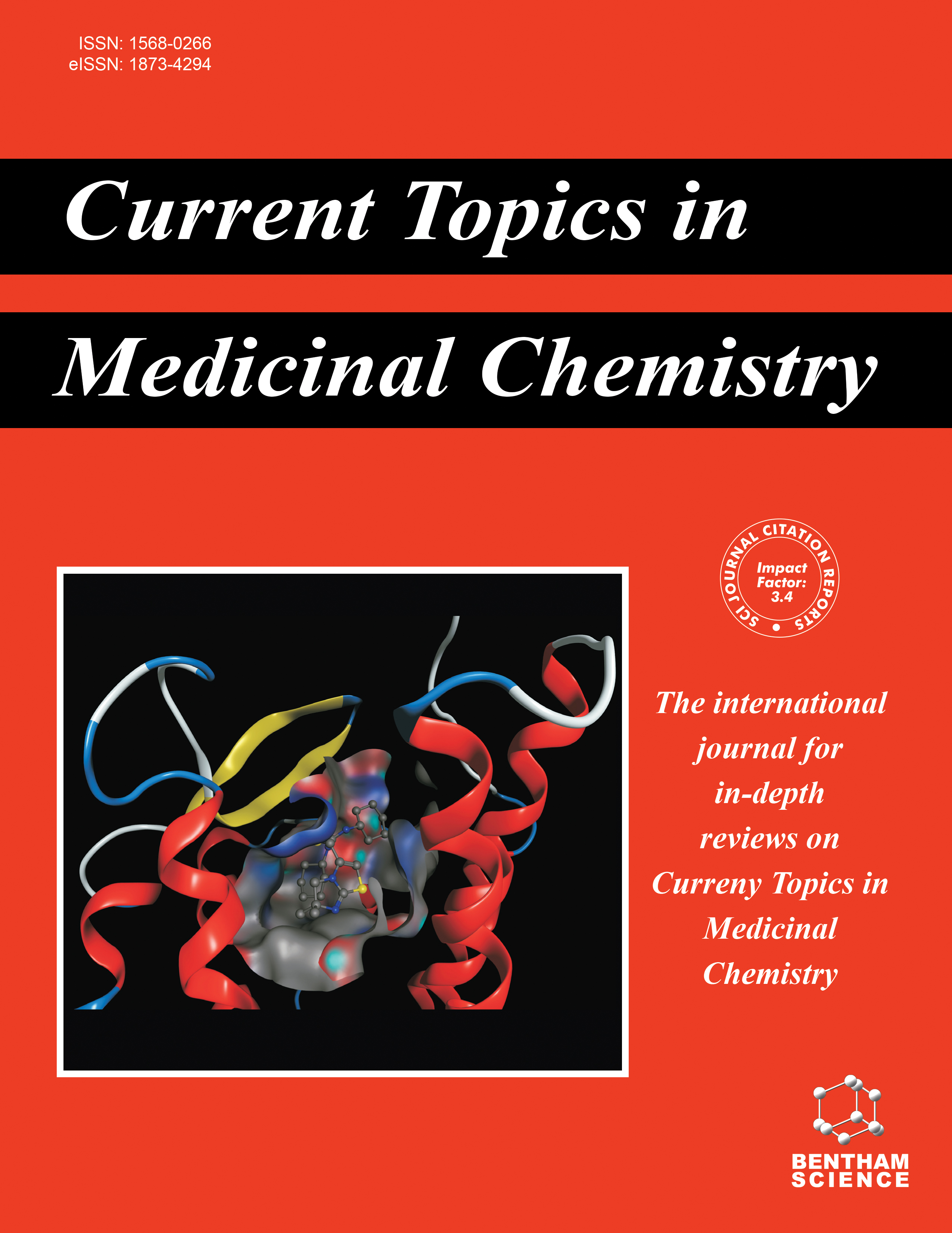
Volume 25, Issue 19, 2025
-
-
Genistein as a Chemo-modulatory Agent: Exploring its Potential in Chemosensitization and Combinatorial Therapeutic Strategies for Cancer Treatment
More LessGenistein (GEN), a phytoestrogen primarily sourced from soy plants, is recognized for its anticancer properties attributed to its roles as a tyrosine kinase inhibitor, an estrogen receptor agonist, and its influence on various cancer hallmarks by modulating diverse signaling pathways. Recent research has highlighted the considerable potential of GEN in combating drug resistance in cancer cells. This attribute of GEN has been demonstrated by its capacity to modulate tyrosine kinases such as HER2, HER3, and EGFR which are implicated in tumorigenesis, as well as pro-survival signaling pathways including NF-κB and Akt/mTOR. Moreover, GEN impacts drug accumulation, AR-driven transcriptional regulation, ER signaling, and various genes that are involved in autophagy, pro/anti-apoptosis, DNA methylation, and histone acetylation. Further, GEN demonstrated efficacy in combinatorial therapy with various standard anticancer agents like 5-FU, cetuximab, cisplatin, clofarabine, doxorubicin, tamoxifen, TRAIL, trastuzumab, and other agents with anticancer activities such as capsaicin, curcumin, daidzein, lycopene, resveratrol, sulforaphane, etc., across a spectrum of cancers including the cancers of bone, brain, breast, cervix, colorectal, endometrium, esophagus, head and neck, leukemia, liver, lung, ovary, pancreas and stomach. Thus, further clinical validation of these potential combinations involving GEN is warranted to confirm the preclinical findings.
-
-
-
Strategies in Parkinson's Disease Therapeutics - A Need for Synergy of Ayurveda, Small Molecules and Nanoparticles aided Approaches
More LessDespite extensive research, there is an unmet need for developing disease-modifying therapies for Parkinson’s disease (PD). Failure of certain landmark clinical trials has highlighted the need for a better understanding of the disease pathogenesis as well as identifying the hurdles in developing drug candidates and designing clinical trials. While adhering to these needs, several promising trials are currently underway with the hope of developing reliable targets. There is also a need to conduct research on plant-based natural products and use them as therapeutic candidates for PD. In this context, many studies have demonstrated the efficacy of medicinal plants and their principal phytochemicals. This review provides an update on the presently underway clinical trials with a small emphasis on the disease modifying therapies that target small molecules, mitochondria, and oligodendrocytes. The role of ethnopharmacology-based approaches for treatment of PD has also been discussed. The third aspect of the article considers the importance of nanomedicine in this area, including the use of liposomes and nanoparticles to provide a novel approach for the treatment of PD.
-
-
-
Exploring the Therapeutic Potential of Traditional Medicinal Foods in Cancer Treatment: Molecular Evidence and Bioactivities
More LessTraditional medicinal foods derived from natural sources have gained increasing attention in recent years due to their perceived health benefits and potential therapeutic properties and are deeply rooted in cultural practices. This review aimed at understanding their potential health benefits, emphasizes the need to identify the key bioactive substances in traditional home medicine. We have discussed the bioactive properties, molecular targets, and anti-cancer effects of various compounds such as curcumin, genistein, berberine, resveratrol, and, quercetin present in traditional medicinal foods. Our study highlights the potential of traditional medicinal food in the prevention and management of various health conditions, including cardiovascular diseases, cancer and neurodegenerative disorders as evident from in vitro, in vivo studies and clinical trials. Additionally, our study explores the mechanistic action of various bioactive constituents of grapes, rosemary, barberry, turmeric and garlic that have been shown to interfere with cancer growth, proliferation, metastasis, angiogenesis, and induce apoptosis by targeting various pathways and the cell cycle. Additionally, a wide range of healing abilities of medicinal foods including their impact on cancer cells demonstrate their direct anti-tumor potential along with antioxidant and antiinflammatory properties. To summarize, the present review highlights that integrating the insights of contemporary science with the age-old wisdom of traditional medicine in a systematic way holds immense potential for developing alternate and effective approaches to cancer therapeutics and offering evidence-based dietary recommendations.
-
-
-
Exploring the Medicinal and Nutraceutical Frontiers of Tinospora cordifolia in Stress and Cancer Management
More LessTinospora cordifolia, commonly known as Guduchi, Giloy, or Amrita, has been a cornerstone of traditional medicine for centuries and is renowned for its diverse nutraceutical and medicinal potential. The plant exhibits immunomodulatory, antioxidant, anti-inflammatory, and anti-viral activities due to its rich array of bioactive compounds, including alkaloids, diterpenoid lactones, polysaccharides, and others. These properties make Giloy a promising candidate for a variety of therapeutic applications. Further, as oxidative damage contributes to chronic diseases by affecting essential biomolecules, the antioxidant phytochemicals found in T. cordifolia counter the free radicals and offer significant health benefits. This comprehensive review delves into the health benefits and therapeutic efficacy of Giloy, with a particular focus on its mechanisms for mitigating stress and combating cancer. The preclinical and clinical studies have demonstrated Giloy’s ability to enhance antioxidant defences and induce apoptosis in cancerous cells. Additionally, it has shown potential in adjunct therapy to improve the quality of life for cancer patients by reducing the side effects associated with conventional cancer therapies. By exploring the multifaceted potential of T. cordifolia in modern medicine, this review aims to bridge the gap between traditional knowledge and contemporary scientific insights by addressing the underutilization of ancient herbal remedies in evidence-based healthcare. It also discusses future research directions and probable applications of Giloy in clinical practice, highlighting the importance of this ancient remedy in the context of modern healthcare practices, especially in cancer and stress management.
-
-
-
Designing 1,4-Dihydropyridines-Based Multitarget Therapeutics: Recent Advances and Future Directions
More LessAuthors: Aditi Soni, Monika Sharma and Rajesh K. SinghBackground1,4-Dihydropyridines (1,4-DHPs) serve as versatile scaffolds in medicinal chemistry, exhibiting multitarget potential with anticancer, cardiovascular, antioxidant, anti-inflammatory, antimicrobial, and analgesic effects. Structural modifications enhance their binding affinity, bioavailability, and selectivity.
AimThis review aims to explore the broad therapeutic potential of 1,4-DHPs by analyzing their biological activities and structure-activity relationships (SAR). Additionally, it seeks to provide medicinal chemists with insights into key structural modifications that can optimize their pharmacological efficacy.
MethodsA comprehensive literature search was conducted in PubMed, ScienceDirect, Elsevier, and Google Scholar, prioritizing peer-reviewed studies from the last decade. Inclusion criteria focused on pharmacological properties, SAR, and therapeutic potential of 1,4-DHPs, while non-peer-reviewed or irrelevant studies were excluded. Data extraction analyzed SAR trends, emphasizing the impact of structural modifications on binding affinity, bioavailability, and biological activity.
ResultsThe review highlights that specific modifications in aromatic substituents, ester groups, and heterocyclic rings play a crucial role in enhancing the biological activity and selectivity of 1,4-DHPs. Their ability to modulate key enzymes and receptors contributes to their effectiveness as multitarget agents. Comparative SAR analysis provides evidence of the potential of 1,4-DHPs as next-generation therapeutics.
Conclusion1,4-DHPs offer a promising framework for drug development, with the potential to address complex, multifactorial diseases. By understanding and optimizing SAR, medicinal chemists can design more selective and potent 1,4-DHP-based drugs. Future research should focus on refining these structural modifications to unlock their full therapeutic potential.
-
-
-
Diazinon-induced Cognitive Impairment: Alternations in Amyloid Precursor Proteins, and TNF-α Expression in the Hippocampus of Adult Rats
More LessBackgroundOrganophosphate pesticides such as diazinon (DZN) are involved in developing psychological symptoms and memory deficits, but their effects on the amyloid precursor proteins (APP) gene expression remain unclear.
Materials and MethodsFollowing low-level oral exposure to the DZN (2 mg/kg), we used novel object recognition, open field, and elevated plus-mazes (EPM) to assess memory and anxiety-like behaviors in rats. We also evaluated alteration in the levels of tumor necrosis factor (TNF-α), amyloid precursor protein (APP), APP-like protein-2 (APLP2), and amyloid-β (Aβ) via western blotting and ELISA. Real-time quantitative PCR was performed to evaluate the expression of the related genes in the hippocampus.
ResultsThe findings demonstrated that whereas DZN exposure boosted anxiety-like behaviors at any exposure level, only prolonged exposure (12 weeks) resulted in memory impairment. The study also found that the hippocampal expression of APP and APLP2 decreased after 12 weeks of exposure but not after 5 days. Additionally, Aβ increased after long-lasting exposure to DZN, indicating the APP contribution to AD pathologies. The TNF-α gene was up-regulated following 5 days of exposure, but 12 weeks had no effect.
ConclusionOur finding demonstrates that long-lasting exposure to low levels of DZN in adulthood stimulates APP degradation, possibly contributing to poor cognitive outcomes.
-
Volumes & issues
-
Volume 25 (2025)
-
Volume 24 (2024)
-
Volume 23 (2023)
-
Volume 22 (2022)
-
Volume 21 (2021)
-
Volume 20 (2020)
-
Volume 19 (2019)
-
Volume 18 (2018)
-
Volume 17 (2017)
-
Volume 16 (2016)
-
Volume 15 (2015)
-
Volume 14 (2014)
-
Volume 13 (2013)
-
Volume 12 (2012)
-
Volume 11 (2011)
-
Volume 10 (2010)
-
Volume 9 (2009)
-
Volume 8 (2008)
-
Volume 7 (2007)
-
Volume 6 (2006)
-
Volume 5 (2005)
-
Volume 4 (2004)
-
Volume 3 (2003)
-
Volume 2 (2002)
-
Volume 1 (2001)
Most Read This Month
