


Current Topics in Medicinal Chemistry - Volume 25, Issue 17, 2025
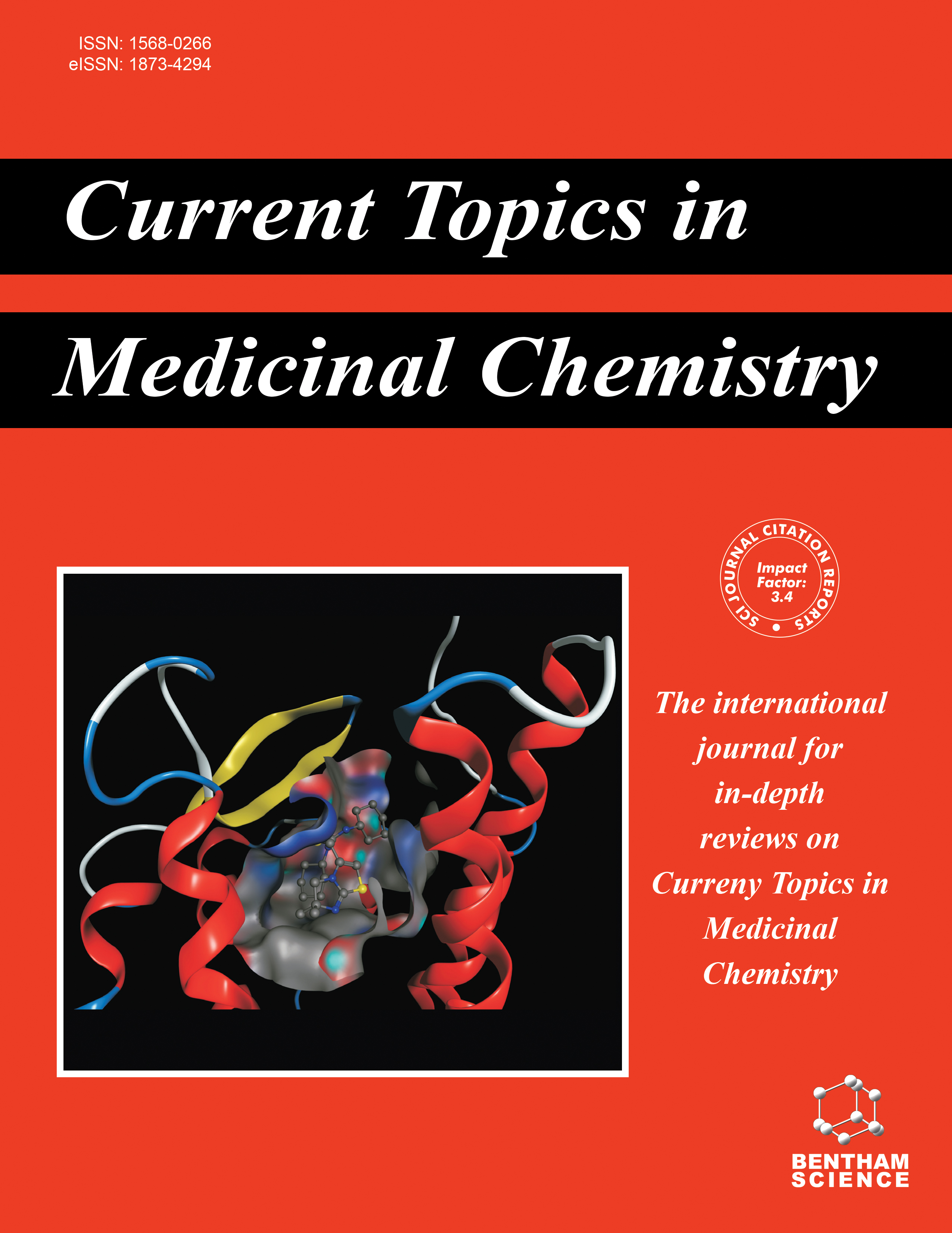
Volume 25, Issue 17, 2025
-
-
Natural Compounds that Modulate Circadian Rhythms
More LessAuthors: Tatsunosuke Tomita, Renu Wadhwa and Yoshiaki OnishiCircadian rhythms of innate 24 h cycles comprise well-conserved biological phenomena from cyanobacteria to mammalian. They are driven by light and regulated by clock genes that work as transcription factors and control the expression of many other genes and physiological functions in the cells. The expression of ~ 40% of protein-coding genes shows 24 h oscillation patterns in mice, implying their importance in normal body functions. Indeed, the physiological and behavioural rhythmicity generated through clock genes-mediated multiple mechanisms affects the quality of life at large. Disrupted circadian rhythmicity is associated with several kinds of diseases. For example, cancer cells show abnormal expression patterns for circadian rhythm genes that have been shown to regulate oncogenesis, drug responses, and disease prognosis. Furthermore, the modern globalisation of human lifestyle and business and social activities have disrupted innate circadian rhythm, resulting in a variety of diseases through disrupted humoral, immunological, and neuronal pathways. Safe and sustainable modulation of circadian rhythm has become a prevalent need that warrants basic and interventional research, as well as clinical investigations. Although traditional systems of medicine suggest some natural compounds with circadian rhythm- modulating potential, most of these have not been validated in laboratory or clinical studies. Reliable read-outs of the effects of test compounds on circadian rhythmicity have been limited by the availability of live cell assays. We have, herein, provided an overview of living cell-embedded real-time reporter gene assays designed for screening compounds that modulate circadian rhythm, and discussed the potential of some natural compounds for circadian rhythm modulation as validated by cell-based assay systems, and their role in disease therapeutics.
-
-
-
Molecular Evidence of the Bio-activities of Traditional Home Medicine Ingredients
More LessAuthors: Jahnvi Hora, Sachin Shetty and Shama Prasada KabekkoduFor many centuries, traditional medicine has played an essential role in health care. The treatment of many illnesses, including cancer, has greatly benefited from using herbal remedies derived from traditional medicine. The bioactive compounds, such as curcumin, silibinin, berberine, ginseng, and others present in traditional medicine have shown a wide range of properties, such as anti-inflammatory, antimicrobial, anti-oxidant as well as potent anti-cancer properties both in laboratory studies and animal experiments (in vitro and in vivo). In this review, we mainly emphasized the anticancer role of bioactive compounds present in traditional medicine, such as curcumin, cardamonin, piperine, berberine, ginseng, silibinin, epigallocatechin gallate, and asafoetida. We also discussed molecular evidence of these compounds in chemoprevention and anticancer effects. These compounds have the potential to interfere with cancer growth, proliferation, metastasis, and angiogenesis and induce apoptosis by targeting different pathways and the cell cycle. This review article also focuses on how these compounds can help overcome drug resistance and enhance the availability of other clinically approved drugs. The usage of these compounds synergistically with other forms of treatment is also of great fascination to new and upcoming research. Finally, we have discussed the bioavailability of these compounds and strategies employed to improve them so their full potential can be exploited.
-
-
-
Drug Delivery Systems for Natural Medicines in Cancer Therapy
More LessCancer stands as a prominent global cause of mortality, with chemotherapy using synthetic drugs being the predominant treatment method. Despite its high success rate, this approach is constrained by substantial side effects. Herbal medicines, known for their diverse bioactive components, exhibit promising anticancer attributes. The drug delivery systems can improve the precision of delivering these herbal compounds, enhancing efficacy while minimizing potential side effects. Various platforms, such as nanoparticle-based carriers, liposomes, and polymeric micelles, are investigated for encapsulating and delivering herbal components to cancer cells. These systems not only enhance the bioavailability of herbal compounds but also facilitate controlled release, sustained drug circulation, and improved cellular uptake. This comprehensive review focuses on the recent advancement in the field of drug delivery systems employed in the delivery of plant-derived anticancer compounds. It categorizes carriers into organic and inorganic nanoparticles, addressing their application in enhancing the safety and efficacy of plant-derived anticancer compounds alongside associated challenges. The review concludes by outlining recent investigations into drug delivery systems aimed at increasing the efficacy of plant-derived anticancer compounds. Future research in this field should emphasize experiments in animal models and potential clinical translation.
-
-
-
γCyclodextrin-assisted Aqueous Extract of Cinnamon for Cancer and Stress Management
More LessAuthors: Yang Shi, Huifu He, Huayue Zhang, Tian Yuan, Zhenya Zhang, Ranil DeSilva, Yoshiyuki Ishida, Keiji Terao, Sunil C Kaul and Renu WadhwaAimOur goal was to investigate the use of Cyclodextrin in creating an aqueous extract of Cinnamon with a high content of its bioactive ingredients, validated by cell-based assays.
BackgroundDue to their safety and cost-effectiveness, natural compounds have garnered attention for cancer therapy, which often faces challenges related to drug toxicity and resistance. Cinnamon (Cinnamomum verum; also known as Ceylon Cinnamon) is a commonly used spice with a history in folk medicine for treating various ailments. However, its active ingredients suffer from poor solubility, stability, and bioavailability, which limits its use and benefits.
ObjectiveWe prepared γCyclodextrin (γCD)-assisted aqueous extract of Cinnamon (CD-CIN) and compared its activity with the DMSO extract (DM-CIN).
MethodsThe cells were exposed to CD-CIN and DM-CIN extracts under normal and stressed (oxidative, metal, and hypoxic) conditions and then analyzed for stress and cancerous phenotypes using various molecular assays.
ResultsWe found that CD-CIN possesses considerable anticancer activity that involves the activation of tumor suppressor proteins and DNA damage response. Low, non-toxic concentrations of DM-CIN and CD-CIN caused comparable inhibition of migration and invasion capability of cells, supported by molecular marker analyses. Furthermore, protection against oxidative, metal, and hypoxia stress, as well as induction of differentiation, was recorded in both DM-CIN and CD-CIN treated cells, as compared to the control.
ConclusionWe report CD-CIN as a new economic and easy Cinnamon-derived resource that possesses considerable anticancer and antistress activities and hence warrants further chemical, in vitro, and in vivo studies.
-
-
-
Recent Advances in Diosmetin: Pharmacological, Pharmacokinetic, and Toxicological Profile
More LessAuthors: Bhoopendra Singh, Bhupesh C. Semwal and Sonia SinghDiosmetin, also known as 3´, 5, 7-trihydroxy-4´-methoxyflavone, is a bioflavonoid that can be found in several food sources. These include mainly citrus fruits and plants, such as Rosmarinus officinalis, Citrus sinensis, Galium verum, and Rosa agrestis. It has been shown that diosmetin has pharmacological actions that include neuroprotective, antioxidant, and anticancer properties. The objective of this manuscript is to provide a comprehensive review of the pharmacological, pharmacokinetic, and toxicological profile of diosmetin. The information has been collected from several research papers found in various databases, including Web of Science, Pubmed, Scopus, and ScienceDirect. Diosmetin has the potential to reduce inflammation, and it can also improve vascular functions and protect against oxidative stress, both of which are essential for the prevention and management of several diseases.
-
-
-
Innovative Therapies: A Major Breakthrough in Combating Multi-Drug-resistant Bacterial Infections Using Mixture Design and Multi-Objective Optimization with NSGA-II Algorithm
More LessIntroduction/ObjectiveThe increasing resistance of pathogens to antibiotics poses a major public health challenge. This study aims to develop an innovative approach to combat this resistance by exploring synergies between standard antibiotics and marine metabolites.
MethodsThe methodology combines disk diffusion testing and mixture design to assess the antimicrobial efficacy of the combinations.
ResultsThe results demonstrate promising synergies between carotenoids, polyphenols, and alkaloids with standard antibiotics, offering potential targeted use in the fight against clinical multidrug-resistant bacteria. Specifically, Gram-negative bacteria (BGN) showed increased resistance to antibiotics such as amoxicillin-clavulanic acid (AMC), ceftazidime, cefotaxime, tetracycline, and cefazolin. These antibiotics, when combined with marine compounds, exhibited substantial inhibitory effects against specific isolates, circumventing antibiotic resistance mechanisms. Similarly, substantial synergies were observed in Gram-positive bacteria. Leveraging advanced algorithms such as multi-objective optimization, notably the NSGA-II algorithm, we accurately predicted minimum inhibitory concentrations (MICs) against clinically resistant bacterial isolates. Optimal conditions against Escherichia coli, characterized by carotenoids = 0.6335, total polyphenols = 0, indole alkaloids = 0.1723, and AMC = 0.1941, yielded a predicted MIC of 41.1126 mg/L, closely mirroring the experimental MIC of 41.66 ± 0.18 mg/L. Similarly, for Staphylococcus aureus, optimal conditions produced a predicted MIC of 30.8304 mg/L, closely aligning with the experimental MIC of 30.69 ± 1.80 mg/L.
ConclusionThe consistent and reliable predictions for bacterial strains affirmed the robustness of the applied methodology. These results not only pave the way for further exploration but also offer valuable insights for optimizing pharmaceutical and medical interventions, presenting innovative avenues for combating antibiotic-resistant bacterial infections.
-
Volumes & issues
-
Volume 25 (2025)
-
Volume 24 (2024)
-
Volume 23 (2023)
-
Volume 22 (2022)
-
Volume 21 (2021)
-
Volume 20 (2020)
-
Volume 19 (2019)
-
Volume 18 (2018)
-
Volume 17 (2017)
-
Volume 16 (2016)
-
Volume 15 (2015)
-
Volume 14 (2014)
-
Volume 13 (2013)
-
Volume 12 (2012)
-
Volume 11 (2011)
-
Volume 10 (2010)
-
Volume 9 (2009)
-
Volume 8 (2008)
-
Volume 7 (2007)
-
Volume 6 (2006)
-
Volume 5 (2005)
-
Volume 4 (2004)
-
Volume 3 (2003)
-
Volume 2 (2002)
-
Volume 1 (2001)
Most Read This Month
