


Current Molecular Medicine - Volume 21, Issue 9, 2021
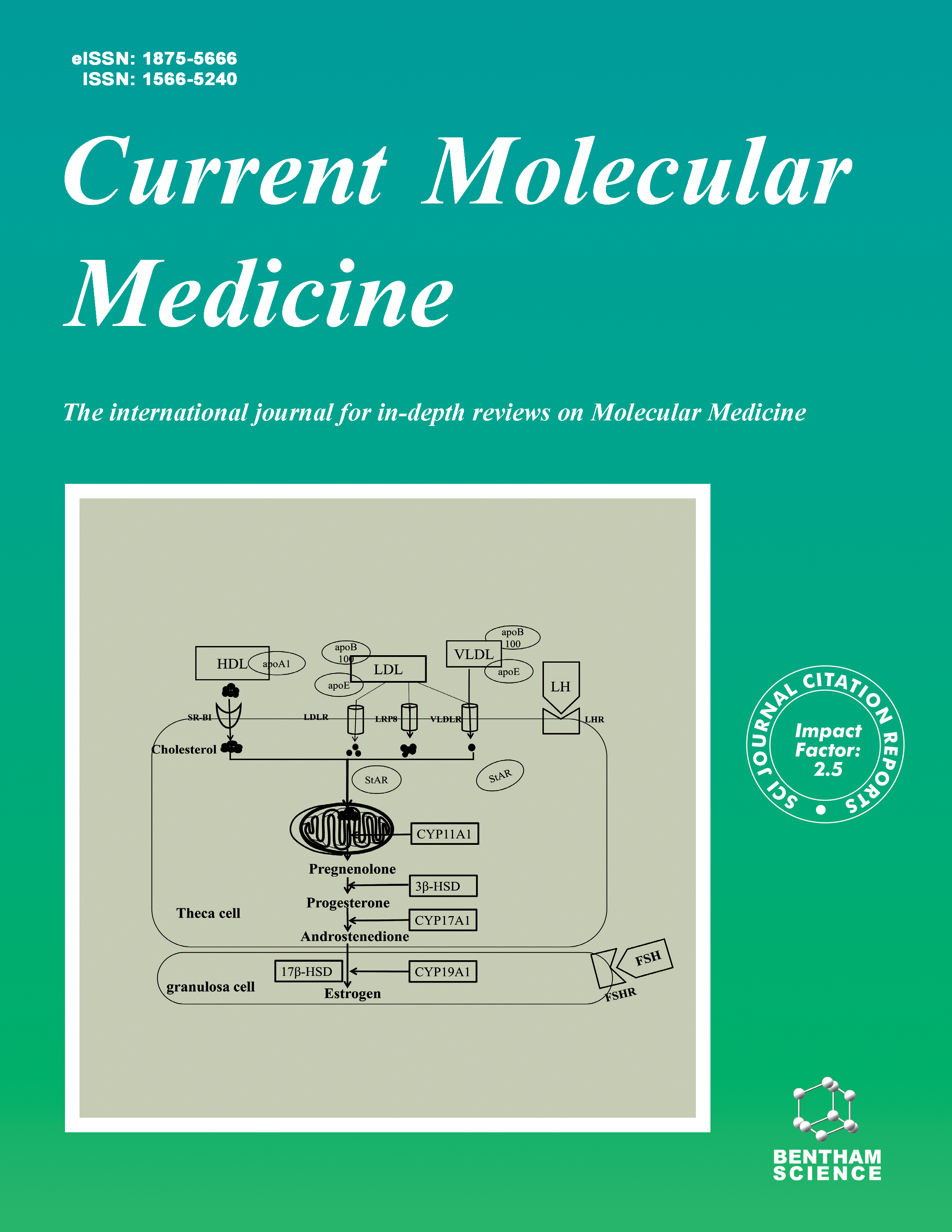
Volume 21, Issue 9, 2021
-
-
Exosomes Harnessed as Nanocarriers for Cancer Therapy - Current Status and Potential for Future Clinical Applications
More LessExosomes are nano structured (50-90 nm) vesicles that originate from endosomal compartment of eukaryotic cells and are secreted into extracellular matrix. In recent years, there has been increased interest in exploring exosomes for diagnostic and therapeutic applications. Like many other diseases, e.g., neurodegenerative disorders, autoimmune diseases exosomes have a considerable significance in cancer too. Exosomes are known to prevail in large numbers and carry unique cargos in different types of cancers and thus are proving as versatile entities in understanding their biology of cancers and utilized as efficient diagnostic biomarkers in identification of cancer type. In addition to diagnostic applications, there has been an increased interest in recent years to exploit exosomes as carriers for delivery of therapeutic agents to target sites as well. This is indebted to their exceptional non-immunogenic and biomimetic properties that prompted researchers to use exosomes as carriers for delivery of therapeutic agents, e.g., drugs, genes and peptides. Exosomes also circumvent many drawbacks associated with other lipid or polymeric nanocarriers, e.g., low circulation time, lipid toxicities, long term stability, etc. However, in spite of many favorable aspects of exosome based therapy, there have been a number of challenges too. This review will focus on the current status of the exosome based drug therapy for cancer, the challenges faced and its potential for future clinical use.
-
-
-
Bioactive Loaded Lipid-based Nanostructures: A Novel Insight for Age-related Neurodegeneration
More LessAuthors: Rajnish Srivastava, P.K. Choudhury, Suresh K. Dev and Vaibhav RathoreSubstantial affirmation suggested that oxidative stress remains an impelling target, contributing to initiate and exacerbate the multiple neurological complications in age-related neurodegeneration (ARN). Factors including gene and environmental toxins are now becoming the most threatening cause of oxidative stress, which leads to mitochondrial dysfunction of the neurons that ultimately causes permanent loss of their functionality. Clinical trials on antioxidants are still in the pipeline to access them as a potential therapeutic class. But this raised the generosity for not only to investigate the module of the antioxidant mechanism but also to justify the drug delivery and dose regimen. Biological barriers, predominantly, Blood-brain barrier (BBB) and rapid firstpass metabolism, are some of the potential obstacles for the effective targeting of the therapeutic agent. Bioactive drugs with antioxidant capacity, loaded with lipid-based Nano career system have revealed to be a novel therapeutic intervention for ARN. The review will deal with the comprehensive state-of-art methodology for the delivery of bioactive loaded lipid Nanocarriers to treat neurodegeneration. A systematic analysis of published reports will help the researchers to understand the role of natural compound loaded Nanoengineered system in the field of ARN as a potential Nano therapeutic intervention.
-
-
-
Inducing Tumor Cell Apoptosis: Mediated Survivin miRNA by Ultrasound and Cationic Lipid Contrast Agent
More LessAuthors: Feng Yang, Liu-Fu Chun and Zhi-Yi ChenBackground: Non-viral delivery systems is a promising method for gene or drug delivery. Polyethyleneimine (PEI) is a double-edged sword. It internalizes itself into the cell through endocytosis and promotes gene transfer efficiency. However, the strong positive charge also makes PEI highly toxic to cells. Ultrasound-targeted microbubble destruction (UTMD) is a promising non-viral method for gene and drug delivery, but its efficiency still needs to be improved. Objective: The aim of this study was to explore a system that combines ultrasound with non-viral gene delivery for the treatment of cervical cancer HeLa cells. Methods: In this study, we synthesized a kind of cationic ultrasound contrast agent(CUCA) that the physical and chemical properties, gene carrying capacity and cytotoxicity were verified. On the basis of previous studies, we further optimized the following transfusion parameters including ultrasound parameters, microbubble concentration, plasmid concentration, cell density and other parameters. The experiment was designed to compare the following six groups: (1) Plasmid group (P group), plasmid 15 μg; (2) PEI + plasmid group (PEI + P group),1 μl of PEI containing 10 nmol nitrogen and 1 μg of DNA containing 3 nmol phosphate for a PEI/DNA ratio equal to a nitrogen/phosphate ratio of 7 for transfection; (3) Ultrasound + plasmid group (US + P), plasmid 15 μg; (4) Ultrasound + cationic liposomal ultrasound contrast agent + plasmid group (UTMD + P group), plasmid 15 μg and cationic liposomal ultrasound contrast agent 5%; (5) Ultrasound + cationic liposomal ultrasound contrast agent + PEI + plasmid group (UTMD + PEI + P group), PEI/DNA ratio equal to a nitrogen/phosphate ratio of 7 for transfection and cationic liposomal ultrasound contrast agent 5%; and (6) Blank group, no treatment), The influence on Hela cells was observed under microscope, the efficiency of apoptosis was measured by flow cytometry, and cell viability was tested in CCK 8. Results: The optimized transfection parameters can improve the transfection efficiency of ultrasound combined with C-UCA to a certain extent, but its transfection efficiency is still lower than that of branched polyethyleneimine (bPEI) 25 kDa. By investigating the effect of HeLa cells apoptosis induced by UTMD in combination with PEI mediated survivin miRNA, we found that both PEI alone and ultrasound in combination with CUCA were able to transfect cells with survivin miRNA to effectively induce HeLa cell apoptosis. However, the synergistic effect between the two methods was not significant. Conclusion: In contrast, the combined use of ultrasound, C-UCA and PEI may significantly reduce the transfection efficiency of UTMD and PEI, and the specific mechanism remains to be further studied.
-
-
-
Role of DACH1 on Proliferation, Invasion, and Apoptosis in Human Lung Adenocarcinoma Cells
More LessAuthors: Junjie Yu, Ping Jiang, Ke Zhao, Zhiguo Chen, Tao Zuo and Baojun ChenObjective: To investigate DACH1 protein expression in lung cancer tissue and matched paracancerous tissue and explore its effect on proliferation, invasion, and apoptosis in human lung adenocarcinoma cells (HLACs). Methods: Tumor tissue and matched paracancerous tissue were collected from 46 patients with pathologically diagnosed lung cancer. RT-PCR was performed to detect DACH1 mRNA expression and immunohistochemistry to measured DACH1 protein expression. To determine the effect of DACH1 on lung cancer behavior, small interfering RNA (siRNA) was used to silence DACH1 expression in A549 cells. The impact on the proliferation of tumor cells was then observed by MTT assay, changes in the invasion of tumor cells were identified using transwell chamber assay, and the effects on apoptosis in the cell line were detected using flow cytometry. Results: The expression of DACH1 mRNA and DACH1 protein was significantly decreased in lung cancer tissue versus matched paracancerous control tissue. The silencing of DACH1 expression in A549 cells significantly enhanced cell proliferation, significantly increased cell invasion, and significantly reduced spontaneous apoptosis. Conclusion: DACH1 is downregulated in lung adenocarcinoma tissue. In vitro assessment shows that DACH1 functions as a tumor suppressor, suggesting its potential use as a new target for lung cancer treatment.
-
-
-
Cytokine Analysis in Patients with Different Stages of Thromboangiitis Obliterans
More LessBackground: Studies suggest that cytokines are involved in the development of both inflammatory disorders and vascular diseases. Objective: The changes in transforming growth factor β (TGFβ), interleukin 6 (IL6), tumor necrosis factor α (TNFα), and interferon γ (IFNγ) with the progression of the thromboangiitis obliterans (TAO) symptoms were investigated in this research. Methods: This study included 80 patients with TAO, who were selected from the Vascular and Endovascular Research Center in Alavi Hospital, from the year 2012 to 2016. They were then categorized into three groups: Mild (migratory thrombophlebitis, cold sensitivity or Raynaud's phenomenon, and skin discoloration), moderate (chronic ulcers, claudication, and burning pain of the feet at night), and severe (pain at rest and spontaneous gangrene) symptoms. The serum levels of TGFβ, IL6, TNFα, and IFNγwere determined by the ELISA method and compared among the groups. Results: The first three predominant symptoms were pulse disorder (n = 76, 95.00%), cold intolerance (n = 61, 76.25%), and claudication (n = 59, 73.75%). A comparison of the analysis of covariance (ANCOVA) revealed that both TGFβ and IL6 were dysregulated as the severity of the symptoms increased from the moderate to the severe stages; however, such changes were not significant (p > 0.05). In the multiple logistic regression model, increased TNFα levels were seen in the presence of moderate symptoms as compared to the severe ones (p < 0.05). Conclusion: It could be concluded that TNFα, as part of the defining cytokineproduction profile of T helper cells, can be significantly involved in the progression of TAO from the moderate to the severe stages.
-
Volumes & issues
-
Volume 25 (2025)
-
Volume 24 (2024)
-
Volume 23 (2023)
-
Volume 22 (2022)
-
Volume 21 (2021)
-
Volume 20 (2020)
-
Volume 19 (2019)
-
Volume 18 (2018)
-
Volume 17 (2017)
-
Volume 16 (2016)
-
Volume 15 (2015)
-
Volume 14 (2014)
-
Volume 13 (2013)
-
Volume 12 (2012)
-
Volume 11 (2011)
-
Volume 10 (2010)
-
Volume 9 (2009)
-
Volume 8 (2008)
-
Volume 7 (2007)
-
Volume 6 (2006)
-
Volume 5 (2005)
-
Volume 4 (2004)
-
Volume 3 (2003)
-
Volume 2 (2002)
-
Volume 1 (2001)
Most Read This Month
