


Current Molecular Medicine - Volume 19, Issue 1, 2019
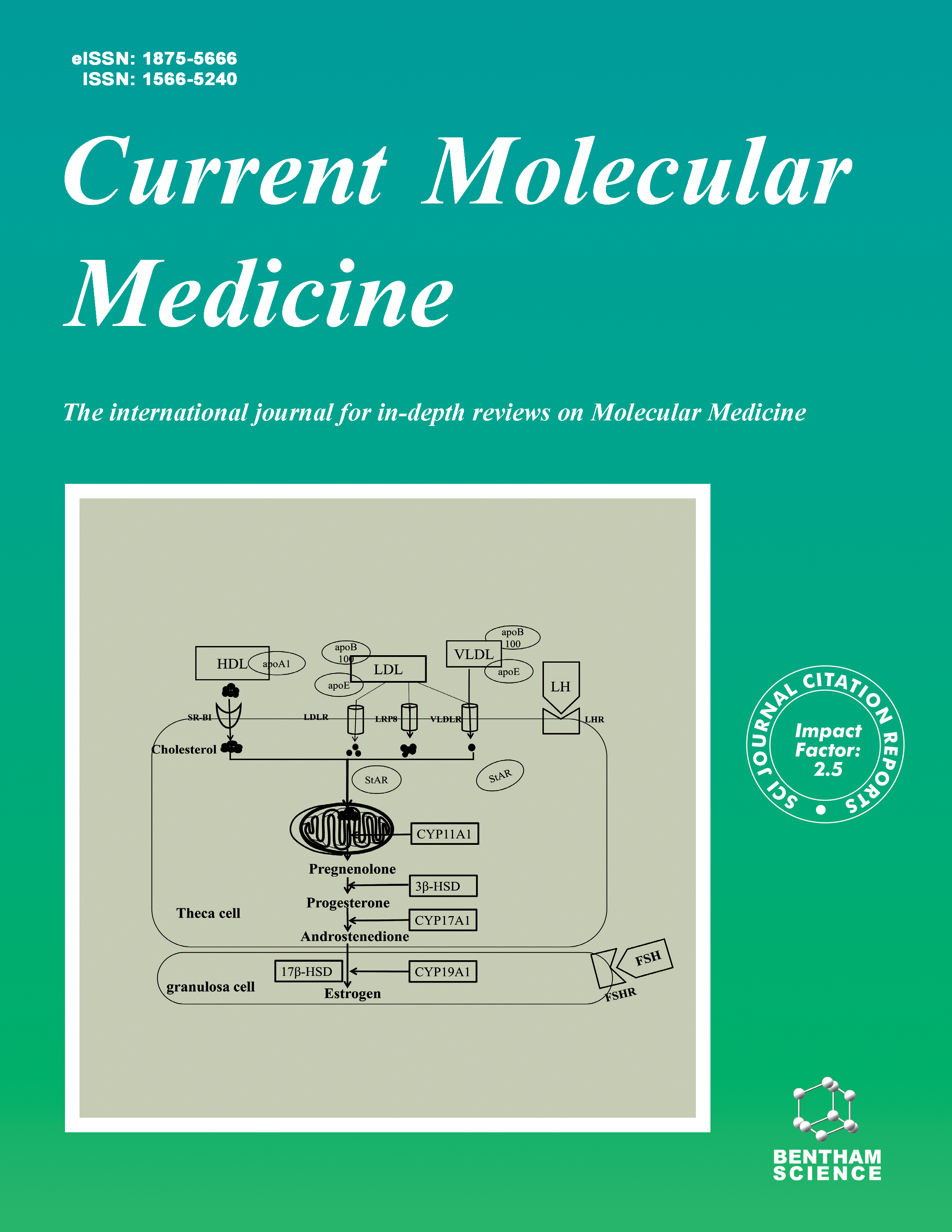
Volume 19, Issue 1, 2019
-
-
A New Approach for Cancer Immunotherapy Based on the Cancer Stem Cell Antigens Properties
More LessAuthors: Shirin Mahmoodi, Navid Nezafat, Manica Negahdaripour and Younes GhasemiBackground: Cancer stem cells (CSCs) are a rare population of tumor cells, which play an important role in tumor initiation, progression, and maintenance. The concept that cancer cells arise from stem cells was presented about 150 years ago. Recently, this hypothesis was renewed considering the heterogeneity of tumor cells. CSCs are resistant to chemo- and radio-therapy. Therefore, targeting CSCs could be a novel and effective strategy to struggle with tumor cells. Objective: In this mini-review, we highlight that different immunotherapeutic approaches can be used to target cancer cells and eradicate different tumor cells. The most important targets are specific markers recognized on the CSC surface as CSC antigens such as CD44, CD133, Aldehyde Dehydrogenase (ALDH), and SOX family members. This article emphasizes recent advances in CSCs in cancer therapy. Results: Our results present that CSC antigens play an important role in tumor initiation, especially in the cells that are resistant to chemo- and radiotherapy agents. Therefore, they are ideal targets for cancer immunotherapy, for instance, in developing different types of cancer vaccines or antibodies against tumor cells. Conclusion: The current studies related to cancer immunotherapy through targeting the CSC antigens based on their properties are briefly summarized. Altogether, CSC antigens can be efficiently targeted to treat cancer patients.
-
-
-
Impact of Active Antihyperglycemic Components as Herbal Therapy for Preventive Health Care Management of Diabetes
More LessAuthors: Harsha Kashyap, Sarika Gupta and Renu BistDiabetes is a metabolic hyperglycemic condition that progressively develops, effect small and large sensory fibers in the affected population. It has various complications as hypertension, coronary artery disease, stroke, blindness, kidney disease as well as peripheral neuropathy. Sulfonylureas, thiazolidinediones, metformin, biguanidine, acarbose and insulin are commonly used drugs for diabetic patients, but these all have certain side effects. Even metformin, that is known as the miracle drug for diabetes has been found to be associated with side effects, as during treatment it involves complications with eyes, kidneys, peripheral nerves, heart and vasculature. In the present article, we hypothesize recent discoveries with respect to active ingredients from Indian medicinal plants i.e., polypeptide-p (protein analogue act as artificial insulin), charantin (a steroidal saponin), momordicin (an alkaloid) and osmotin (ubiquitous plant protein and animal analogue of human adeponectin) possessing anti-hyperglycemic potential for diabetes type II. Therefore, plants as herbal therapy have preventive care of hyperglycemia accompanied with healthy lifestyle which can provide significant decline in the incidences of diabetes in future.
-
-
-
Treatment with Radix Euphorbiae Ebracteolatae Significantly Decreases the Expression of E6 and L1, and Increases the Expression of p53 and Rb in HPV18-infected Human Foreskin Keratinocytes
More LessBackground: Radix Euphorbiae Ebracteolatae (REE) was recently reported to be significantly superior to vitamin A acid ointment in treating multiple plantar warts. However, the effects of REE on HPV18 remain unclear. Therefore, the current study aimed to investigate the effects of REE on the proliferation of HPV18, and explore possible molecular mechanisms underlying the effects. Methods: HFK and HFK-HPV18 were treated with water-extracted single or compound REE, ethanol-extracted single or compound REE, TNF-α and IFN for 3 days, respectively. In addition, the organotypic rafts containing HFK-HPV18 and HFK were treated with REE, IFN and TNF-α for 7 days, respectively. Cell proliferation rates were measured with Brdu. mRNA expression of E6, L1, p53 and Rb was detected by qPCR. Protein expression of p53, Rb and L1 was detected by Western blot. Results: Compared to HFK group, HFK-HPV18 group had significantly higher expression of E6 and L1. Compared to the control group, HFK-HPV18 treated with REE, TNF-α and IFN displayed significantly lower proliferation rates. The mRNA expression of E6 was markedly lower, and mRNA expression of p53 and Rb was significantly higher after treatment of REE in HFK-HPV18 or in organotypic rafts containing HFK-HPV18. Treatment with REE markedly increased the protein expression of p53 and Rb, and decreased the protein expression of L1 in HFK-HPV18 or in organotypic rafts containing HFK-HPV18. Among all formula of REE, the inhibition of proliferation rates and expression of E6 and L1, and the increase in expression of p53 and Rb in HFK-HPV18 was highest in ethanol-extracted compound REE group. Conclusions: The proliferation rates are significantly lower in HFK-HPV18 treated with REE. The expression of E6 and L1 is markedly lower, and expression of p53 and Rb is significantly higher after REE treatment in HFK-HPV18 or organotypic rafts containing HFK-HPV18. Among all formula of REE, ethanol-extracted compound REE displays the highest protection against HPV18.
-
-
-
The Genetic Variants of IKZF1 Gene Linked with the Growing Risk of Childhood Acute Lymphoblastic Leukaemia
More LessBackground: The zinc finger protein IKAROS (IKZF1) is an essential transcription factor in haematopoiesis that is involved primarily in lymphoid tissue differentiation. Many studies have indicated that IKZF1 alterations may be associated with acute lymphoblastic leukaemia, but the results remain controversial. Objective: We aimed to investigate the association of the rs4132601 T/G and rs10272724 T/C IKZF1 gene polymorphisms with the risk of childhood acute lymphoblastic leukaemia and to determine whether these genetic variants affect the clinical parameters and the iron profiles of these children cohort. Methods: This case control study was conducted on 170 Egyptian children comprising of two groups: group (I) included 90 children diagnosed with acute lymphoblastic leukaemia and group (II) comprised of 80 ages and sex-matched healthy control children. The studied polymorphisms were genotyped using PCR restriction fragment length polymorphism (PCR-RFLP). Results: A higher frequency of the mutant GG genotype and G allele of rs4132601 was found in the patient group than in the control group. The results also showed a significant difference among the rs10272724 genotypes, with a higher frequency of the mutant CC genotype and C allele in the patients than in controls. The mutant GG genotype of rs4132601 and the mutant CC genotype of rs10272724 were associated with a higher serum ferritin level and transferrin saturation and an older age at diagnosis of acute lymphoblastic leukaemia than the other genotypes. Conclusion: IKZF1 rs4132601 and rs10272724 could be considered significant risk contributors to childhood acute lymphoblastic leukaemia and may impact the iron profiles in these children.
-
-
-
Association of ATG7 Polymorphisms and Clear Cell Renal Cell Carcinoma Risk
More LessAuthors: Zhenlong Wang, Lei Tao, Yuquan Xue, Li Xue, Ziming Wang and Tie ChongBackground: Kidney cancer is one of the most common cancers worldwide. Recent studies have suggested that single nucleotide polymorphisms (SNPs) in autophagy-related gene are associated with the risk of kidney cancer. Objective: This study was undertaken to investigate the association of autophagyrelated gene 7 (ATG7) polymorphisms with the risk of clear cell renal cell carcinoma (ccRCC) in the Chinese Han population. Methods: Blood samples were collected from 293 ccRCC patients and 297 healthy controls. Three ATG7 polymorphisms (rs1375206, rs2606736 and rs6442260) were genotyped by Agena MassARRAY. The association was estimated by genetic models and stratification analyses. Results: A significant association was observed between allele A of rs6442260 and ccRCC risk (OR = 0.76, 95% CI: 0.58-0.99, p = 0.039). Genetic model analysis revealed that rs2606736 (OR = 0.57, 95% CI: 0.34-0.95, p = 0.031) and rs6442260 (OR = 0.44, 95% CI: 0.22-0.90, p = 0.021) were associated with decreased risk of ccRCC under recessive model. Age stratification analysis showed that rs2606736 (OR = 0.67, 95% CI: 0.46-0.98, p = 0.036) and rs6442260 (OR = 0.26, 95% CI: 0.07-0.89, p = 0.014) were significantly decreased risk of ccRCC under the log-additive model in age > 55 years old and ≤ 55 years old, respectively. Conclusions: This study indicated that ATG7 polymorphisms (rs2606736 and rs6442260) have a protective role for ccRCC risk. Further large sample size and functional assays are needed to confirm our findings and reveal the role of ATG7 polymorphisms in ccRCC carcinogenesis.
-
-
-
Glucose Oxidase- and UVA-Induced Changes in the Expression Patterns of Seven De-sumoylation Enzymes (SENPs) Are Associated with Cataract Development
More LessObjective: It has been well established that sumoylation acts as an important regulatory mechanism that controls many different cellular processes. We and others have shown that sumoylation plays an indispensable role during mouse eye development. Whether sumoylation is implicated in ocular pathogenesis remains to be further studied. In the present study, we have examined the expression patterns of the de-sumoylation enzymes (SENPs) in the in vitro cataract models induced by glucose oxidase and UVA irradiation. Methods: Four-week-old C57BL/6J mice were used in our experiments. Lenses were carefully dissected out from mouse eyes and cultured in M199 medium for 12 hours. Transparent lenses (without surgical damage) were selected for experimentation. The lenses were exposed to UVA for 60 min or treated with 20 mU/mL glucose oxidase (GO) to induce cataract formation. The mRNA levels were analyzed with qRT-PCR. The protein levels were determined with western blot analysis and quantitated with Image J. Results: GO treatment and UVA irradiation can induce cataract formation in lens cultured in vitro. GO treatment significantly down-regulated the mRNA levels for SENPs from 50% to 85%; on the other hand, expression of seven SENP proteins under GO treatment appeared in 3 situations: upregulation for SENP1, 2 and 6; downregulation for SENP 5 and 8; and unchanged for SENP3 and 7. UVA irradiation upregulates the mRNAs for all seven SENPs; In contrast to the mRNA levels for 7 SENPs, the expression levels for 6 SENPs (SENP1-3, 5-6 and 8) appeared down-regulated from 10% to 50%, and only SENP7 was slightly upregulated. Conclusion: Our results for the first time established the differentiation expression patterns of 7 de-sumoylation enzymes (SENPs) under treatment by GO or UVA, which provide preliminary data to link sumoylation to stress-induced cataractogenesis.
-
-
-
The Prognostic and Clinicopathologic Characteristics of OCT4 and Lung Cancer: A Meta-Analysis
More LessAuthors: Hui Li, Liwen Wang, Shupeng Shi, Yadong Xu, Xuejiao Dai, Hongru Li, Jing Wang, Qiong Zhang, Yonggang Wang, Shuming Sun and Yanping LiObjective: The relationship between OCT4 and clinicopathological features in lung cancer is shown to be controversial in recent publications. Therefore, we conducted this meta-analysis to quantitatively investigate the prognostic and clinicopathological characteristics of OCT4 in lung cancer. Methods: A comprehensive literature search of the PubMed, EMBASE, Cochrane Library, WOS, CNKI and Wanfang databases was performed to identify studies. Correlations between OCT4 expression and survival outcomes or clinicopathological features were analyzed using meta-analysis methods. Results: Twenty-one studies with 2523 patients were included. High OCT4 expression showed a poorer overall survival (OS) (univariate: HR= 2.00, 95% CI = (1.68, 2.39), p<0.0001; multivariate: HR= 2.43, 95% CI = (1.67, 3.55), p<0.0001) and median overall survival (MSR = 0.51, 95% CI = (0.44, 0.58), p < 0.0001), disease-free survival (DFS) (HR= 2.18, 95% CI = (1.30, 3.67), p = 0.003) and poorer disease-specific survival (DSS) (HR= 2.23, 95% CI = (1.21, 4.11), p = 0.010). Furthermore, high OCT4 expression was found to be related with lower 5 year disease-specific survival rate (OR= 0.24, 95% CI = (0.14, 0.41), p<0.0001) and 10 year overall survival rate (OR= 0.22, 95% CI = (0.12, 0.40), p=0.0001). Additionally, OCT4-high expression was also strongly associated with higher clinical TNM stage, lymph node metastasis, tumor distant metastasis, higher histopathologic grade, but not related with gender, smoking status, tumor size and histologic type of lung cancer. Conclusion: OCT4 over-expression in lung cancer was strongly related to poorer clinicopathological features and worse survival outcomes, which suggests that OCT4 could be a valuable prognostic marker in lung cancer.
-
Volumes & issues
-
Volume 25 (2025)
-
Volume 24 (2024)
-
Volume 23 (2023)
-
Volume 22 (2022)
-
Volume 21 (2021)
-
Volume 20 (2020)
-
Volume 19 (2019)
-
Volume 18 (2018)
-
Volume 17 (2017)
-
Volume 16 (2016)
-
Volume 15 (2015)
-
Volume 14 (2014)
-
Volume 13 (2013)
-
Volume 12 (2012)
-
Volume 11 (2011)
-
Volume 10 (2010)
-
Volume 9 (2009)
-
Volume 8 (2008)
-
Volume 7 (2007)
-
Volume 6 (2006)
-
Volume 5 (2005)
-
Volume 4 (2004)
-
Volume 3 (2003)
-
Volume 2 (2002)
-
Volume 1 (2001)
Most Read This Month
