


Current Topics in Medicinal Chemistry - Volume 25, Issue 16, 2025
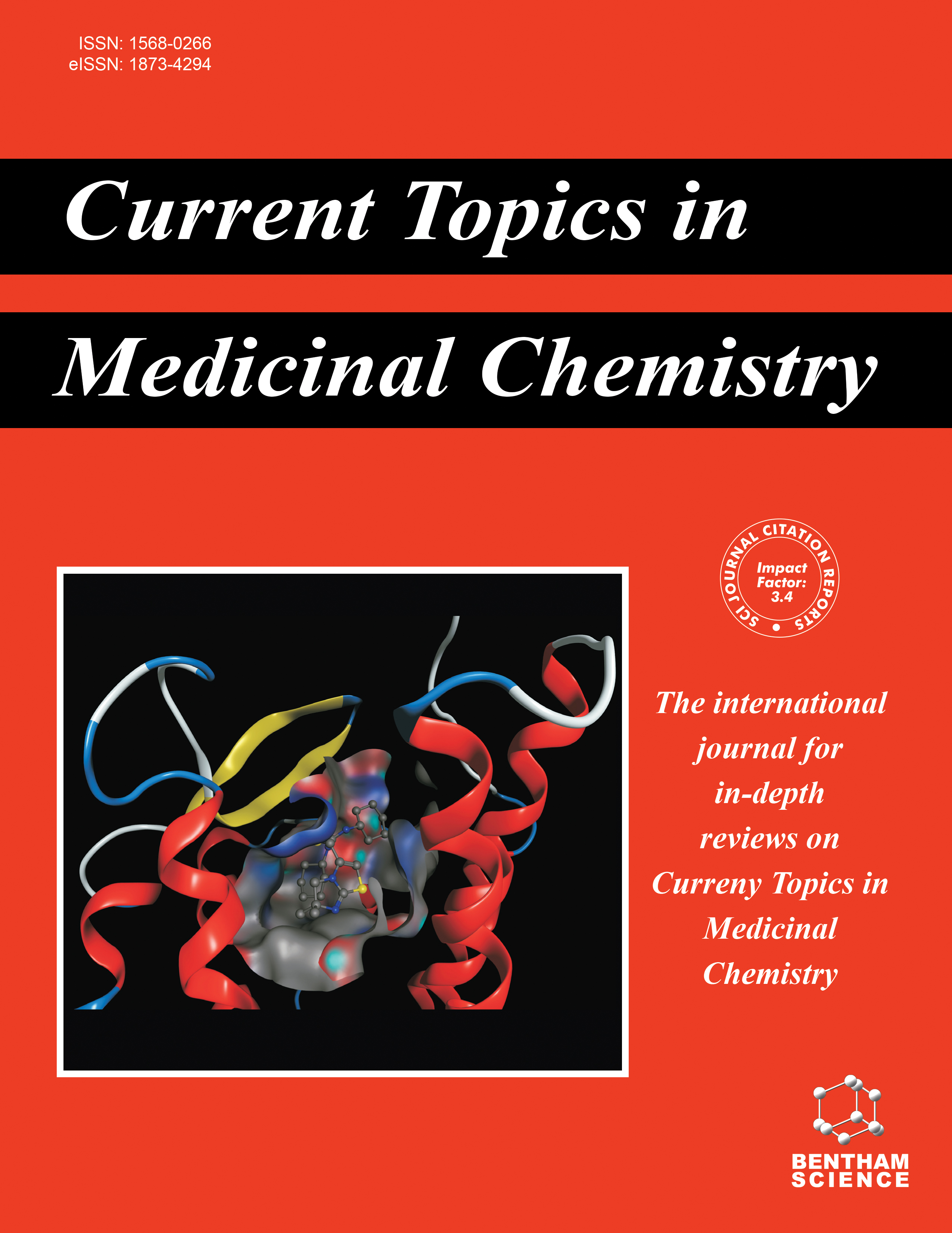
Volume 25, Issue 16, 2025
- Thematic Issue: Current Trends in Drug Discovery Based on Artificial Intelligence and Computer-aided Drug Design: Part II
-
-
-
Computer-aided Drug Discovery of Epigenetic Modulators in Dual-target Therapy of Multifactorial Diseases
More LessAuthors: Slavica Oljacic, Marija Popovic-Nikolic, Brankica Filipic, Zarko Gagic and Katarina NikolicNumerous studies suggest that common genetic and epigenetic factors such as p53, histone deacetylase (HDAC), brain-derived neurotrophic factor (BDNF), the (Ataxia Telangiectasia mutated) ATM gene, cyclin-dependent kinase 5 (CDK5), glycogen synthase kinase 3 (GSK3) and altered expression of microRNA (miRNA) play a crucial role in cancer and neurodegeneration. As there is growing evidence that epigenetic aberrations in cancer and neurological diseases lead to complex pathophysiological changes, the simultaneous targeting of epigenetic and other related pathways by dual-target inhibitors may contribute to the discovery of more effective and personalized therapeutic options. Computer-Aided Drug Design (CADD) provides comprehensive bioinformatic, chemoinformatic, and chemometric approaches for the design of novel chemotypes of epigenetic dual-target inhibitors, enabling efficient discovery of new drug candidates for innovative treatments of these multifactorial diseases. The detailed anticancer mechanisms by which the epigenetic dual-target inhibitors alter metastatic and tumorigenic properties, influence the tumor microenvironment, or regulate the immune response are also presented and discussed in the review. To improve our understanding of the pathogenesis of cancer and neurodegeneration, this review discusses novel therapeutic agents targeting different molecular mechanisms involved in these multifactorial diseases.
-
-
-
Application of Artificial Intelligence-Based Approaches in the Discovery and Development of Protein Kinase Inhibitors (PKIs) Targeting Anticancer Activity
More LessHerein, we present an in-depth review focused on the application of different artificial intelligence (AI) approaches for developing protein kinase inhibitors (PKIs) targeting anticancer activity, focusing on how the AI-based tools are making promising advances in drug design and development, by predicting active compounds for essential targets involved in cancer. In this context, the machine learning (ML) approach performs a critical role by promoting a fast analysis of a thousand potential inhibitors within a small gap of time by processing large datasets of chemical data, putting it at a higher level than other traditionally used methods for screening molecules. In general, AI-based screening of compounds reduces the time of the work and increases the chances of success in the end. Additionally, we have covered recent studies focused on the application of deep neural networks (DNNs) and quantitative structure-activity relationships (QSAR) to identify PKIs. Furthermore, the paper covers new AI-based methodologies for filtering or improving datasets of potential compounds or even targets, such as generative models for the creation of novel compounds and ML-based strategies to collect information from different databases, increasing the efficiency in drug design and development. Finally, this review highlights how AI-based tools are increasing and improving the field of PKIs targeting cancer, making them an alternative for the future in the medicinal chemistry field.
-
-
-
The Future of Medicine: AI and ML Driven Drug Discovery Advancements
More LessAuthors: Divya D. Patel, Ruchi S. Pathak, Kaushika S. Patel, Hardik G. Bhatt and Paresh K. PatelThe field of drug design has evolved from conventional approaches relying on empirical evidence to advanced approaches such as Computer-Aided Drug Design (CADD). It aids in intricate phases of drug discovery, such as target discovery, lead optimization, and clinical trials, establishing a safe, rapid, and cost-effective system. Structure based drug design (SBDD), Ligand based drug design (LBDD), and Pharmacophore modelling, being the most utilized techniques of CADD, play a major role in establishing the road map necessary for the discovery. Artificial intelligence (AI) and Machine learning (ML) have improved the field with the incorporation of big data and, thereby, enhancing the efficacy and accuracy of the CADD. Deep Learning (DL), a part of AI helps in processing complex and non-linear data and thereby decreases complexity, increases resource utilization and enhances drug-target interaction prediction. These approaches have revolutionized healthcare by enhancing diagnostic precision and predicting the behavior of drugs. Currently, AI/ML approach has become crucial for rapidly discovering novel insights and transforming healthcare areas lie diagnostics, clinical research, and critical care. In the case of the drug development area, techniques like PBPK modeling and advanced nano-QSAR enhance drug behavior understanding and predict nano material toxicity if any, leading to safe and effective therapeutic predictions and interventions. The advancement of AI/ML techniques will bring accuracy, efficacy, and more patient-tailored responses to the drug development field.
-
-
-
MHA-SVR: An Adaptive Soft Sensor Based on Feature Interaction for Ultrasonic Phytomedicine Extraction
More LessAuthors: Yuqi Yue, Zepeng Xue, Zhongyu Guo and Juan ChenIntroductionUltrasonic extraction is a crucial technique for isolating active compounds from phytomedicine. However, as a batch process characterized by non-linearity and small sample size, it poses substantial challenges for real-time and prediction of extraction rates during the extraction of phytomedicinal. This work proposes an adaptive soft sensor for ultrasonic phytomedicine extraction.
MethodsAn adaptive soft sensor based on an attention mechanism was first proposed. The attention mechanism calculates correlations between samples and assigns weights based on their similarity to the current query. Support vector regression (SVR) is then used to construct the soft sensor for extraction rate measurement. To further enhance sample information analysis, multi-head attention is employed. This allows the model to calculate the similarity between current queries and historical data across different feature spaces, thus improving the modeling capabilities of the intrinsic data structure. Finally, a dual-frequency ultrasonic extraction experiment of puerarin is designed and conducted. The experimental data is collected and labeled from different batches under varying initial extraction temperatures. This data is used to establish the soft sensor model and compare its performance.
Results and DiscussionThe experimental results indicate that the proposed MHA-SVR model improved the coefficient of determination (R2) by 5.12% compared to the mainstream model and reduced the online prediction time by 88% compared to the JITL-SVR model. This work performance well exceeds the others while maintaining good real-time capabilities for the dual-frequency ultrasonic extraction of puerarin.
ConclusionThe multi-head attention and SVR-integrated soft sensor method proposed in this study effectively addresses the soft measurement challenges in online monitoring of multi-batch ultrasonic extraction processes. This approach demonstrates significant enhancement in extraction yield detection accuracy across varying batches and diverse initial operating conditions, thereby providing a robust technical solution for real-time quantification of extraction efficiency in botanical material processing.
-
-
-
Review on the Phytochemistry and Pharmacological Potential of Saffron (Crocus sativus L.)
More LessAuthors: Sonia Singh and Khushi SharmaSaffron has been used in Chinese medicine for a very long time, dating back to 1979, when it was first brought inside of China. According to Traditional Chinese medicine, saffron has a sweet, moderately chilly character, and it has remarkable effects on the liver and heart systems. In addition, this spice stimulates blood circulation, removes blood stasis, reduces blood temperature, and eradicates heat-related toxins. The herb has been used to treat a variety of conditions, including pain, hemoptysis, asthma, phlegm, sleeplessness, depression, anxiety, and Alzheimer's disease. Saffron has over seventy different bioactive components, the most important of which are crocin, crocetin, and safranal. These three components are responsible for the distinctive color and flavor of saffron. This article briefly covers the phytochemistry and pharmacological potential of this uncommon herb.
-
-
-
Current Organoid Culture Systems in Pancreatic Cancer
More LessAuthors: Lei Liu, Jing Sun, Sheng Chen, Xuechan Tang, Shuai Zhang, Min Wang, Qian Yue, Changqing Zhong and Lianyong LiDespite advances in therapeutic regimens, Pancreatic Cancer (PC) still remains an aggressive malignancy characterized by high treatment resistance, mortality, and poor clinical outcome. Hence, there is an urgent need for more effective therapeutic methods to improve the survival of PC patients. Currently, organoid culture systems have emerged as a preclinical research model for studying cancer progression, biology, and treatment responses, bridging the translational gap between in vivo and in vitro models. This review summarized the common culture systems of PC organoids, paving the way for precision medicine in PC.
-
Volumes & issues
-
Volume 25 (2025)
-
Volume 24 (2024)
-
Volume 23 (2023)
-
Volume 22 (2022)
-
Volume 21 (2021)
-
Volume 20 (2020)
-
Volume 19 (2019)
-
Volume 18 (2018)
-
Volume 17 (2017)
-
Volume 16 (2016)
-
Volume 15 (2015)
-
Volume 14 (2014)
-
Volume 13 (2013)
-
Volume 12 (2012)
-
Volume 11 (2011)
-
Volume 10 (2010)
-
Volume 9 (2009)
-
Volume 8 (2008)
-
Volume 7 (2007)
-
Volume 6 (2006)
-
Volume 5 (2005)
-
Volume 4 (2004)
-
Volume 3 (2003)
-
Volume 2 (2002)
-
Volume 1 (2001)
Most Read This Month
