


Chiral Benzimidazoles and their Chemistry

- Authors: Minakshi1, Rashmi Pundeer2
-
View Affiliations Hide Affiliations1 Department of Chemistry, Indira Gandhi University, Meerpur, Rewari 122502, Haryana, India 2 Department of Chemistry, Indira Gandhi University, Meerpur, Rewari-122502, Haryana, India
- Source: The Role of Asymmetric Synthesis in Drug Discovery , pp 169-197
- Publication Date: December 2025
- Language: English


Chiral Benzimidazoles and their Chemistry, Page 1 of 1
< Previous page | Next page > /docserver/preview/fulltext/9798898812676/chapter-8-1.gif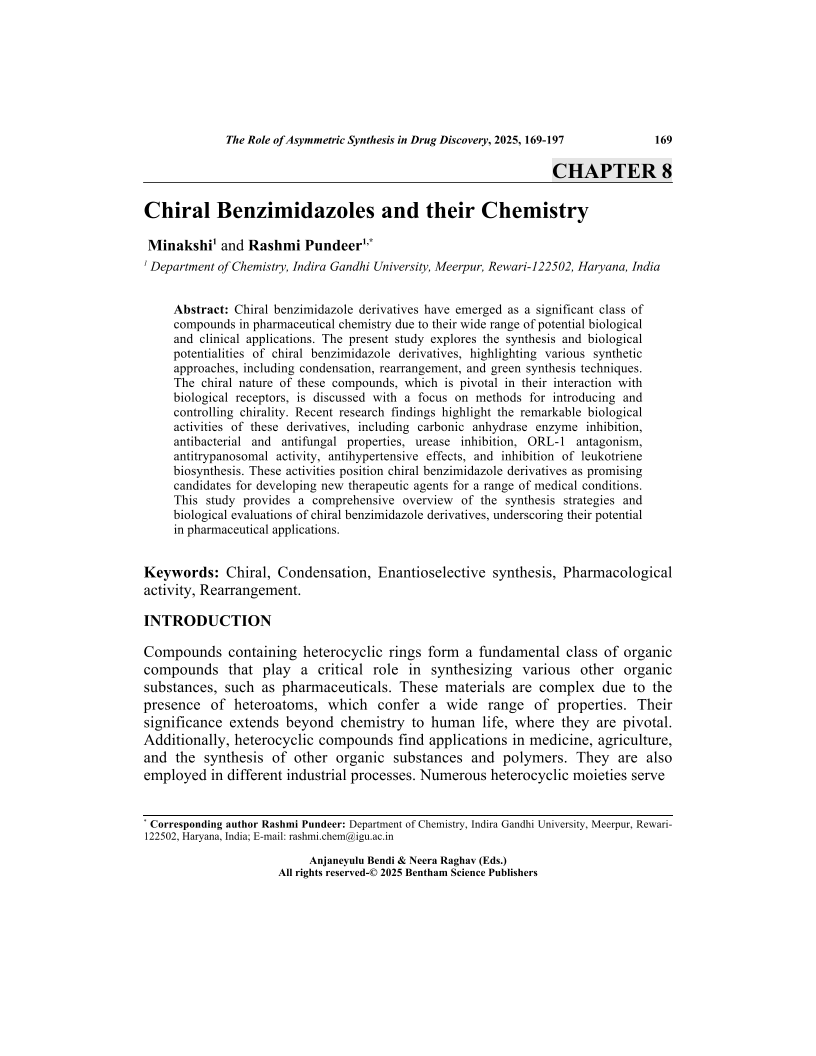
Chiral benzimidazole derivatives have emerged as a significant class of compounds in pharmaceutical chemistry due to their wide range of potential biological and clinical applications. The present study explores the synthesis and biological potentialities of chiral benzimidazole derivatives, highlighting various synthetic approaches, including condensation, rearrangement, and green synthesis techniques. The chiral nature of these compounds, which is pivotal in their interaction with biological receptors, is discussed with a focus on methods for introducing and controlling chirality. Recent research findings highlight the remarkable biological activities of these derivatives, including carbonic anhydrase enzyme inhibition, antibacterial and antifungal properties, urease inhibition, ORL-1 antagonism, antitrypanosomal activity, antihypertensive effects, and inhibition of leukotriene biosynthesis. These activities position chiral benzimidazole derivatives as promising candidates for developing new therapeutic agents for a range of medical conditions. This study provides a comprehensive overview of the synthesis strategies and biological evaluations of chiral benzimidazole derivatives, underscoring their potential in pharmaceutical applications.
-
From This Site
/content/books/9798898812676.chapter-8dcterms_subject,pub_keyword-contentType:Journal -contentType:Figure -contentType:Table -contentType:SupplementaryData105
