


Protocol for Inducing Ocular Hypertension in Mice Using Magnetic Microbeads
- Authors: Najam A. Sharif1, Saima Chaudhry2
-
View Affiliations Hide Affiliations1 Vice President and Head of Research & Development Nanoscope Therapeutics Inc., 2777 N. Stemmons Fwy, Suite 1102, Dallas, TX 75207, USA 2 Univ N. Texas at Arlington, 701 S Nedderman Dr, Arlington, TX-76019, USA
- Source: Research Protocols for Ophthalmic Disease Mechanisms and Therapeutics: Glaucoma - Ocular Hypertension , pp 303-310
- Publication Date: August 2025
- Language: English


Protocol for Inducing Ocular Hypertension in Mice Using Magnetic Microbeads, Page 1 of 1
< Previous page | Next page > /docserver/preview/fulltext/9789815324334/chapter-26-1.gif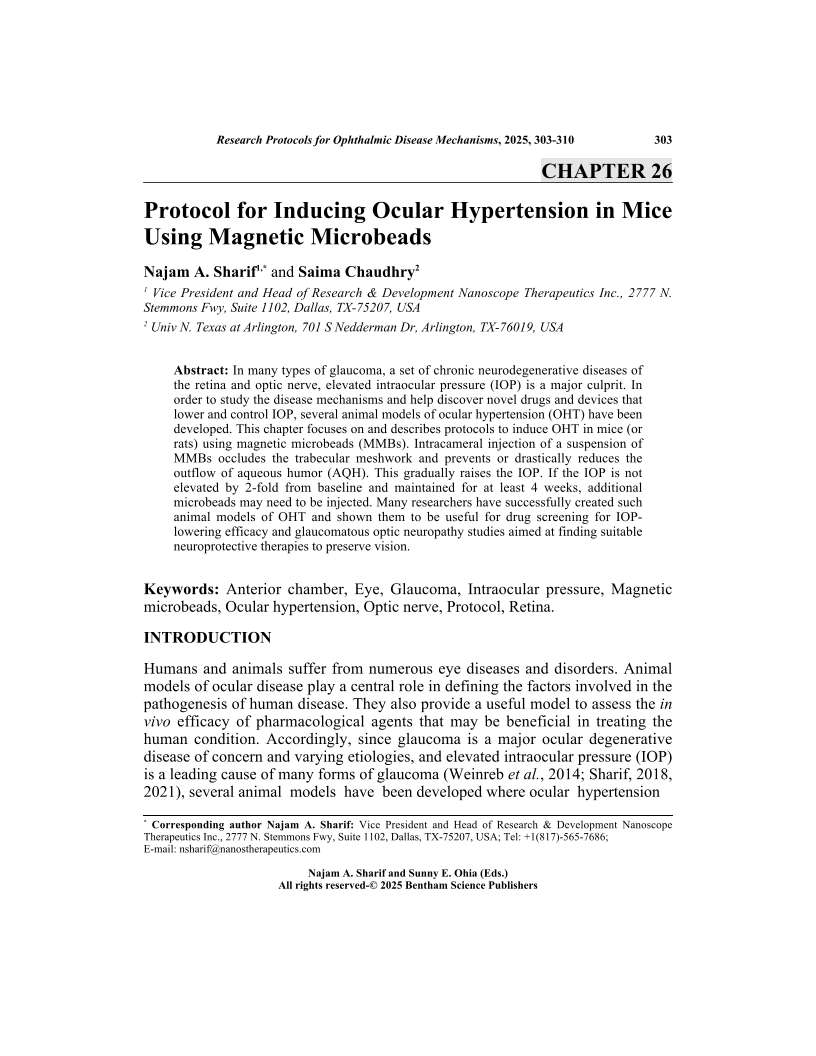
In many types of glaucoma, a set of chronic neurodegenerative diseases of the retina and optic nerve, elevated intraocular pressure (IOP) is a major culprit. In order to study the disease mechanisms and help discover novel drugs and devices that lower and control IOP, several animal models of ocular hypertension (OHT) have been developed. This chapter focuses on and describes protocols to induce OHT in mice (or rats) using magnetic microbeads (MMBs). Intracameral injection of a suspension of MMBs occludes the trabecular meshwork and prevents or drastically reduces the outflow of aqueous humor (AQH). This gradually raises the IOP. If the IOP is not elevated by 2-fold from baseline and maintained for at least 4 weeks, additional microbeads may need to be injected. Many researchers have successfully created such animal models of OHT and shown them to be useful for drug screening for IOPlowering efficacy and glaucomatous optic neuropathy studies aimed at finding suitable neuroprotective therapies to preserve vision.
-
From This Site
/content/books/9789815324334.chapter-26dcterms_subject,pub_keyword-contentType:Journal -contentType:Figure -contentType:Table -contentType:SupplementaryData105
