


The Contribution of Traditionally Used Medicinal Plants to Modern Medicine: An Update on the Successful Journey of Medicinal Plants of North East Africa
- Authors: Pankaj Barman1, Anupam Biswas2
-
View Affiliations Hide Affiliations1 Centre for Preclinical Studies, CSIR North East Institute of Science and Technology, Jorhat 785006, Assam, India 2 Centre for Preclinical Studies, CSIR-North East Institute of Science and Technology, Jorhat 785006, Assam, India
- Source: Traditional Medicine in North East Africa: Research on Traditional Healer Preparations and Herbs , pp 118-146
- Publication Date: April 2025
- Language: English


The Contribution of Traditionally Used Medicinal Plants to Modern Medicine: An Update on the Successful Journey of Medicinal Plants of North East Africa, Page 1 of 1
< Previous page | Next page > /docserver/preview/fulltext/9789815313178/chapter-6-1.gif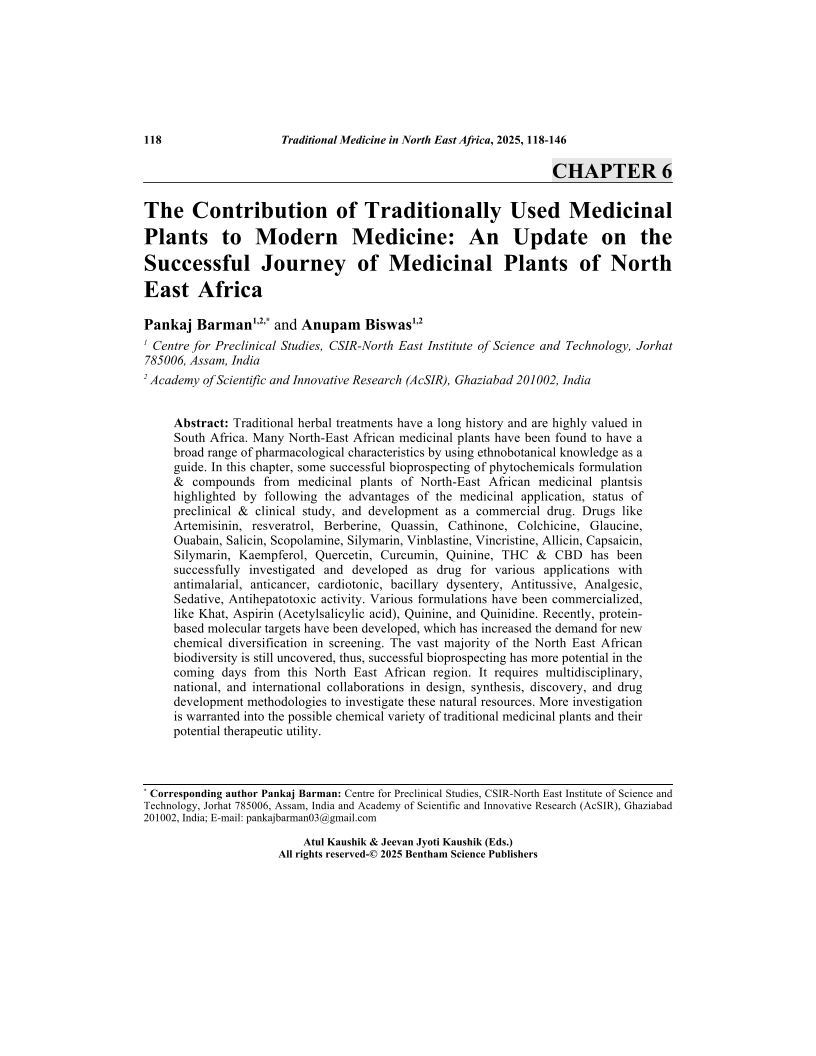
Traditional herbal treatments have a long history and are highly valued in South Africa. Many North-East African medicinal plants have been found to have a broad range of pharmacological characteristics by using ethnobotanical knowledge as a guide. In this chapter, some successful bioprospecting of phytochemicals formulation & compounds from medicinal plants of North-East African medicinal plantsis highlighted by following the advantages of the medicinal application, status of preclinical & clinical study, and development as a commercial drug. Drugs like Artemisinin, resveratrol, Berberine, Quassin, Cathinone, Colchicine, Glaucine, Ouabain, Salicin, Scopolamine, Silymarin, Vinblastine, Vincristine, Allicin, Capsaicin, Silymarin, Kaempferol, Quercetin, Curcumin, Quinine, THC & CBD has been successfully investigated and developed as drug for various applications with antimalarial, anticancer, cardiotonic, bacillary dysentery, Antitussive, Analgesic, Sedative, Antihepatotoxic activity. Various formulations have been commercialized, like Khat, Aspirin (Acetylsalicylic acid), Quinine, and Quinidine. Recently, proteinbased molecular targets have been developed, which has increased the demand for new chemical diversification in screening. The vast majority of the North East African biodiversity is still uncovered, thus, successful bioprospecting has more potential in the coming days from this North East African region. It requires multidisciplinary, national, and international collaborations in design, synthesis, discovery, and drug development methodologies to investigate these natural resources. More investigation is warranted into the possible chemical variety of traditional medicinal plants and their potential therapeutic utility.
-
From This Site
/content/books/9789815313178.chapter-6dcterms_subject,pub_keyword-contentType:Journal -contentType:Figure -contentType:Table -contentType:SupplementaryData105
