


Ethnomedicinal Plants used for Snakebite in Africa: A Comprehensive Study
- By Maneesha Singh1
-
View Affiliations Hide Affiliations1 School of Basic and Applied Sciences, Shri Guru Ram Rai University, Patel Nagar, Dehradun, India
- Source: Traditional Medicine in North East Africa: Research on Traditional Healer Preparations and Herbs , pp 65-82
- Publication Date: April 2025
- Language: English


Ethnomedicinal Plants used for Snakebite in Africa: A Comprehensive Study, Page 1 of 1
< Previous page | Next page > /docserver/preview/fulltext/9789815313178/chapter-4-1.gif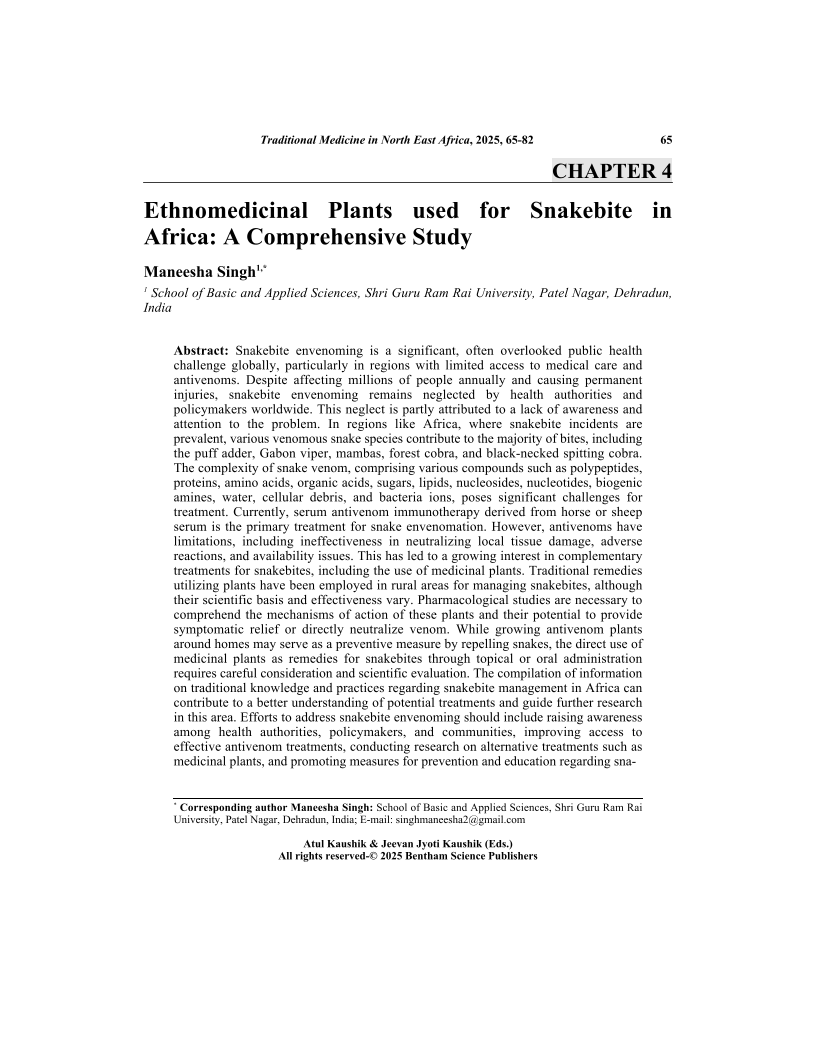
Snakebite envenoming is a significant, often overlooked public health challenge globally, particularly in regions with limited access to medical care and antivenoms. Despite affecting millions of people annually and causing permanent injuries, snakebite envenoming remains neglected by health authorities and policymakers worldwide. This neglect is partly attributed to a lack of awareness and attention to the problem. In regions like Africa, where snakebite incidents are prevalent, various venomous snake species contribute to the majority of bites, including the puff adder, Gabon viper, mambas, forest cobra, and black-necked spitting cobra. The complexity of snake venom, comprising various compounds such as polypeptides, proteins, amino acids, organic acids, sugars, lipids, nucleosides, nucleotides, biogenic amines, water, cellular debris, and bacteria ions, poses significant challenges for treatment. Currently, serum antivenom immunotherapy derived from horse or sheep serum is the primary treatment for snake envenomation. However, antivenoms have limitations, including ineffectiveness in neutralizing local tissue damage, adverse reactions, and availability issues. This has led to a growing interest in complementary treatments for snakebites, including the use of medicinal plants. Traditional remedies utilizing plants have been employed in rural areas for managing snakebites, although their scientific basis and effectiveness vary. Pharmacological studies are necessary to comprehend the mechanisms of action of these plants and their potential to provide symptomatic relief or directly neutralize venom. While growing antivenom plants around homes may serve as a preventive measure by repelling snakes, the direct use of medicinal plants as remedies for snakebites through topical or oral administration requires careful consideration and scientific evaluation. The compilation of information on traditional knowledge and practices regarding snakebite management in Africa can contribute to a better understanding of potential treatments and guide further research in this area. Efforts to address snakebite envenoming should include raising awareness among health authorities, policymakers, and communities, improving access to effective antivenom treatments, conducting research on alternative treatments such as medicinal plants, and promoting measures for prevention and education regarding snakebite prevention and management. Collaboration between local communities, healthcare professionals, researchers, and policymakers is crucial in addressing this neglected global health problem.
-
From This Site
/content/books/9789815313178.chapter-4dcterms_subject,pub_keyword-contentType:Journal -contentType:Figure -contentType:Table -contentType:SupplementaryData105
