


Algorithm Development for Computational Modeling and Simulation
- Authors: Nordina Syamira Mahamad Shabudin1, Ahmad Naqib Shuid2
-
View Affiliations Hide Affiliations1 Advanced Medical and Dental Institute (AMDI), University of Science Malaysia (USM), Kepala Batas, Penang, Malaysia 2 Advanced Medical and Dental Institute (AMDI), University of Science Malaysia (USM), Kepala Batas, Penang, Malaysia
- Source: Computational Modeling and Simulation in Biomedical Research , pp 40-75
- Publication Date: August 2024
- Language: English


Algorithm Development for Computational Modeling and Simulation, Page 1 of 1
< Previous page | Next page > /docserver/preview/fulltext/9789815165463/chapter-3-1.gif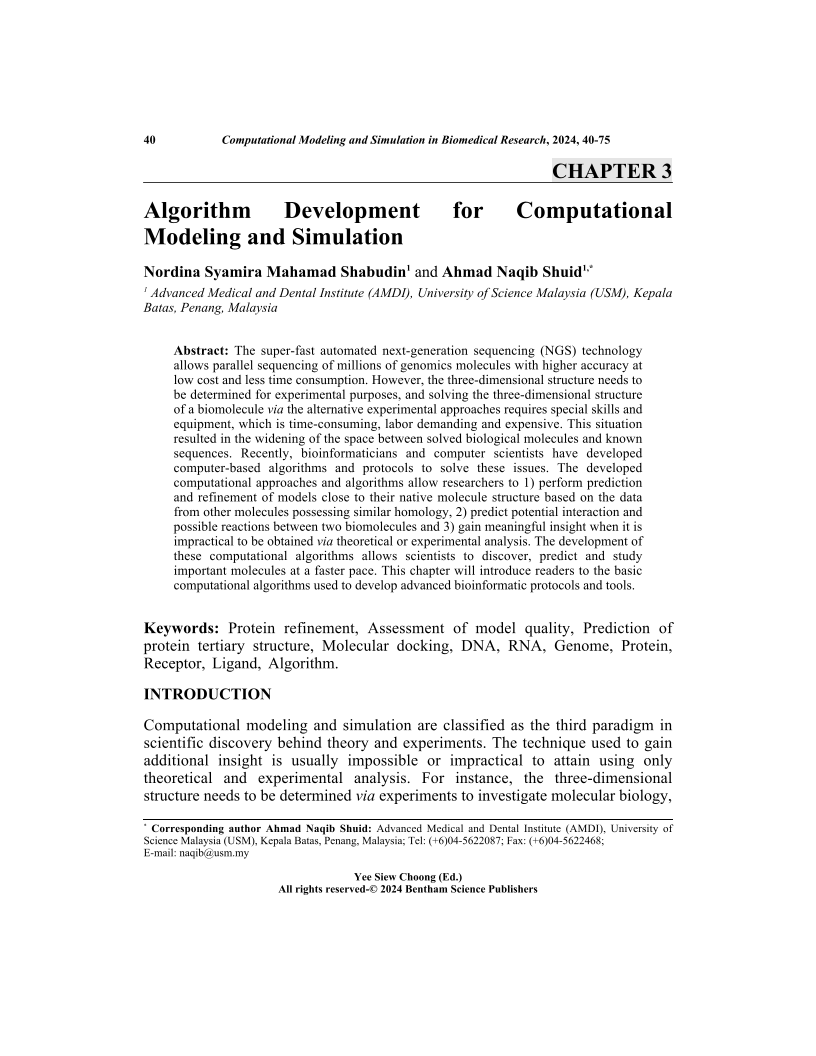
The super-fast automated next-generation sequencing (NGS) technology allows parallel sequencing of millions of genomics molecules with higher accuracy at low cost and less time consumption. However, the three-dimensional structure needs to be determined for experimental purposes, and solving the three-dimensional structure of a biomolecule via the alternative experimental approaches requires special skills and equipment, which is time-consuming, labor demanding and expensive. This situation resulted in the widening of the space between solved biological molecules and known sequences. Recently, bioinformaticians and computer scientists have developed computer-based algorithms and protocols to solve these issues. The developed computational approaches and algorithms allow researchers to 1) perform prediction and refinement of models close to their native molecule structure based on the data from other molecules possessing similar homology, 2) predict potential interaction and possible reactions between two biomolecules and 3) gain meaningful insight when it is impractical to be obtained via theoretical or experimental analysis. The development of these computational algorithms allows scientists to discover, predict and study important molecules at a faster pace. This chapter will introduce readers to the basic computational algorithms used to develop advanced bioinformatic protocols and tools.
-
From This Site
/content/books/9789815165463.chapter-3dcterms_subject,pub_keyword-contentType:Journal -contentType:Figure -contentType:Table -contentType:SupplementaryData105
