


Computational Analysis of Biological Data: Where Are We?

- Authors: Lilach Soreq1, Wael Mohamed2
-
View Affiliations Hide Affiliations1 Department of Molecular Neuroscience, UCL London's Global University, London, UK 2 Clinical Pharmacology Department, Menoufia University, Shebin El-Kom, Egypt
- Source: Computational Modeling and Simulation in Biomedical Research , pp 14-39
- Publication Date: August 2024
- Language: English


Computational Analysis of Biological Data: Where Are We?, Page 1 of 1
< Previous page | Next page > /docserver/preview/fulltext/9789815165463/chapter-2-1.gif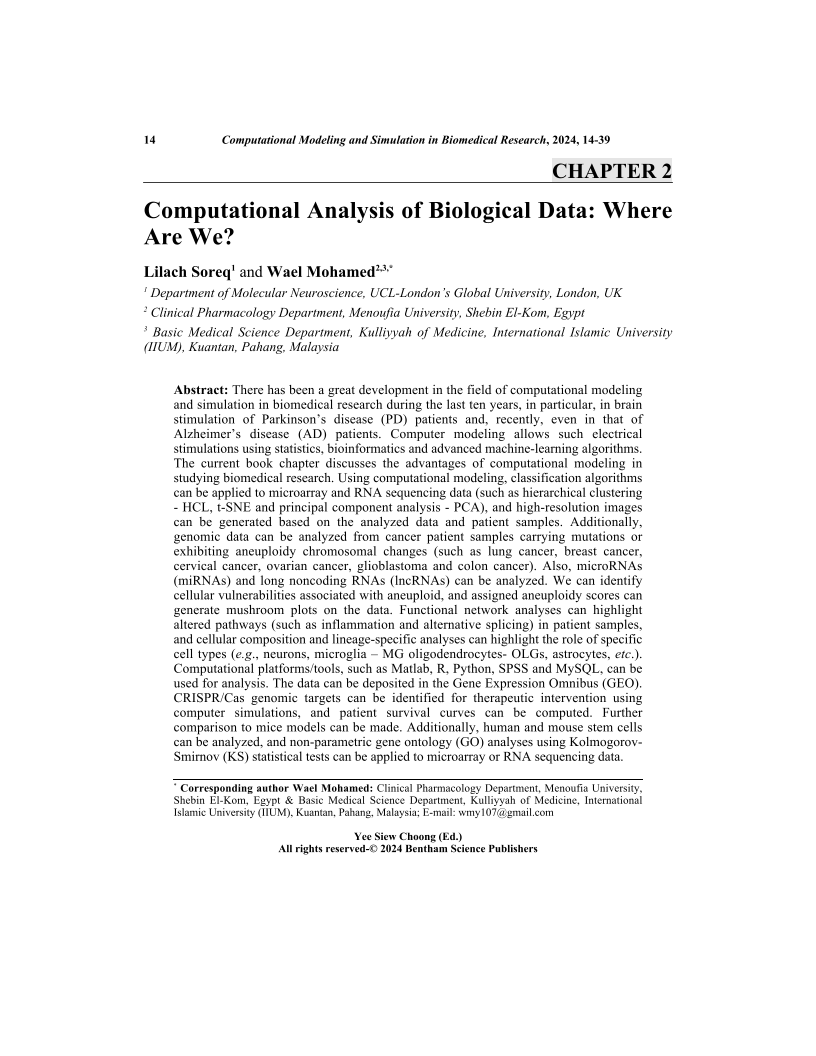
There has been a great development in the field of computational modeling and simulation in biomedical research during the last ten years, in particular, in brain stimulation of Parkinson's disease (PD) patients and, recently, even in that of Alzheimer's disease (AD) patients. Computer modeling allows such electrical stimulations using statistics, bioinformatics and advanced machine-learning algorithms. The current book chapter discusses the advantages of computational modeling in studying biomedical research. Using computational modeling, classification algorithms can be applied to microarray and RNA sequencing data (such as hierarchical clustering - HCL, t-SNE and principal component analysis - PCA), and high-resolution images can be generated based on the analyzed data and patient samples. Additionally, genomic data can be analyzed from cancer patient samples carrying mutations or exhibiting aneuploidy chromosomal changes (such as lung cancer, breast cancer, cervical cancer, ovarian cancer, glioblastoma and colon cancer). Also, microRNAs (miRNAs) and long noncoding RNAs (lncRNAs) can be analyzed. We can identify cellular vulnerabilities associated with aneuploid, and assigned aneuploidy scores can generate mushroom plots on the data. Functional network analyses can highlight altered pathways (such as inflammation and alternative splicing) in patient samples, and cellular composition and lineage-specific analyses can highlight the role of specific cell types (e.g., neurons, microglia MG oligodendrocytes- OLGs, astrocytes, etc.). Computational platforms/tools, such as Matlab, R, Python, SPSS and MySQL, can be used for analysis. The data can be deposited in the Gene Expression Omnibus (GEO). CRISPR/Cas genomic targets can be identified for therapeutic intervention using computer simulations, and patient survival curves can be computed. Further comparison to mice models can be made. Additionally, human and mouse stem cells can be analyzed, and non-parametric gene ontology (GO) analyses using KolmogorovSmirnov (KS) statistical tests can be applied to microarray or RNA sequencing data.
-
From This Site
/content/books/9789815165463.chapter-2dcterms_subject,pub_keyword-contentType:Journal -contentType:Figure -contentType:Table -contentType:SupplementaryData105
