


The Roles and Application of Protein Modeling in Biomedical Research
- Authors: Chong Lee Ng1, Tze Yin Lee2, Nur Naili Irsyada Binti Zulkfli3, Theam Soon Lim4, Yee Siew Choong5
-
View Affiliations Hide Affiliations1 Institute for Research in Molecular Medicine, Universiti Sains Malaysia, Minden, Penang, Malaysia 2 Institute for Research in Molecular Medicine, Universiti Sains Malaysia, Minden, Penang, Malaysia 3 Institute for Research in Molecular Medicine, Universiti Sains Malaysia, Minden, Penang, Malaysia 4 Institute for Research in Molecular Medicine, Universiti Sains Malaysia, Minden, Penang, Malaysia 5 Institute for Research in Molecular Medicine, Universiti Sains Malaysia, Minden, Penang, Malaysia
- Source: Computational Modeling and Simulation in Biomedical Research , pp 76-102
- Publication Date: August 2024
- Language: English


The Roles and Application of Protein Modeling in Biomedical Research, Page 1 of 1
< Previous page | Next page > /docserver/preview/fulltext/9789815165463/chapter-4-1.gif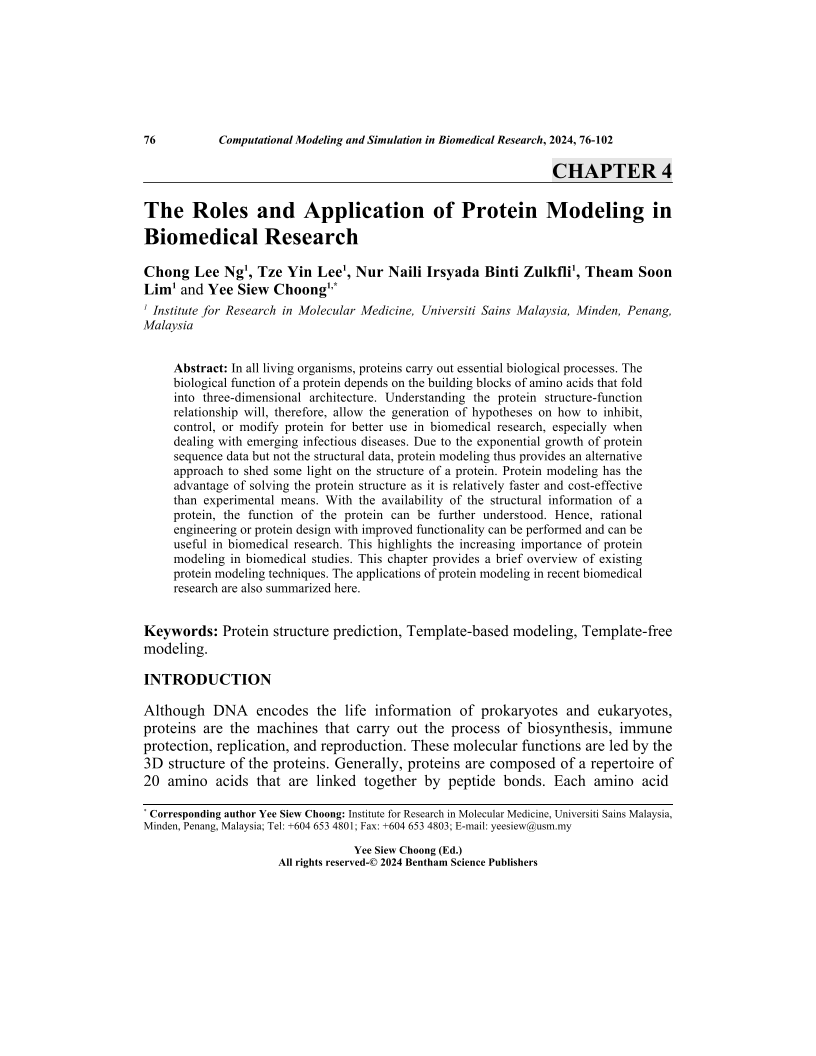
In all living organisms, proteins carry out essential biological processes. The biological function of a protein depends on the building blocks of amino acids that fold into three-dimensional architecture. Understanding the protein structure-function relationship will, therefore, allow the generation of hypotheses on how to inhibit, control, or modify protein for better use in biomedical research, especially when dealing with emerging infectious diseases. Due to the exponential growth of protein sequence data but not the structural data, protein modeling thus provides an alternative approach to shed some light on the structure of a protein. Protein modeling has the advantage of solving the protein structure as it is relatively faster and cost-effective than experimental means. With the availability of the structural information of a protein, the function of the protein can be further understood. Hence, rational engineering or protein design with improved functionality can be performed and can be useful in biomedical research. This highlights the increasing importance of protein modeling in biomedical studies. This chapter provides a brief overview of existing protein modeling techniques. The applications of protein modeling in recent biomedical research are also summarized here.
-
From This Site
/content/books/9789815165463.chapter-4dcterms_subject,pub_keyword-contentType:Journal -contentType:Figure -contentType:Table -contentType:SupplementaryData105
