Bentham Science Publishers
Bentham Science Publishers is a major publisher of more than 100 peer-reviewed science, technology and medical (STM) journals, along with a rapidly growing collection of eBooks. Since 1993, Bentham Science Publishers has been catering to the information needs of the pharmaceutical, engineering, biomedical and medical research community.221 - 240 of 1976 results
-
-
Applications of Ionic Liquids in the Oil Industry: Towards A Sustainable Industry
More LessThis book is a guide to the application of ionic liquids (ILs) in the oil industry. It includes ten chapters that review basic and advanced topics. Starting with a general introduction to IL structure and properties, the book comprehensively explains the use of ILs in key petroleum extraction processes such as pollutant removal, demulsification, crude oil transport and oil recovery. Additional applications that are important for the sustainability management of petrochemical operations such as deepwell hydrate inhibition, CO2 capture, corrosion engineering, catalysis, hydrocarbon separation, bitumen extraction and stabilization are also included. Each chapter also provides bibliographic references for further reading. The wide range of topics makes this an informative reference to students and professionals in petroleum engineering, chemical engineering programs and any other training course that requires reading material for an understanding of the oil industry. General readers and researchers interested in the fascinating chemistry of ionic liquids will also enjoy this book.
-
-
-

Applications of Modern High Performance Networks
More LessThis Ebook presents state-of-the-art solutions in applications of modern high performance networks. The topics covered in this Ebook include mobile ad-hoc networks, clusters for distance computing, clustering technologies and deployment, emerging wireless sensor network technologies, ultra wideband wireless sensor networks, and smart agriculture with sensor networks. This Ebook stands out from others in the field by bringing together the most diverse applications of networks under one title. It is aimed at academicians, students and working professionals in hospitals, agriculture, government, military, and networking technology fields.
-
-
-
Applications of Modern Mass Spectrometry: Volume 1
More LessApplications of Modern Mass Spectrometry covers the latest advances in the use of mass spectrometry in scientific research. The series attempts to present readers information on the broad range of mass spectrometry techniques and configurations, data analysis and practical applications. Each volume contains contributions from eminent researchers who present their findings in an easy to read format. The multidisciplinary nature of the works presented in each volume of this book series make it a valuable reference on mass spectrometry to academic researchers and industrial R&D specialists in applied sciences, biochemistry, life sciences and allied fields.
The first volume of the series presents 5 reviews:
- Applications of mass spectrometry for the determination of the microbial crude protein synthesis in ruminants
- Qualitative and quantitative LC-MS analysis in food proteins and peptides
- Chemometrics as a powerful and complementary tool for mass spectrometry applications in life sciences
- Recent developments of allied techniques of qualitative analysis of heavy metal ions in aqueous solutions with special reference to modern mass spectrometry
- New techniques and methods in explosive analysis
-
-
-
Applications of Modern Mass Spectrometry: Volume 2
More LessApplications of Modern Mass Spectrometry, Volume 2, covers the latest advances in mass spectrometry in scientific research. The series presents readers with information on the broad range of mass spectrometry techniques and configurations, data analysis, and practical applications. Each volume contains contributions from eminent researchers who present their findings in an easy-to-read format. The multidisciplinary nature of the works presented in each volume of this book series makes it a valuable reference on mass spectrometry to academic researchers and industrial R&D specialists in applied sciences, biochemistry, life sciences, and allied fields.
The second volume of the series presents 6 reviews: Ion Mobility-Mass Spectrometry for Macromolecule Analysis - Recent Advancements in Detection of Organic Contaminants in Wastewater Using Advanced Mass Spectrometry - Poisonous Substances in Tropical Medicinal and Edible Plants: Traditional Uses, Toxicology, and Characterization by Hyphenated Mass Spectrometry Techniques - LC-MS Analysis of Endogenous Neuropeptides from Tissues of Central Nervous System: An Overview - Advances in Structural Proteomics Using Mass Spectrometry and Recent Trends of Modern Mass Spectrometry: Application towards Drug Discovery and Development Process.
-
-
-
Applications of NMR Spectroscopy: Volume 1
More LessApplications of NMR Spectroscopy is an eBook series devoted to publishing the latest advances in the application of nuclear magnetic resonance (NMR) spectroscopy in practical situations. In the first volume of this eBook series, readers will find detailed NMR analysis on edible oils and lipid content in foods, the role of NMR spectroscopy in the human metabolomics and the diagnosis of autism related disorders, protein-protein interactions and NMR spectroscopy of chiral molecules.
-
-
-
Applications of NMR Spectroscopy: Volume 2
More LessApplications of NMR Spectroscopy is an eBook series devoted to publishing the latest advances in the application of nuclear magnetic resonance (NMR) spectroscopy in practical situations. The second volume of this eBook series features five chapters covering NMR spectroscopic analysis of plant polyphenols, the role of NMR spectroscopy in neuroradiology, NMR –based sensors, studies on protein and nucleic acid structure and function, and mathematical formations for NMR spectroscopy in structural biology.
-
-
-
Applications of NMR Spectroscopy: Volume 3
More LessApplications of NMR Spectroscopy is a book series devoted to publishing the latest advances in the applications of nuclear magnetic resonance (NMR) spectroscopy in various fields of organic chemistry, biochemistry, health and agriculture.
The third volume of this book series features six reviews covering structure-property relationship of polyphenols, NMR spectroscopy in breast cancer diagnosis, NMR methods in drug discovery and formulation, protein confirmation analysis using Fluorine NMR and NMR studies enaminones.
-
-
-
Applications of NMR Spectroscopy: Volume 4
Applications in Food Sciences
More LessApplications of NMR Spectroscopy is a book series devoted to publishing the latest advances in the applications of nuclear magnetic resonance (NMR) spectroscopy in various fields of organic chemistry, biochemistry, health and agriculture.
The fourth volume of the series features several reviews focusing on NMR spectroscopic techniques in food sciences. Readers will find references on methods used to test food quality, food color analysis, the role of Tannins in wine taste as well as NMR studies on lipid oxidation and large protein complexes.
-
-
-
Applications of NMR Spectroscopy: Volume 5
More LessApplications of NMR Spectroscopy is a book series devoted to publishing the latest advances in the applications of nuclear magnetic resonance (NMR) spectroscopy in various fields of organic chemistry, biochemistry, health and agriculture.
The fifth volume of the series features several reviews focusing on NMR spectroscopic techniques for identifying natural and synthetic compounds (polymer and peptide characterization, GABA in tinnitus affected mice), medical diagnosis and therapy (gliomas) and food analysis. The spectroscopic methods highlighted in this volume include high resolution proton magnetic resonance spectroscopy and solid state NMR.
-
-
-
Applications of NMR Spectroscopy: Volume 6
More LessApplications of NMR Spectroscopy is a book series devoted to publishing the latest advances in the applications of nuclear magnetic resonance (NMR) spectroscopy in various fields of organic chemistry, biochemistry, health and agriculture.
The sixth volume of the series features reviews focusing on NMR spectroscopic techniques for studying tautomerism, applications in medical diagnosis, in food chemistry and identifying secondary metabolites.
-
-
-
Applications of NMR Spectroscopy: Volume 7
More LessApplications of NMR Spectroscopy is a book series devoted to publishing the latest advances in the applications of nuclear magnetic resonance (NMR) spectroscopy in various fields of organic chemistry, biochemistry, health and agriculture.
The seventh volume of the series features six reviews focusing on NMR spectroscopic techniques for studying structures of protein complexes, metabolic profiling of gut bacteria, lipid digestion, lung disorders, and early cancer diagnosis, respectively.
-
-
-
Applications of NMR Spectroscopy: Volume 8
More LessApplications of NMR Spectroscopy is a book series devoted to publishing the latest advances in the applications of nuclear magnetic resonance (NMR) spectroscopy in various fields of organic chemistry, biochemistry, health and agriculture.
The eighth volume of the series features six reviews focusing on NMR spectroscopic techniques in food science, molecular biology and medical diagnosis. The reviews in this volume are:
- qNMR as a Tool for Determination of Six Common Sugars in Foods
- Correlation of VIP Scores and 1H NMR to Extract Information of Psychological Attention Tests Applied Before and After Coffee Intake
- NMR Spectroscopy for Probing the Structural Determinants of Aptamer Optimization and Riboswitch Engineering
- Applications of NMR Spectroscopy in Medical Diagnosis
- Applications of NMR Spectroscopy in Cancer Diagnosis
- NMR as a Tool for Exploring Protein Interactions and Dynamics
-
-
-
Applications of NMR Spectroscopy: Volume 9
More LessApplications of NMR Spectroscopy is a book series devoted to publishing the latest advances in the applications of nuclear magnetic resonance (NMR) spectroscopy in various fields of organic chemistry, biochemistry, health and agriculture.
The ninth volume of the series features reviews that highlight NMR spectroscopic techniques in microbiology, food science, pharmaceutical analysis and cancer diagnosis. The reviews in this volume are:
- NMR spectroscopy for the characterization of photoprotective compounds in cyanobacteria
- Coffee assessment using 1H NMR spectroscopy and multivariate data analysis: a review
- Evaluation of structure-property relationship of coconut shell lignins by NMR spectroscopy: from biorefinery to high-added value products
- Application of NMR spectroscopy in chiral recognition of drugs
- NMR-based metabolomics: general aspects and applications in cancer diagnosis
-
-
-
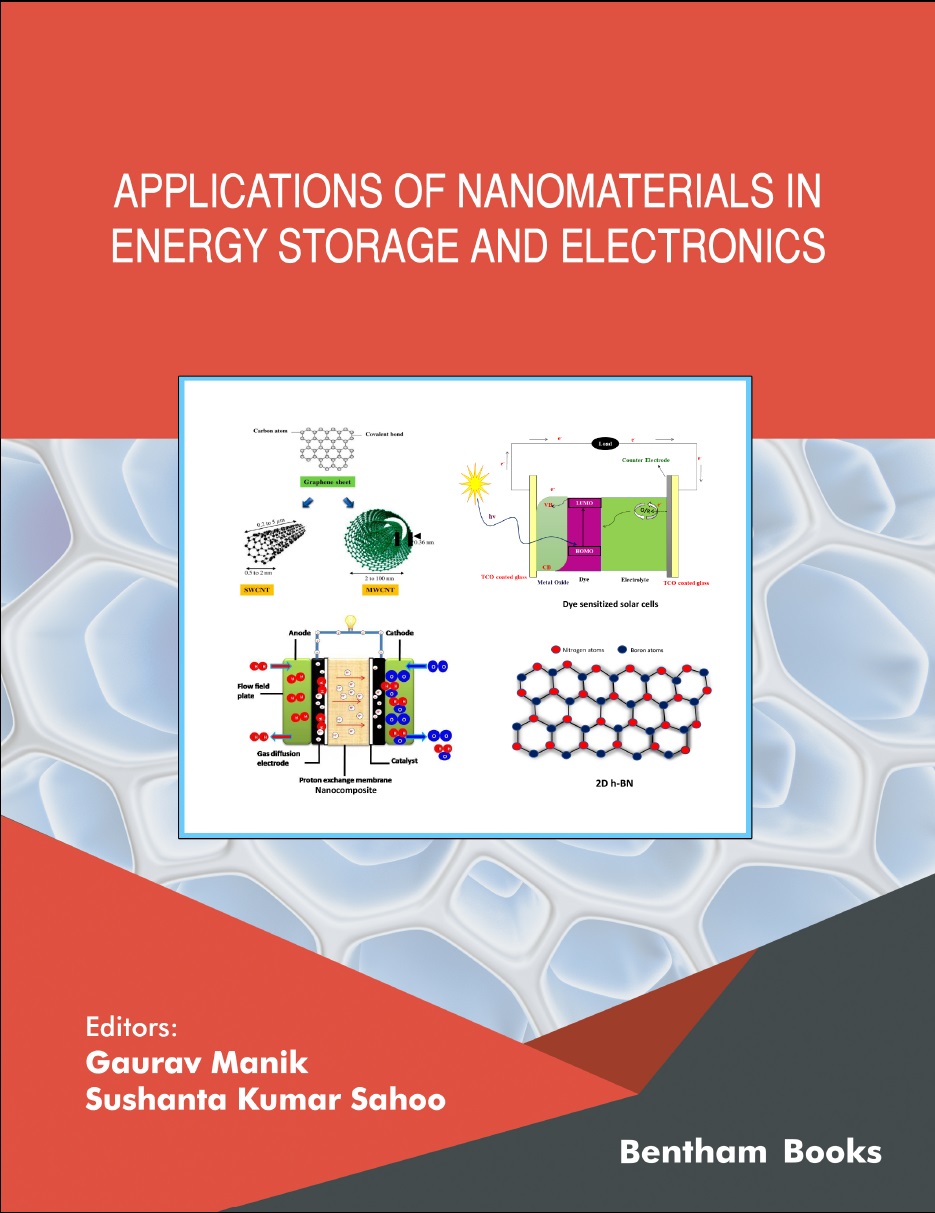
Applications of Nanomaterials in Energy Storage and Electronics
Current and Future Developments in Nanomaterials and Carbon Nanotubes: Volume 3
More LessThis volume describes recent advancements in the synthesis and applications of nanomaterials for energy harvesting and storage, and optoelectronics technology for next-generation devices.
This book consists of 15 chapters that cover a range of nanomaterials and the corresponding technologies.
The initial chapters summarize the recent progress in applications of nanomaterials like carbon nanotubes, metal oxides, and graphene oxides-based hybrids in solar energy harvesting using recent photovoltaic technologies. These chapters are followed by reviews on nanowires, graphene quantum dots, boron nitrides, carbon nano onions and metal organic frameworks leading to the fabrication of supercapacitors, bio-sensors, lithium-ion batteries and hydrogen storage applications. The final set of chapters cover the next generation fuel cells using polymer nanocomposites, ferroelectric liquid crystal nanocomposite and optoelectronic nanomaterials for optical memory and displays devices.
Key Features:
Describes the types of nanomaterials that are fundamental to energy storage and electronic systems. These materials include nanowires, graphene quantum dots, boron nitrides, carbon nano onions and metal organic frameworks (MOFs),
Covers the processes for nanomaterial synthesis
Reviews important photovoltaics applications of nanomaterials, including their use in energy storage, batteries and optoelectronic devices
Discusses the application of nanomaterials in electronics for sensing, bioelectronics, memory, nanocomposites for fuel cells, ferroelectric liquid crystal nanocomposites and optoelectronic nanomaterials for optical memory and displays
Provides references for further reading in every chapter The volume informs engineers, academic researchers, research scholars and graduate students working in the area of nanomaterials for energy generation, storage and optoelectronics.
-
-
-
Applications of Nanomaterials in Medical Procedures and Treatments
Frontiers in Nanomedicine: Volume 4
More LessApplications of Nanomaterials in Medical Procedures and Treatments is a primer to the industrial use of nanomaterials. It presents 8 chapters explaining the use of nanomaterials in clinical medicine. Basic to advanced concepts are explained with the guidance of specialists who present the principal techniques and methods to obtain high-performance polymers and composite materials.
The book starts with chapters on new contrast agents that help in molecular imaging, followed by chapters on prosthetics and artificial tissues. The next 3 chapters cover the applications of nanomaterials in the treatment of cancer and eye infections. This includes a chapter on innovative bioceramics with anticancer properties. The concluding chapters focus on biomedical device regulators and processing techniques for advanced materials.
This book is a primary reference book for undergraduate and graduate students as well as professors involved in multidisciplinary research and teaching programs.
-
-
-
Applications of Nanoparticles in Drug Delivery and Therapeutics
More LessApplications of Nanoparticles in Drug Delivery and Therapeutics is an authoritative review on nanoparticle-based drug delivery systems. This comprehensive volume focuses on the transformative role of nanoparticles in enhancing drug delivery systems and advancing therapeutic applications. By bridging the gap between laboratory research and clinical practice, this book offers a thorough exploration of how nanotechnology is revolutionizing the pharmaceutical industry.
The book is structured into well-organized chapters, each dedicated to a specific aspect of nanoparticle-based drug delivery and therapy. Initial chapters provide a foundational understanding of nanoparticle synthesis, characterization, and functionalization. Subsequent sections cover various types of nanoparticles, including liposomes, dendrimers, and polymeric nanoparticles, highlighting their unique properties and applications. The latter chapters delve into case studies and clinical trials, showcasing real-world applications and the therapeutic potential of nanoparticle technologies in treating diseases like cancer, cardiovascular disorders, and neurodegenerative diseases.
Key features of this book include detailed discussions on the design and optimization of nanoparticles for targeted drug delivery, insights into the regulatory and safety aspects of nanomedicine, and comprehensive reviews of current and emerging therapeutic applications. The book also offers practical guidance on the challenges and future directions in the field, making it an invaluable reference for researchers and practitioners alike.
Chapters 1 and 2 are based on the introduction of nanomaterials used as drug delivery systems, their manufacturing approaches and applications. Chapters 3 and 4 emphasize on the use of nanoparticles in medical diagnostics and in intervention devices. Chapters 5 and 6 illustrate the use of lipids-based nanoparticles in medical imaging and drug delivery. Chapter 7 specifically discusses amino acid functionalized inorganic nanoparticles in diagnostics. Chapter 8 is focused on the special class of nanoparticles “hybrid nanocomposites”. Chapters 9 and 10 covers the applications of silica and fullerene nanomaterials in anticancer drug delivery.
The book is intended as a resource for pharmaceutical scientists, biomedical researchers, and healthcare professionals keen on the latest advancements in drug delivery systems. It also serves as essential reading for graduate students and academics in pharmacology and medical courses that require learning about modern drug delivery systems.
-
-
-

Applications of Spreadsheets in Education The Amazing Power of a Simple Tool
More LessThis e-book is devoted to the use of spreadsheets in the service of education in a broad spectrum of disciplines: science, mathematics, engineering, business, and general education. The effort is aimed at collecting the works of prominent researchers and educators that make use of spreadsheets as a means to communicate concepts with high educational value. The e-book brings some of the most recent applications of spreadsheets in education and research to the fore. To offer the reader a broad overview of the diversity of applications, carefully chosen articles from engineering (power systems and control), mathematics (calculus, differential equations, and probability), science (physics and chemistry), and education are provided. Some of these applications make use of Visual Basic for Applications (VBA), a versatile computer language that further expands the functionality of spreadsheets.
The material included in this e-book should inspire readers to devise their own applications and enhance their teaching and/or learning experience.
-
-
-

Applicative Chemistry of Tanning Metallic Heterocomplexes
More LessThe chemistry of heterocomplex compounds is a fascinating field for experts in chemical synthesis and structural analysis, and for technologists specializing in leather processing. This volume describes the vast theoretical and practical possibilities of exploiting the action synergism of metals with different collagen cross-linking capacity. The possibility of reducing chromium content from leather tanning agents by replacing it with other tanning metals has significant environmental implications and minimum changes in terms of quality and production costs of natural leather, and is a viable alternative for a safe future. Applicative Chemistry of Tanning Metallic Heterocomplexes is a book dedicated to the synthesis and use of tanning metallic heterocomplexes in leather tanning as alternatives to tanning with basic chromium salts. Replacing chromium with other tanning metals is an innovative approach that exploits the possibility that a series of known disadvantages of tanning metals used individually be reduced by heterocomplexation. The synthesis mechanism of stable combinations of chromium with other tanning metals: aluminum, iron, titanium, or zirconium is based on the stoichiometry of oxidation-reduction reactions which enables a wide range of combinations, the premise for obtaining various properties by tanning and retanning natural leather. The volume is intended as a useful reference for researchers, chemical auxiliary producers, experts in natural leather processing who are looking for clean and efficient solutions for wastewater pollutants, sludge or solid wastes while striving to preserve the known characteristics of mineral tanned natural leather.
-
-
-
Applied Biomathematics For Nucleic Acid Chemistry and Protein Folding: Quantitative Simulations
More LessThis monograph research presents research in applied biomathematics carried out by the author at the beginning of this millennium. Monte Carlo simulations have been widely used by computational biologists to understand stochastics of living systems in biological matter. This work demonstrates how Monte Carlo simulations can help us to understand the nucleic acid structure, biophysics and chemistry. The author presents research on methods to understand aspects of the molecular dynamics of nucleic acids, DNA melting, evolutionary genetics, protein folding of Crambin and DNA vitrification. The book consists of five chapters and an appendix on the theoretical investigation on 10-12 potential of Hydrogen-Hydrogen covalent bond. Some of the previous research published in İnternational Journal of Modern Physics C and Modern Physics Letters B is extended for additional insight. Readers will find simple computer algorithms for hard mathematical physics problems such as mesoscopic, fractals, percolation, Metropolis algorithm and Langevin dynamics & many of which are also crucial to understanding experimental results of computer-aided drug discovery and cryopreservation. The author has taken care to explain calculations in a clear manner. All simulations have been conducted using Fortran (f77).
-