


CNS & Neurological Disorders - Drug Targets - Volume 22, Issue 7, 2023
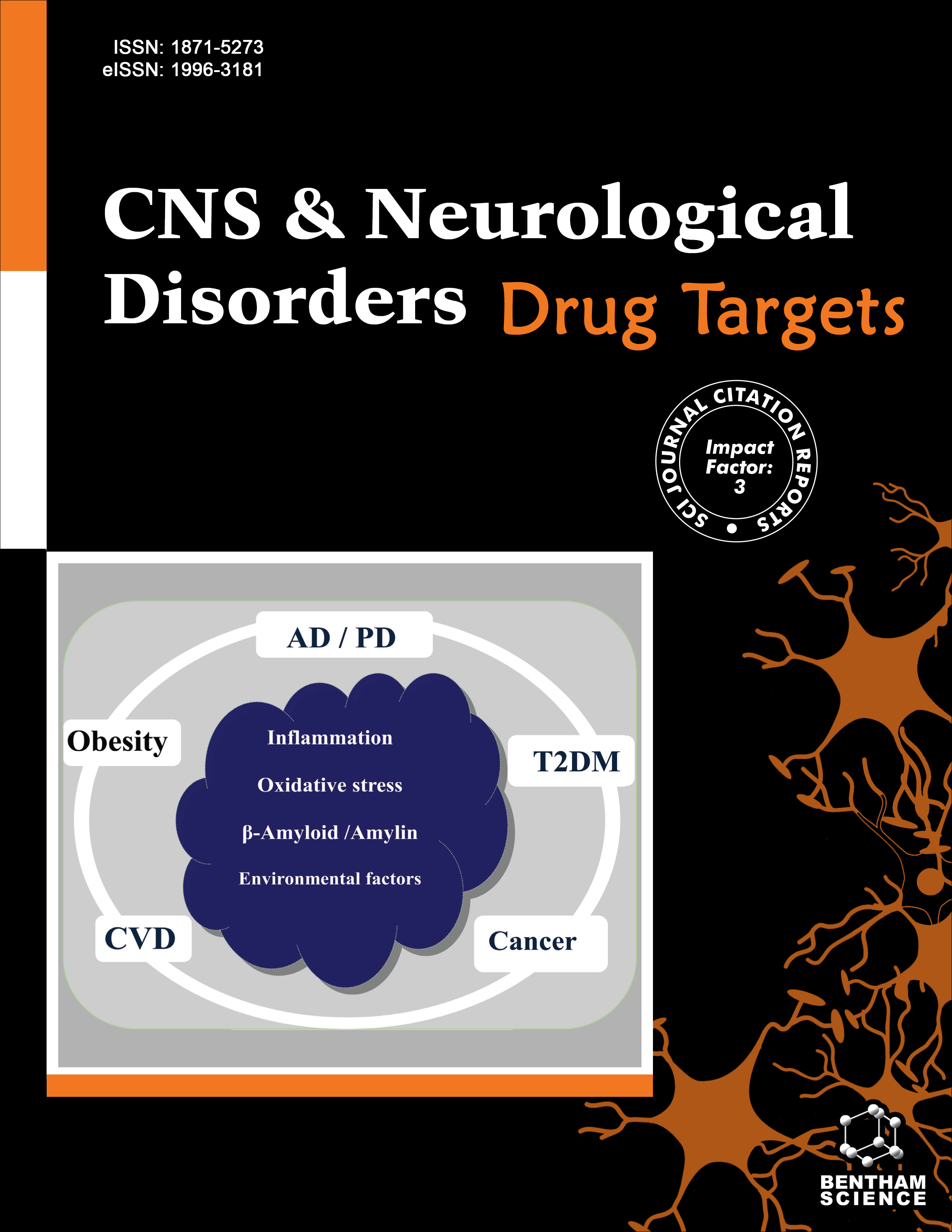
Volume 22, Issue 7, 2023
-
-
Elucidating the Role of Trauma and Significant Life Stress in the Disease of Addiction may Provide New Targets for Medication Development
More LessAuthors: Caroline E. Sagrera, Laura Alderman, M. F. Vest, Nicholas E. Goeders and Kevin S. MurnaneThe role of previous life stress and trauma in addiction has been understudied and underappreciated. To date, much previous research has emphasized other aspects of the disease of addiction, including the reward-based neural circuitry. While previous research has offered tremendous value and shaped human understanding of addiction, an increased emphasis on the role of stress and trauma in addiction may provide new targets for therapeutic development. Here, we review both clinical and preclinical literature in support of the hypothesis that addiction is largely initiated and driven by significant previous life stressors and traumas. We describe some of the available quantitative molecular in vitro studies, systematic literature reviews, case-control studies, and cross-sectional studies to summarize the neurobiology of the reward pathway, the influence of stress-related hormones on the brain, and the role of childhood trauma in the development of substance abuse. The current perspective highlights the importance of early intervention during stressful life events for the prevention of future addiction behavior and suggests that elucidating the neurobiology of these systems may provide new targets for medication development for addiction.
-
-
-
Application of Herbs and Dietary Supplements in ADHD Management
More LessAuthors: Rashmi Mallya, Beena Naik and Munira MominAttention Deficit Hyperactivity Disorder is a neurodevelopmental disorder, which is characterised by a distinct clinical pattern of inattention, hyperactivity as well as impulsivity, which in turn interferes with the day-to-day activities of the affected individual. Although conventional allopathic medications have been found to provide symptomatic relief, they are accompanied by a plethora of side effects that overshadow and outweigh the potential therapeutic benefits. Hence, various alternative approaches in the management of Attention Deficit Hyperactivity Disorder (ADHD) are actively being investigated. Over the past few decades, numerous studies have been initiated and have delved into potential alternative strategies in the treatment and management of ADHD. The primary focus of this article is to discuss the etiology, pathophysiology coupled with a financial background as well as alternative strategies in the treatment and management of ADHD. A review of the literature on the clinical trialson alternative treatment approaches for ADHD showed that, plants and dietary supplements have beneficial effects on ADHD management. But in-depth studies still need to be conducted because the trials reported till now have a smaller sample size and need to be scaled up to get a broader understanding and knowledge of the potential impact of alternative forms of natural treatment on the patient population with ADHD. Also, the manufacturer of the alternative formulations needs to develop effective protocols and processes for the safe, effective, and robust manufacturing of such natural remedies, which fall in line with the expectation of the FDA to gain regulatory clearance for its manufacturing and sale, which can lead to better therapeutic outcomes in patients.
-
-
-
Mechanistic and Etiological Similarities in Diabetes Mellitus and Alzheimer's Disease: Antidiabetic Drugs as Optimistic Therapeutics in Alzheimer's Disease
More LessAuthors: Subham Das, Anu K. Ramachandran, Debojyoti Halder, Saleem Akbar, Bahar Ahmed and Alex JosephBackground: Diabetes mellitus and Alzheimer's disease are two common diseases that majorly affect the elderly population. Patients in both cases are increasing day by day. They are considered two independent diseases, but recent evidence suggests that they have a lot in common. Objective: In this review, we focused on the connection between Alzheimer's disease and diabetes and highlighted the importance of antidiabetic drugs against Alzheimer's disease. Methods: Common pathways such as obesity, vascular diseases, oxidative stress, mitochondrial dysfunction, mutation of the ApoE4 gene, and Sirtuin gene were found to manipulate both diseases. Antidiabetic drugs are found to have promising effects on Alzheimer's disease, acting by reducing insulin resistance, neuronal protection, and reducing amyloid-beta plaques. Some anti-diabetic drugs have shown promising results in vivo and in vitro studies. Results: No review present focuses on the structural features of the antidiabetic molecules against Alzheimer's disease, their crosslinking pathophysiology, the role of natural bioactive molecules, in silico advancements followed by preclinical and clinical studies, and current advancements. Hence, we concentrated on the factors mentioned in the objectives. Conclusion: Alzheimer's disease can be considered a form of 'type-3 diabetes,' and repurposing the anti-diabetic drug will open up new paths of research in the field of Alzheimer's disease drug discovery.
-
-
-
Update on Oxytocin, Phosphodiesterase, Neurokinin, Glycine as a Therapeutic Approach in the Treatment of Schizophrenia
More LessBackground: Schizophrenia is a chronic psychiatric disorder characterized by disrupted thoughts, perception, mood, and behavior. It has a heterogeneous genetic and neurobiological background and affects about 0.5-1% of the adult population worldwide. Herein, we review the current approaches and advances in schizophrenia. The potential therapeutic compounds for the treatment of schizophrenia act on the oxytocin receptor, phosphodiesterase system, neurokinin receptor, and glycine transport 1 receptor. Therefore, this article provides an update on the pharmacology of different receptors in addition to the dopaminergic system. These findings would guide the readers on novel targets for schizophrenia with the potential to be therapeutic agents in the future. Objective: To provide the researchers an update on the emerging role of oxytocin, phosphodiesterase, neurokinin, and glycine which can be explored as potential pharmacotherapeutic targets in the treatment of schizophrenia. Methods: An extensive literature search was conducted using PubMed, Science Direct, and NCBI with the following keywords: schizophrenia, novel receptors, oxytocin, phosphodiesterase, neurokinin, and glycine. Furthermore, to provide insights into newer drug treatments for Schizophrenia, Furthermore, Clinicaltrials.gov website was searched for newer receptor-based drugs. Results: Current literature supported by preclinical and clinical provides substantial evidence that oxytocin, phosphodiesterase, neurokinin, and glycine play a crucial role in Schizophrenia. Conclusion: Our findings indicate that though multiple antipsychotic drugs are prescribed to treat schizophrenia, novel approaches and/or mechanisms are plausible. Moreover, sensitive and specific diagnostic tools and safe and effective interventions, including novel therapeutic agents, are required to yield substantially improved future outcomes.
-
-
-
Gut-Brain Axis and Neurological Disorders-How Microbiomes Affect our Mental Health
More LessThe gut microbiota is an essential part of the gastrointestinal tract and recent research, including clinical and preclinical studies, shed light on the interaction between the gut and the brain. A rising amount of evidence strongly proves the involvement of gut microbes in brain function and their contribution in altering behavior, mood, and ultimately in the pathogenesis of certain neurological conditions. The gut microbiota produces and modulates neurotransmitters such as GABA, serotonin, dopamine, glutamate, etc. Furthermore, there is a presence of a biological link between the microbiota, immune signaling, and CNS suggesting that microbial metabolites could regulate both neurological and immunological activities in the brain. Thus, this review focuses on the bidirectional communication between the gut and brain, its impact and role in the modulation of various neurological disorders, such as schizophrenia, depression, anxiety, etc., and attempts to explore the underlying mechanism for the same. The article also discusses studies involving germ-free mice, studies on the effects of faeces transfer of microbiota, and research involving gut microbiota composition in animal models. The effects of probiotics and prebiotics on neurological disorders are also discussed, along with the clinical studies for each of them. In a nutshell, extensive studies are required to explore this bidirectional communication between the gut and brain, which might help researchers develop new therapeutic targets in treating neurological disorders and increase our understanding of the gut-brain axis.
-
-
-
Neurorestoratology: New Advances in Clinical Therapy
More LessAuthors: Hongyun Huang, Hari S. Sharma, Lin Chen and Di ChenNeurorestorative treatments have been able to improve the quality of life for patients suffering from neurological diseases and damages since the concept of Neurorestoratology was proposed. The discipline of Neurorestoratology focuses on restoring impaired neurological functions and/or structures through varying neurorestorative mechanisms including neurostimulation or neuromodulation, neuroprotection, neuroplasticity, neuroreplacement, loop reconstruction, remyelination, immunoregulation, angiogenesis or revascularization, neuroregeneration or neurogenesis and others. The neurorestorative strategies of Neurorestoratology include all therapeutic methods which can restore dysfunctions for patients with neurological diseases and improve their quality of life. Neurorestoratology is different from regenerative medicine in the nervous system, which mainly focuses on the neuroregeneration. It also is different from Neurorehabilitation. Neurorestoratology and Neurorehabilitation share some functional recovering mechanisms, such as neuroplasticity, especially in the early phase of neurological diseases; but generally Neurorehabilitation mainly focuses on recovering neurological functions through making the best use of residual neurological functions, replacing lost neurological functions in the largest degree, and preventing and treating varying complications. Recently, there have been more advances in restoring damaged nerves by cell therapy, neurostimulation/neuromodulation and braincomputer interface (BCI), neurorestorative surgery, neurorestorative pharmaceutics, and other clinic strategies. Simultaneously related therapeutic guidelines and standards are set up in succession. Based on those advances, clinicians should consider injured and degenerated nervous disorders or diseases in the central nervous system as treatable or neurorestorative disorders. Extending and encouraging further neurorestorative explorations and achieving better clinical efficacy with stronger evidence regarding neurorestoratology will shed new light and discover superior benefits for patients with neurological disorders.
-
-
-
Amyloid Beta Peptide-Mediated Alterations in Mitochondrial Dynamics and its Implications for Alzheimer's Disease
More LessAlzheimer's disease (AD) is considered the most frequent neurodegenerative disorder worldwide, compromising cognitive function in patients, with an average incidence of 1-3% in the open population. Protein aggregation into amyloidogenic plaques and neurofibrillary tangles, as well as neurodegeneration in the hippocampal and cortical areas, represent the neuropathological hallmarks of this disorder. Mechanisms involved in neurodegeneration include protein misfolding, augmented apoptosis, disrupted molecular signaling pathways and axonal transport, oxidative stress, inflammation, and mitochondrial dysfunction, among others. It is precisely through a disrupted energy metabolism that neural cells trigger toxic mechanisms leading to cell death. In this regard, the study of mitochondrial dynamics constitutes a relevant topic to decipher the role of mitochondrial dysfunction in neurological disorders, especially when considering that amyloid-beta peptides can target mitochondria. Specifically, the amyloid beta (Aβ) peptide, known to accumulate in the brain of AD patients, has been shown to disrupt overall mitochondrial metabolism by impairing energy production, mitochondrial redox activity, and calcium homeostasis, thus highlighting its key role in the AD pathogenesis. In this work, we review and discuss recent evidence supporting the concept that mitochondrial dysfunction mediated by amyloid peptides contributes to the development of AD.
-
-
-
A Concise Review of Common Plant-derived Compounds as a Potential Therapy for Alzheimer's Disease and Parkinson's Disease: Insight into Structure-Activity-Relationship
More LessAlzheimer’s disease (AD) and Parkinson’s disease (PD) are the two most common neurological illnesses that affect people in their later years. Memory loss is the hallmark of Alzheimer’s disease, while dyskinesia, or loss of mobility, is associated with muscle rigidity and tremors in PD. Both diseases are unrelated, however, they do have a few similarities associated with extrapyramidal abnormalities, particularly stiffness, which has been linked to concomitant PD in many AD patients. Increased levels of IL-1, IL-6, and TNF in the AD and PD patients can be regarded as evidence of systemic inflammation associated with each of these neurodegenerative disorders. One of the primary variables in the progression of neurodegenerative disorders is oxidative stress. Many medicinal plants and their secondary metabolites have been claimed to be able to help people with neurodegenerative disorders like AD and PD. Anti-inflammatory, antioxidant, antiapoptotic, monoamine oxidase inhibition, acetylcholinesterase, and neurotrophic pursuits are among the major mechanisms identified by which phytochemicals exert their neuroprotective effects and potential maintenance of neurological health in old age. In regard to neurodegenerative disorders, numerable plant-based drugs like alkaloids, iridoids, terpenes, and flavones are employed for the treatment. Structure-activity relationships (SAR) and quantitative structure-activity relationships (QSAR) are used to investigate the link between bioactivity and the chemical configuration of substances. The SAR and QSAR of natural plant components employed in AD and PD are discussed in the current review.
-
-
-
Smartphone Addiction among Students and its Harmful Effects on Mental Health, Oxidative Stress, and Neurodegeneration towards Future Modulation of Anti-Addiction Therapies: A Comprehensive Survey based on SLR, Research Questions, and Network Visualization Techniques
More LessBackground: Addiction is always harmful to the human body. Smartphone addiction also affects students' mental and physical health. Aim: This study aims to determine the research volume conducted on students who are affected by smartphone addiction and design a database. We intended to highlight critical problems for future research. In addition, this paper enterprises a comprehensive and opinion-based image of smartphone-addicted students. Methodology: We used two types of methods, such as systematic literature review and research questions based on the Scopus database to complete this study. We found 27 research articles and 11885 subjects (mean ±SD: 440.19 ± 513.58) using the PRISMA technique in this study. Additionally, we have deeply investigated evidence to retrieve the current understanding of smartphone addiction from physical changes, mental changes, behavioural changes, impact on performance, and significant concepts. Furthermore, the effect of this addiction has been linked to cancers, oxidative stress, and neurodegenerative disorders. Results: This work has also revealed the future direction and research gap on smartphone addiction among students and has also tried to provide goals for upcoming research to be accomplished more significantly and scientifically. Conclusion: This study suggests future analysis towards identifying novel molecules and pathways for the treatment and decreasing the severity of mobile addiction.
-
-
-
The Potential Effect of Blueberry on Cognitive Health and Mood State based on Human Intervention Studies: Systematic Review and Mini Meta-Analysis
More LessBackground: Blueberries are known for their high content of several bioactive compounds, specifically anthocyanin, which are the most beneficial of the flavonoid family in terms of neuroprotection. Several human interventional studies have been conducted to assess the effects of blueberry intake on cognitive performance; however, the results of clinical trials are inconclusive. Therefore, this systematic review and meta-analysis evaluated the effect of blueberry supplementation on some aspects of cognitive performance and mood parameters using data from clinical trials based on existing evidence. Methods: Relevant studies, published in April 2021, were searched through PubMed/Medline, Scopus, Embase, and Google Scholar. The random effect size was used to estimate the pooled effect size. Heterogeneity between studies was evaluated by the Cochrane Q test and I-squared (I2). To detect the potential source of heterogeneity, a subgroup analysis was conducted. Results: Fourteenrandomized trials were included in the quantitative analysis, and six were pooled for statistical analysis. Blueberry intervention resulted in no significant change in mood state score (WMD = 0.03; 95% CI: -0.80 to 0.87, P = 0.16). Moreover, no significant effect of blueberry intake was shown in attention task reaction time (WMD = -1.50 ms; 95% CI: -24.75 to -21.75, P = 0.9), percentages of attention task accuracy (WMD = 0.85; 95% CI: -2.57 to 0.86, P = 0.3), one-back test accuracy (WMD = 0.03; 95% CI: -0.04 to 0.09, P = 0.4). Significant effect was indicated (WMD = 0.08; 95% CI: 0.02 to 0.13, P = 0.005) in two-back test accuracy. Conclusion: We found a significant effect of blueberry consumption on two-back test accuracy as a cognitive outcome. More high-quality clinical trials according to the challenges mentioned seem to indicate the use of blueberry as a supplement for cognitive and mood health efficiently.
-
-
-
Impact of Dimethylfumarate on Sleep in Multiple Sclerosis Patients: An Actigraphic Study
More LessBackground: Sleep disorders in multiple sclerosis (MS) patients are common. Dimethylfumarate is an oral disease-modifying drug (DMT), whose impact on sleep is unknown. Objective: The aim of this study was to characterize actigraphic patterns in MS patients treated with dimethylfumarate. Methods: Twenty relapsing-remitting MS patients with low to a mild disability, aged 20-50y, treated with dimethylfumarate for more than 6 months, were enrolled. All subjects had no history of sleep disorders. Actigraphy was used to study sleep patterns during a seven-day period. Sleep quality was assessed by the Pittsburgh Sleep Quality Index (PSQI). Twenty healthy subjects served as controls. Results: Our results showed statistically significant differences between some actigraphic patterns in MS patients treated with dimethylfumarate and healthy subjects, but the values for patients were still within normal limits. PSQI score was higher in MS patients compared to controls. Conclusion: Our findings suggest that dimethylfumarate, an oral DMT with a favourable benefit-risk profile, does not strongly alter sleep patterns in MS patients with low to mild disability and with no history of sleep disorders. Actigraphy is a simple diagnostic tool, able to support an objective measure of sleep parameters. The simplicity of application may allow considering its use for a screening of sleep disorders in MS patients.
-
-
-
Na+/HCO3− Co-transporters Inhibitor S0859 Attenuates Global Cerebral Ischemia-reperfusion Injury of the CA1 Neurons in the Gerbil's Hippocampus
More LessAuthors: Meng Jia, Qian Zhang, Xi Guo, Ru Liu, Sha Liu, Nanyu Chen, Yunfu Wang, Qun Wang, Jianping Wu and Susan L. CampbellBackground: Metabolic acidosis plays a key role in transient global cerebral ischemiareperfusion (I/R) induced delayed neuronal death (DND) of the hippocampal CA1 region of gerbils. Na+ coupled HCO3 - transporters (NBCs) mediated Na+/HCO3− - co-transportation can be activated by the pH gradient of intracellular and extracellular environments induced by acidosis. However, whether NBCs are activated and involved in I/R-induced neuronal injury is unknown. Objective: In this work, we studied neuronal apoptosis, astrocyte activation, and hippocampusdependent memory task using a well-established transient global cerebral I/R model of gerbils and investigated whether the specific NBCs inhibitor S0859 could reverse this injury. Methods: To explore the role of S0859 in I/R-induced DND, we established a transient global cerebral I/R model of Mongolian gerbils and studied neuronal apoptosis by using Nissl stain and TUNEL assay. The excitability and NBCs current were analyzed by whole-cell patch-clamp, while the cognitive function was evaluated by Barnes maze. Results: We found that I/R increased the NBCs current, inhibited the excitability of CA1 neurons, and led to apoptosis in CA1 neurons. Selective NBCs inhibitor S0859 protected CA1 neurons from I/R induced neuronal cell death, astrocyte accumulation, and spatial memory impairment. Conclusion: These findings indicate that NBCs mediate transient global cerebral I/R induced DND of CA1 neurons, and NBCs inhibitors could be a promising target to protect neuronal functions after I/R.
-
-
-
Bis-iodine-labeled Curcumin as a Potential CT Imaging Agent for β-amyloid Plaques in the Brain
More LessAuthors: Yaqian Dai, Liduo Peng, Xiaoyan Tian, Xingwang Wu, Yuanhong Xu, Taoshan Jiang and Jinping QiaoBackground: Alzheimer's disease (AD) is one of the most common causes of dementia, affecting many old people. Objectives: By designing and synthesizing intracerebral imaging probes, we tried to provide a new solution for the early diagnosis of AD. Methods: We designed and synthesized bis-iodine-labeled curcumin, and verified its performance through in vivo and in vitro experiments. Results: In this study, bis-iodine-labeled curcumin (7, BICUR) was synthesized. In the in vitro mass spectrum binding assay, Kd values of BICUR with Aβ1-40 and Aβ1-42 aggregates were 46.29 nM and 64.29 nM, respectively. Aβ plaques in AD brain adjacent sections were positively stained by BICUR, which was similar to some other curcumin derivatives. The Log P value of BICUR was 1.45. In the biodistribution experiment, BICUR showed the highest initial brain uptake (5.87% compared to the blood concentration) two minutes after the tail vein injection and rapid clearance from the mouse brain. In the acute toxicity experiment, BICUR showed low toxicity, and the LD50 was >100 mg/kg. Moreover, BICUR showed a high stability in vitro (86.68% unchanged BICUR after incubation for 120min in mouse brain homogenate). Besides, BICUR produced an enhanced CT imaging effect that could be sensitively detected in vitro, but it also showed an obvious differentiation from surrounding tissues after intracerebral injection. Conclusion: All results suggested that BICUR could probably act as a targeted CT imaging agent for Aβ plaques in the brain.
-
Volumes & issues
-
Volume 25 (2026)
-
Volume 24 (2025)
-
Volume 23 (2024)
-
Volume 22 (2023)
-
Volume 21 (2022)
-
Volume 20 (2021)
-
Volume 19 (2020)
-
Volume 18 (2019)
-
Volume 17 (2018)
-
Volume 16 (2017)
-
Volume 15 (2016)
-
Volume 14 (2015)
-
Volume 13 (2014)
-
Volume 12 (2013)
-
Volume 11 (2012)
-
Volume 10 (2011)
-
Volume 9 (2010)
-
Volume 8 (2009)
-
Volume 7 (2008)
-
Volume 6 (2007)
-
Volume 5 (2006)
Most Read This Month

Most Cited Most Cited RSS feed
-
-
A Retrospective, Multi-Center Cohort Study Evaluating the Severity- Related Effects of Cerebrolysin Treatment on Clinical Outcomes in Traumatic Brain Injury
Authors: Dafin F. Muresanu, Alexandru V. Ciurea, Radu M. Gorgan, Eva Gheorghita, Stefan I. Florian, Horatiu Stan, Alin Blaga, Nicolai Ianovici, Stefan M. Iencean, Dana Turliuc, Horia B. Davidescu, Cornel Mihalache, Felix M. Brehar, Anca . S. Mihaescu, Dinu C. Mardare, Aurelian Anghelescu, Carmen Chiparus, Magdalena Lapadat, Viorel Pruna, Dumitru Mohan, Constantin Costea, Daniel Costea, Claudiu Palade, Narcisa Bucur, Jesus Figueroa and Anton Alvarez
-
-
-
- More Less