


Secondary Plant Metabolites and their Role in Celiac Disease Management.
- Authors: Himanshu Gandhi1, Rupali Rana2, Pragya Sharma3, Varun Singh4, Samar Vihal5
-
View Affiliations Hide Affiliations1 Department of Pharmaceutics, School of Pharmaceutical Sciences, Shoolini University, Solan 173212, Himachal Pradesh, India 2 Department of Pharmaceutical Sciences, Guru Nanak Dev University, Amritsar, Punjab, India 3 Department of Pharmaceutical Chemistry, Amity Institute of Pharmacy, Amity University, Jaipur 302001, Rajasthan, India 4 Department of Pharmaceutical Sciences, Guru Nanak Dev University, Amritsar, Punjab, India 5 School of Pharmaceutical Sciences, KC Institute of Pharmaceutical Sciences, Pandoga, Una, Himachal Pradesh, India
- Source: Autoimmune Disorders and Secondary Plant Metabolites (Part 2) , pp 193-218
- Publication Date: December 2025
- Language: English


Secondary Plant Metabolites and their Role in Celiac Disease Management., Page 1 of 1
< Previous page | Next page > /docserver/preview/fulltext/9798898812799/chapter-7-1.gif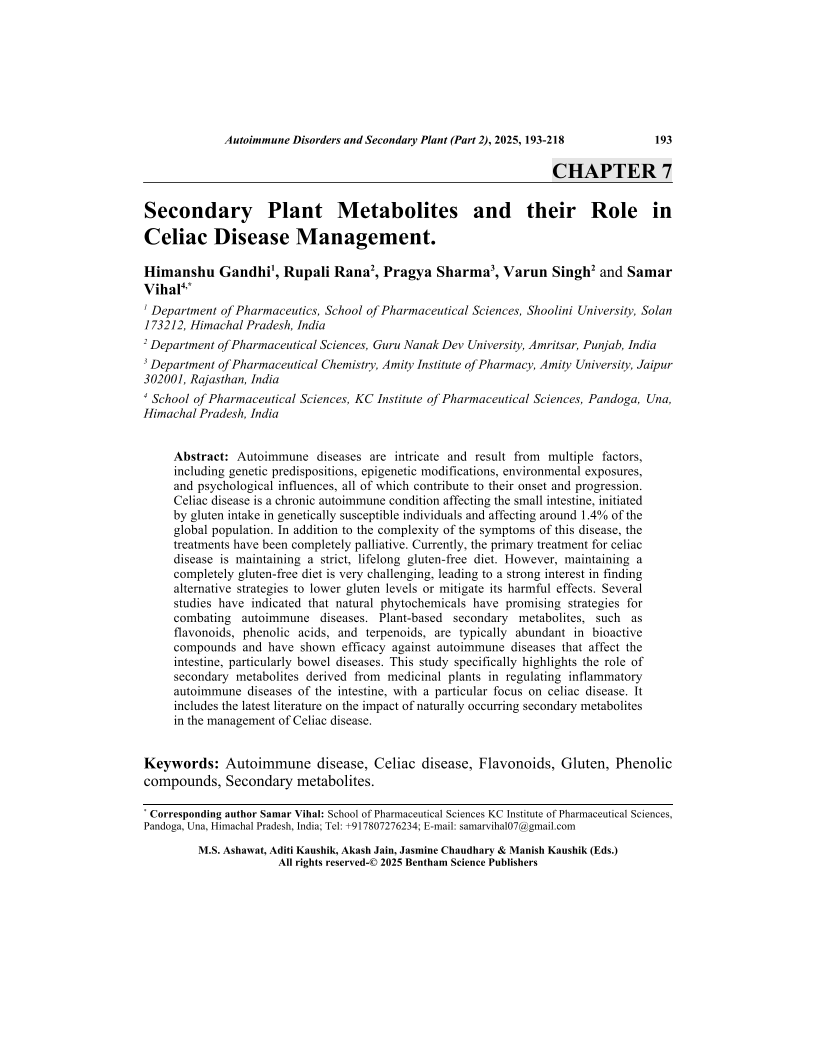
Autoimmune diseases are intricate and result from multiple factors, including genetic predispositions, epigenetic modifications, environmental exposures, and psychological influences, all of which contribute to their onset and progression. Celiac disease is a chronic autoimmune condition affecting the small intestine, initiated by gluten intake in genetically susceptible individuals and affecting around 1.4% of the global population. In addition to the complexity of the symptoms of this disease, the treatments have been completely palliative. Currently, the primary treatment for celiac disease is maintaining a strict, lifelong gluten-free diet. However, maintaining a completely gluten-free diet is very challenging, leading to a strong interest in finding alternative strategies to lower gluten levels or mitigate its harmful effects. Several studies have indicated that natural phytochemicals have promising strategies for combating autoimmune diseases. Plant-based secondary metabolites, such as flavonoids, phenolic acids, and terpenoids, are typically abundant in bioactive compounds and have shown efficacy against autoimmune diseases that affect the intestine, particularly bowel diseases. This study specifically highlights the role of secondary metabolites derived from medicinal plants in regulating inflammatory autoimmune diseases of the intestine, with a particular focus on celiac disease. It includes the latest literature on the impact of naturally occurring secondary metabolites in the management of Celiac disease.
-
From This Site
/content/books/9798898812799.chapter-7dcterms_subject,pub_keyword-contentType:Journal -contentType:Figure -contentType:Table -contentType:SupplementaryData105
