


Malaria: State of the Art and New Perspectives
- Authors: Samyak Bajaj1, Akankcha Gupta2, Priyanshu Nema3, Mitali Mishra4, Sushil Kumar Kashaw5
-
View Affiliations Hide Affiliations1 Integrated Drug Discovery Research Laboratory, Department of Pharmaceutical Sciences, Dr. Harisingh Gour University (A Central University), Sagar (MP), India 2 Integrated Drug Discovery Research Laboratory, Department of Pharmaceutical Sciences, Dr. Harisingh Gour University (A Central University), Sagar (MP), India 3 Integrated Drug Discovery Research Laboratory, Department of Pharmaceutical Sciences, Dr. Harisingh Gour University (A Central University), Sagar (MP), India 4 Integrated Drug Discovery Research Laboratory, Department of Pharmaceutical Sciences, Dr. Harisingh Gour University (A Central University), Sagar (MP), India 5 Integrated Drug Discovery Research Laboratory, Department of Pharmaceutical Sciences, Dr. Harisingh Gour University (A Central University), Sagar (MP), India
- Source: Advances in the Medicinal Chemistry of Neglected Tropical Disease and Related Infectious Diseases , pp 227-267
- Publication Date: August 2025
- Language: English


Malaria: State of the Art and New Perspectives, Page 1 of 1
< Previous page | Next page > /docserver/preview/fulltext/9789815324785/chapter-7-1.gif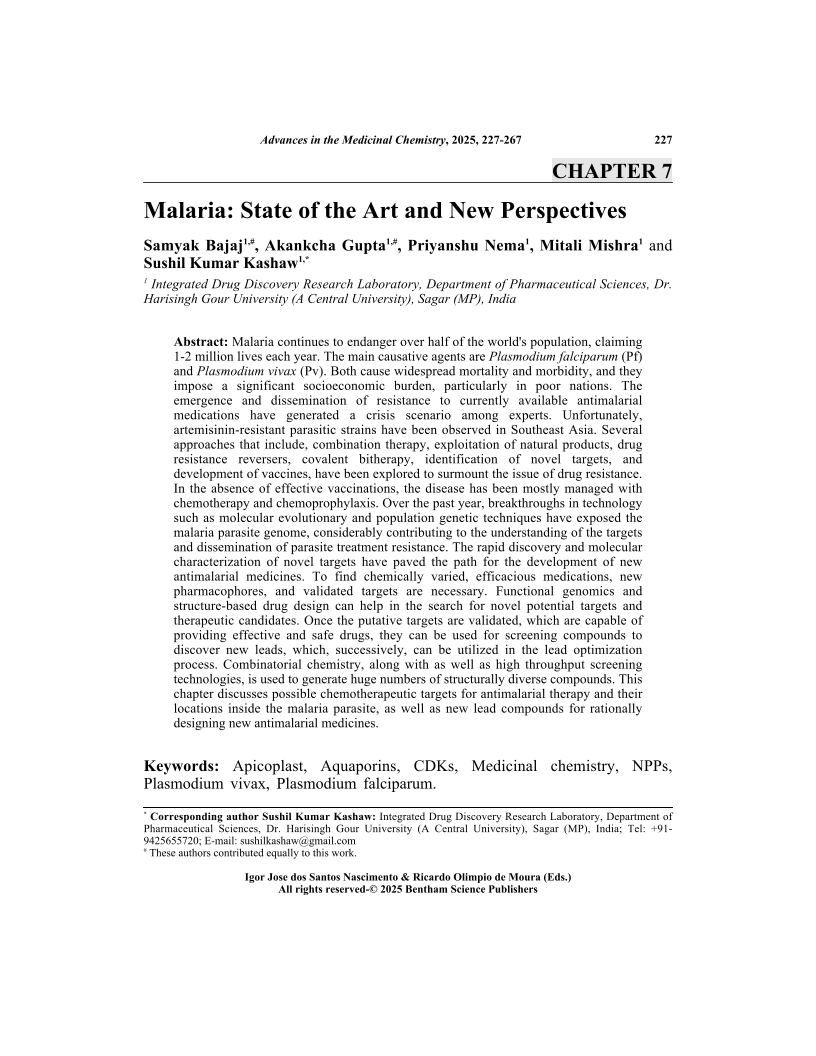
Malaria continues to endanger over half of the world's population, claiming 1-2 million lives each year. The main causative agents are Plasmodium falciparum (Pf) and Plasmodium vivax (Pv). Both cause widespread mortality and morbidity, and they impose a significant socioeconomic burden, particularly in poor nations. The emergence and dissemination of resistance to currently available antimalarial medications have generated a crisis scenario among experts. Unfortunately, artemisinin-resistant parasitic strains have been observed in Southeast Asia. Several approaches that include, combination therapy, exploitation of natural products, drug resistance reversers, covalent bitherapy, identification of novel targets, and development of vaccines, have been explored to surmount the issue of drug resistance. In the absence of effective vaccinations, the disease has been mostly managed with chemotherapy and chemoprophylaxis. Over the past year, breakthroughs in technology such as molecular evolutionary and population genetic techniques have exposed the malaria parasite genome, considerably contributing to the understanding of the targets and dissemination of parasite treatment resistance. The rapid discovery and molecular characterization of novel targets have paved the path for the development of new antimalarial medicines. To find chemically varied, efficacious medications, new pharmacophores, and validated targets are necessary. Functional genomics and structure-based drug design can help in the search for novel potential targets and therapeutic candidates. Once the putative targets are validated, which are capable of providing effective and safe drugs, they can be used for screening compounds to discover new leads, which, successively, can be utilized in the lead optimization process. Combinatorial chemistry, along with as well as high throughput screening technologies, is used to generate huge numbers of structurally diverse compounds. This chapter discusses possible chemotherapeutic targets for antimalarial therapy and their locations inside the malaria parasite, as well as new lead compounds for rationally designing new antimalarial medicines.
-
From This Site
/content/books/9789815324785.chapter-7dcterms_subject,pub_keyword-contentType:Journal -contentType:Figure -contentType:Table -contentType:SupplementaryData105
