


Nasal Vaccination: Breaking New Ground in Immune Response
- Authors: Akhil Sharma1, Shaweta Sharma2, Akanksha Sharma3, Anila Mishra4, Pankaj Agrawal5
-
View Affiliations Hide Affiliations1 R. J. College of Pharmacy, 2HVJ+567, Raipur, Gharbara, Tappal, Khair, Uttar Pradesh 202165, India 2 School of Medical and Allied Sciences, Galgotias University, Yamuna Expressway, Gautam Buddha Nagar, Uttar Pradesh 201310, India 3 R. J. College of Pharmacy, 2HVJ+567, Raipur, Gharbara, Tappal, Khair, Uttar Pradesh 202165, India 4 Amity Institute of Pharmacy, Amity University Uttar Pradesh, Lucknow Campus, Near Malhaur Rly Station, P.O. Chinhat, Lucknow, U. P., 226028, India 5 Guru Gobind Singh Indraprastha University, Govt of NCT of Delhi, Sector 16C, Dwarka, New Delhi, 110078, India
- Source: Mucosal Vaccine Delivery Systems: The Future of Immunization (Part 1) , pp 35-63
- Publication Date: July 2025
- Language: English


Nasal Vaccination: Breaking New Ground in Immune Response, Page 1 of 1
< Previous page | Next page > /docserver/preview/fulltext/9789815324570/chapter-2-1.gif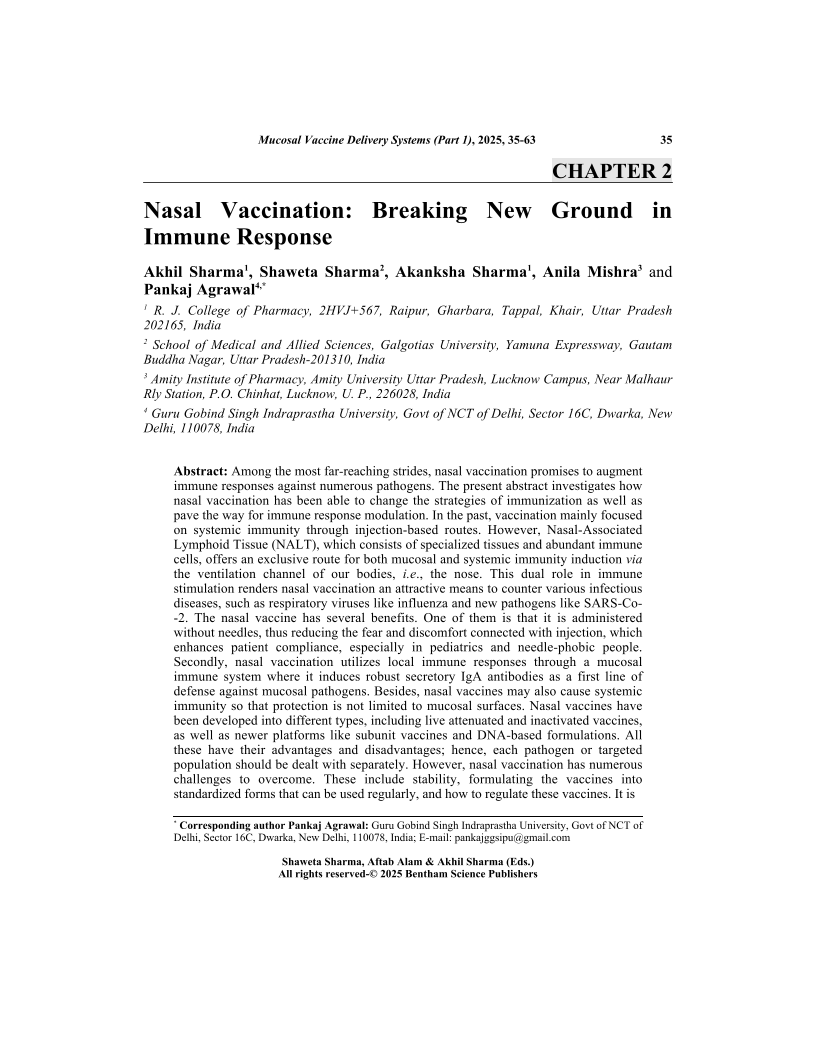
Among the most far-reaching strides, nasal vaccination promises to augment immune responses against numerous pathogens. The present abstract investigates how nasal vaccination has been able to change the strategies of immunization as well as pave the way for immune response modulation. In the past, vaccination mainly focused on systemic immunity through injection-based routes. However, Nasal-Associated Lymphoid Tissue (NALT), which consists of specialized tissues and abundant immune cells, offers an exclusive route for both mucosal and systemic immunity induction via the ventilation channel of our bodies, i.e., the nose. This dual role in immune stimulation renders nasal vaccination an attractive means to counter various infectious diseases, such as respiratory viruses like influenza and new pathogens like SARS-Co- -2. The nasal vaccine has several benefits. One of them is that it is administered without needles, thus reducing the fear and discomfort connected with injection, which enhances patient compliance, especially in pediatrics and needle-phobic people. Secondly, nasal vaccination utilizes local immune responses through a mucosal immune system where it induces robust secretory IgA antibodies as a first line of defense against mucosal pathogens. Besides, nasal vaccines may also cause systemic immunity so that protection is not limited to mucosal surfaces. Nasal vaccines have been developed into different types, including live attenuated and inactivated vaccines, as well as newer platforms like subunit vaccines and DNA-based formulations. All these have their advantages and disadvantages; hence, each pathogen or targeted population should be dealt with separately. However, nasal vaccination has numerous challenges to overcome. These include stability, formulating the vaccines into standardized forms that can be used regularly, and how to regulate these vaccines. It is necessary to address these issues to allow nasal vaccination's maximum utility in public health intervention. The way forward is ongoing research to improve the formulation of nasal vaccines, optimize delivery systems, and introduce new adjuvants for better efficacy against the existing constraints. In addition, personalized medicine can facilitate the customization of nasal vaccines based on individual immune profiles, which enhances their effectiveness greatly. Overall, nasal immunization strategies are a paradigm shift from traditional approaches since they represent a versatile and effective means of concurrently generating protective immunity against multiple pathogens. Therefore, exploiting its unique features while addressing current limitations associated with nasal vaccination can open up new frontiers in modulating immune responses besides enhancing global health outcomes.
-
From This Site
/content/books/9789815324570.chapter-2dcterms_subject,pub_keyword-contentType:Journal -contentType:Figure -contentType:Table -contentType:SupplementaryData105
