


Protocol for Generating and Utilizing Ocular Tissue Homogenates for Receptor Binding Studies
- By Nozhat Choudry1
-
View Affiliations Hide Affiliations1 Santen Inc., 6401 Hollis Street, Suite 125, Emeryville, CA 94608, USA
- Source: Research Protocols for Ophthalmic Disease Mechanisms and Therapeutics: Glaucoma - Ocular Hypertension , pp 49-56
- Publication Date: August 2025
- Language: English


Protocol for Generating and Utilizing Ocular Tissue Homogenates for Receptor Binding Studies, Page 1 of 1
< Previous page | Next page > /docserver/preview/fulltext/9789815324334/chapter-5-1.gif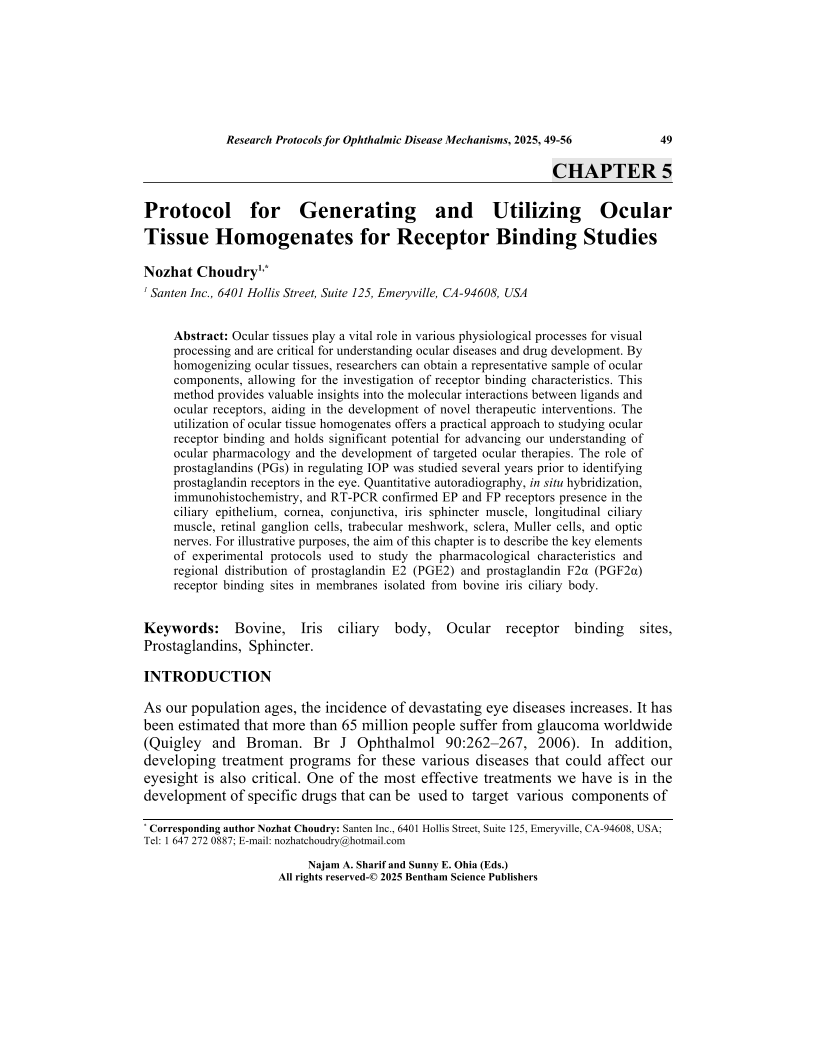
Ocular tissues play a vital role in various physiological processes for visual processing and are critical for understanding ocular diseases and drug development. By homogenizing ocular tissues, researchers can obtain a representative sample of ocular components, allowing for the investigation of receptor binding characteristics. This method provides valuable insights into the molecular interactions between ligands and ocular receptors, aiding in the development of novel therapeutic interventions. The utilization of ocular tissue homogenates offers a practical approach to studying ocular receptor binding and holds significant potential for advancing our understanding of ocular pharmacology and the development of targeted ocular therapies. The role of prostaglandins (PGs) in regulating IOP was studied several years prior to identifying prostaglandin receptors in the eye. Quantitative autoradiography, in situ hybridization, immunohistochemistry, and RT-PCR confirmed EP and FP receptors presence in the ciliary epithelium, cornea, conjunctiva, iris sphincter muscle, longitudinal ciliary muscle, retinal ganglion cells, trabecular meshwork, sclera, Muller cells, and optic nerves. For illustrative purposes, the aim of this chapter is to describe the key elements of experimental protocols used to study the pharmacological characteristics and regional distribution of prostaglandin E2 (PGE2) and prostaglandin F2α (PGF2α) receptor binding sites in membranes isolated from bovine iris ciliary body
-
From This Site
/content/books/9789815324334.chapter-5dcterms_subject,pub_keyword-contentType:Journal -contentType:Figure -contentType:Table -contentType:SupplementaryData105
