


Protocol for Assessment of Aqueous Humor Dynamics in the Living Mouse
- Authors: J. Cameron Millar1, Wei Zhang2
-
View Affiliations Hide Affiliations1 North Texas Eye Research Institute (NTERI), Department of Pharmacology & Neuroscience, University of North Texas Health Science Center (UNTHSC), 3500 Camp Bowie Boulevard, Room IREB 511, Fort Worth, TX 76107, USA 2 North Texas Eye Research Institute (NTERI), Department of Pharmacology & Neuroscience, University of North Texas Health Science Center (UNTHSC), 3500 Camp Bowie Boulevard, Room IREB-511, Fort Worth, TX 76107, USA
- Source: Research Protocols for Ophthalmic Disease Mechanisms and Therapeutics: Glaucoma - Ocular Hypertension , pp 354-375
- Publication Date: August 2025
- Language: English


Protocol for Assessment of Aqueous Humor Dynamics in the Living Mouse, Page 1 of 1
< Previous page | Next page > /docserver/preview/fulltext/9789815324334/chapter-34-1.gif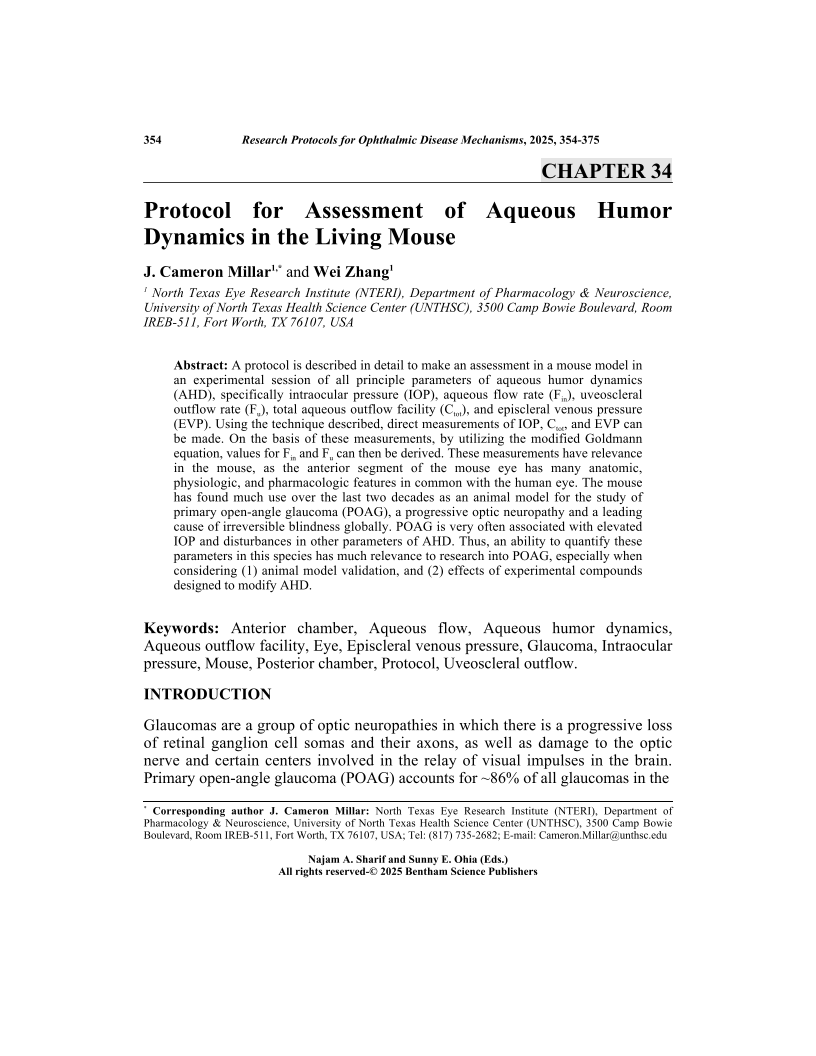
A protocol is described in detail to make an assessment in a mouse model in an experimental session of all principle parameters of aqueous humor dynamics (AHD), specifically intraocular pressure (IOP), aqueous flow rate (Fin), uveoscleral outflow rate (Fu ), total aqueous outflow facility (Ctot), and episcleral venous pressure (EVP). Using the technique described, direct measurements of IOP, Ctot, and EVP can be made. On the basis of these measurements, by utilizing the modified Goldmann equation, values for Fin and Fu can then be derived. These measurements have relevance in the mouse, as the anterior segment of the mouse eye has many anatomic, physiologic, and pharmacologic features in common with the human eye. The mouse has found much use over the last two decades as an animal model for the study of primary open-angle glaucoma (POAG), a progressive optic neuropathy and a leading cause of irreversible blindness globally. POAG is very often associated with elevated IOP and disturbances in other parameters of AHD. Thus, an ability to quantify these parameters in this species has much relevance to research into POAG, especially when considering (1) animal model validation, and (2) effects of experimental compounds designed to modify AHD.
-
From This Site
/content/books/9789815324334.chapter-34dcterms_subject,pub_keyword-contentType:Journal -contentType:Figure -contentType:Table -contentType:SupplementaryData105
