


Protocols for Studying Contraction/Relaxation of Ocular Tissues In Vitro
- Authors: Kalu K. Ngele1, Sunny E. Ohia2, Catherine A. Opere3, Anthonia Okolie4, Fatima Muili5, Pratik Bhankele6, Ya Fatou Njie Mbye7
-
View Affiliations Hide Affiliations1 Department of Pharmaceutical Sciences, College of Pharmacy and Health Sciences, Texas Southern University, Houston, Texas, USA 2 Department of Pharmaceutical Sciences, College of Pharmacy and Health Sciences, Texas Southern University, Houston, Texas, USA 3 Department of Pharmacy Sciences, School of Pharmacy and Health Professions, Creighton University, Omaha, Nebraska, USA 4 Department of Pharmaceutical Sciences, College of Pharmacy and Health Sciences, Texas Southern University, Houston, Texas, USA 5 Department of Pharmaceutical Sciences, College of Pharmacy and Health Sciences, Texas Southern University, Houston, Texas, USA 6 Department of Pharmaceutical Sciences, College of Pharmacy and Health Sciences, Texas Southern University, Houston, Texas, USA 7 Department of Pharmaceutical Sciences, College of Pharmacy and Health Sciences, Texas Southern University, Houston, Texas, USA
- Source: Research Protocols for Ophthalmic Disease Mechanisms and Therapeutics: Glaucoma - Ocular Hypertension , pp 274-280
- Publication Date: August 2025
- Language: English


Protocols for Studying Contraction/Relaxation of Ocular Tissues In Vitro, Page 1 of 1
< Previous page | Next page > /docserver/preview/fulltext/9789815324334/chapter-22-1.gif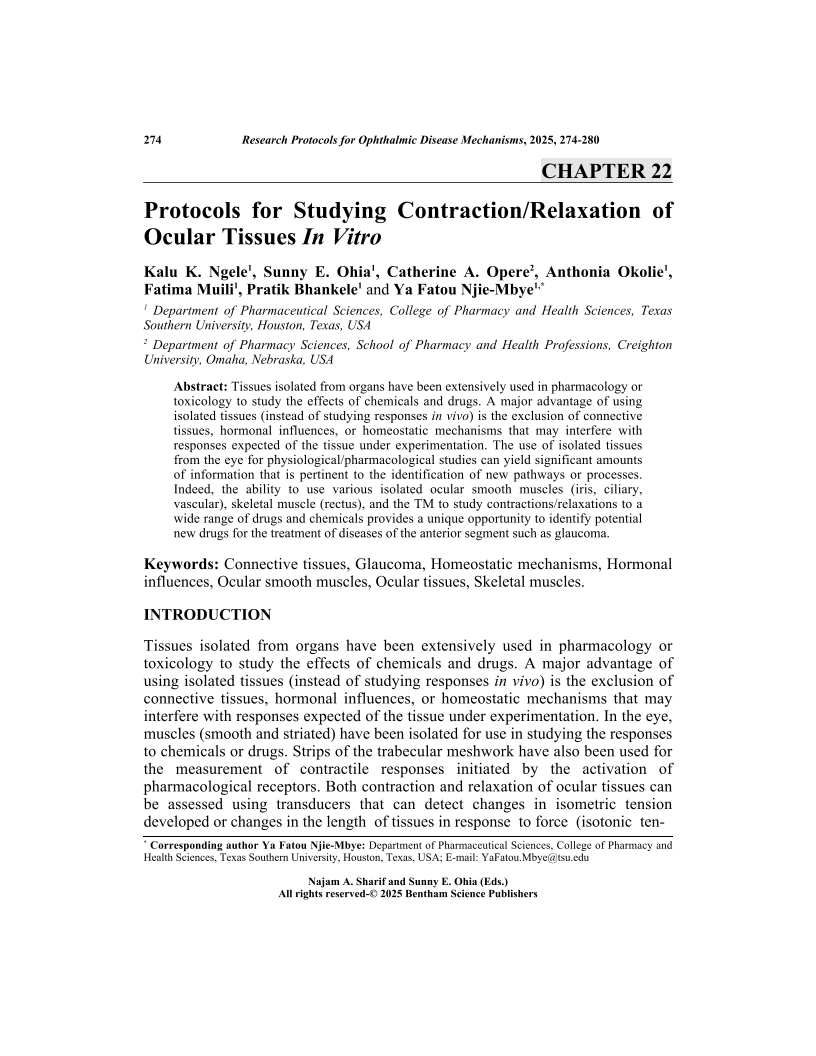
Tissues isolated from organs have been extensively used in pharmacology or toxicology to study the effects of chemicals and drugs. A major advantage of using isolated tissues (instead of studying responses in vivo) is the exclusion of connective tissues, hormonal influences, or homeostatic mechanisms that may interfere with responses expected of the tissue under experimentation. The use of isolated tissues from the eye for physiological/pharmacological studies can yield significant amounts of information that is pertinent to the identification of new pathways or processes. Indeed, the ability to use various isolated ocular smooth muscles (iris, ciliary, vascular), skeletal muscle (rectus), and the TM to study contractions/relaxations to a wide range of drugs and chemicals provides a unique opportunity to identify potential new drugs for the treatment of diseases of the anterior segment such as glaucoma.
-
From This Site
/content/books/9789815324334.chapter-22dcterms_subject,pub_keyword-contentType:Journal -contentType:Figure -contentType:Table -contentType:SupplementaryData105
