


Protocols for Studying Neurotransmitter Release from Isolated Ocular Tissues
- Authors: Sunny E. Ohia1, Catherine A. Opere2, Anthonia Okolie3, Fatima Muili4, Pratik Bhankele5, Ya Fatou Njie Mbye6
-
View Affiliations Hide Affiliations1 Department of Pharmaceutical Sciences, College of Pharmacy and Health Sciences, Texas Southern University, Houston, Texas, USA 2 Department of Pharmacy Sciences, School of Pharmacy and Health Professions, Creighton University, Omaha, Nebraska, USA 3 Department of Pharmaceutical Sciences, College of Pharmacy and Health Sciences, Texas Southern University, Houston, Texas, USA 4 Department of Pharmaceutical Sciences, College of Pharmacy and Health Sciences, Texas Southern University, Houston, Texas, USA 5 Department of Pharmacy Sciences, School of Pharmacy and Health Professions, Creighton University, Omaha, Nebraska, USA 6 Department of Pharmaceutical Sciences, College of Pharmacy and Health Sciences, Texas Southern University, Houston, Texas, USA
- Source: Research Protocols for Ophthalmic Disease Mechanisms and Therapeutics: Glaucoma - Ocular Hypertension , pp 266-273
- Publication Date: August 2025
- Language: English


Protocols for Studying Neurotransmitter Release from Isolated Ocular Tissues, Page 1 of 1
< Previous page | Next page > /docserver/preview/fulltext/9789815324334/chapter-21-1.gif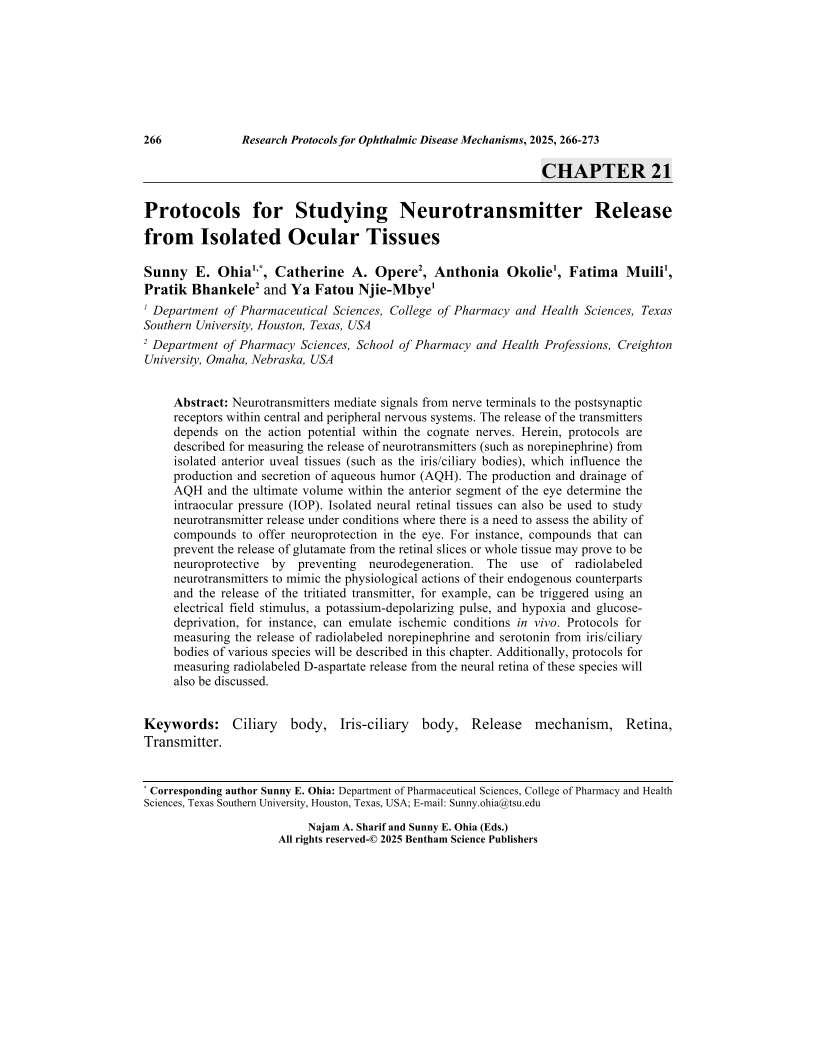
Neurotransmitters mediate signals from nerve terminals to the postsynaptic receptors within central and peripheral nervous systems. The release of the transmitters depends on the action potential within the cognate nerves. Herein, protocols are described for measuring the release of neurotransmitters (such as norepinephrine) from isolated anterior uveal tissues (such as the iris/ciliary bodies), which influence the production and secretion of aqueous humor (AQH). The production and drainage of AQH and the ultimate volume within the anterior segment of the eye determine the intraocular pressure (IOP). Isolated neural retinal tissues can also be used to study neurotransmitter release under conditions where there is a need to assess the ability of compounds to offer neuroprotection in the eye. For instance, compounds that can prevent the release of glutamate from the retinal slices or whole tissue may prove to be neuroprotective by preventing neurodegeneration. The use of radiolabeled neurotransmitters to mimic the physiological actions of their endogenous counterparts and the release of the tritiated transmitter, for example, can be triggered using an electrical field stimulus, a potassium-depolarizing pulse, and hypoxia and glucosedeprivation, for instance, can emulate ischemic conditions in vivo. Protocols for measuring the release of radiolabeled norepinephrine and serotonin from iris/ciliary bodies of various species will be described in this chapter. Additionally, protocols for measuring radiolabeled D-aspartate release from the neural retina of these species will also be discussed.
-
From This Site
/content/books/9789815324334.chapter-21dcterms_subject,pub_keyword-contentType:Journal -contentType:Figure -contentType:Table -contentType:SupplementaryData105
