


Anterior Segment Scleral Fibroblasts and Protocols for Ocular Cell Isolation and Characterization for Glaucoma Studies
- By Veluchamy A. Barathi1
-
View Affiliations Hide Affiliations1 Translational Pre Clinical Model Platform, Singapore Eye Research Institute, ACP in Ophthalmology & Visual Sciences, DUKE-NUS Graduate Medical School, Department of Ophthalmology, Yong Loo Lin School of Medicine, National University of Singapore, Singapore 119077, Singapore
- Source: Research Protocols for Ophthalmic Disease Mechanisms and Therapeutics: Glaucoma - Ocular Hypertension , pp 126-151
- Publication Date: August 2025
- Language: English


Anterior Segment Scleral Fibroblasts and Protocols for Ocular Cell Isolation and Characterization for Glaucoma Studies, Page 1 of 1
< Previous page | Next page > /docserver/preview/fulltext/9789815324334/chapter-12-1.gif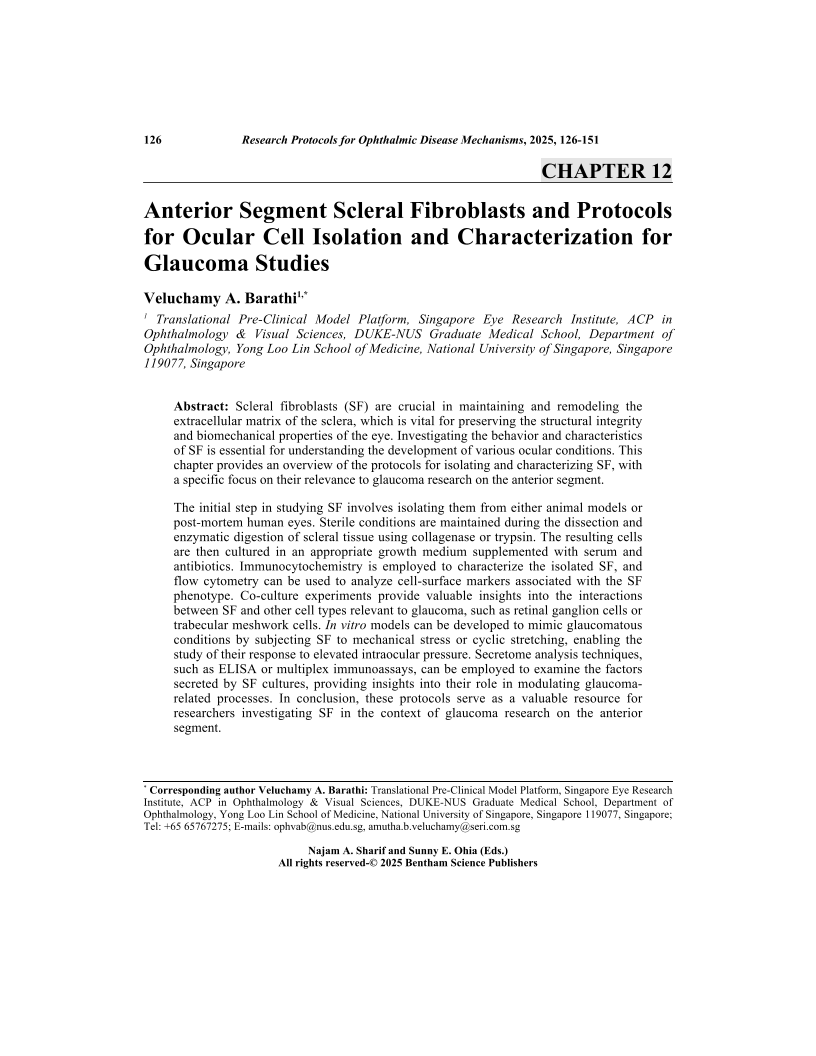
Scleral fibroblasts (SF) are crucial in maintaining and remodeling the extracellular matrix of the sclera, which is vital for preserving the structural integrity and biomechanical properties of the eye. Investigating the behavior and characteristics of SF is essential for understanding the development of various ocular conditions. This chapter provides an overview of the protocols for isolating and characterizing SF, with a specific focus on their relevance to glaucoma research on the anterior segment.
The initial step in studying SF involves isolating them from either animal models or post-mortem human eyes. Sterile conditions are maintained during the dissection and enzymatic digestion of scleral tissue using collagenase or trypsin. The resulting cells are then cultured in an appropriate growth medium supplemented with serum and antibiotics. Immunocytochemistry is employed to characterize the isolated SF, and flow cytometry can be used to analyze cell-surface markers associated with the SF phenotype. Co-culture experiments provide valuable insights into the interactions between SF and other cell types relevant to glaucoma, such as retinal ganglion cells or trabecular meshwork cells. In vitro models can be developed to mimic glaucomatous conditions by subjecting SF to mechanical stress or cyclic stretching, enabling the study of their response to elevated intraocular pressure. Secretome analysis techniques, such as ELISA or multiplex immunoassays, can be employed to examine the factors secreted by SF cultures, providing insights into their role in modulating glaucomarelated processes. In conclusion, these protocols serve as a valuable resource for researchers investigating SF in the context of glaucoma research on the anterior segment.
-
From This Site
/content/books/9789815324334.chapter-12dcterms_subject,pub_keyword-contentType:Journal -contentType:Figure -contentType:Table -contentType:SupplementaryData105
