


Evaluating Twitter Sentiments via Natural Language Processing
- Authors: Radhey Shyam1, Shilpi Khanna2, Smita Singh3, Tanvi Jaiswal4
-
View Affiliations Hide Affiliations1 Department of Information Technology, SRMCEM, Lucknow, India 2 Department of Information Technology, SRMCEM, Lucknow, India 3 Department of Information Technology, SRMCEM, Lucknow, India 4 Department of Information Technology, SRMCEM, Lucknow, India
- Source: Computational Intelligence and its Applications , pp 207-222
- Publication Date: March 2025
- Language: English


Evaluating Twitter Sentiments via Natural Language Processing, Page 1 of 1
< Previous page | Next page > /docserver/preview/fulltext/9789815313321/chapter-13-1.gif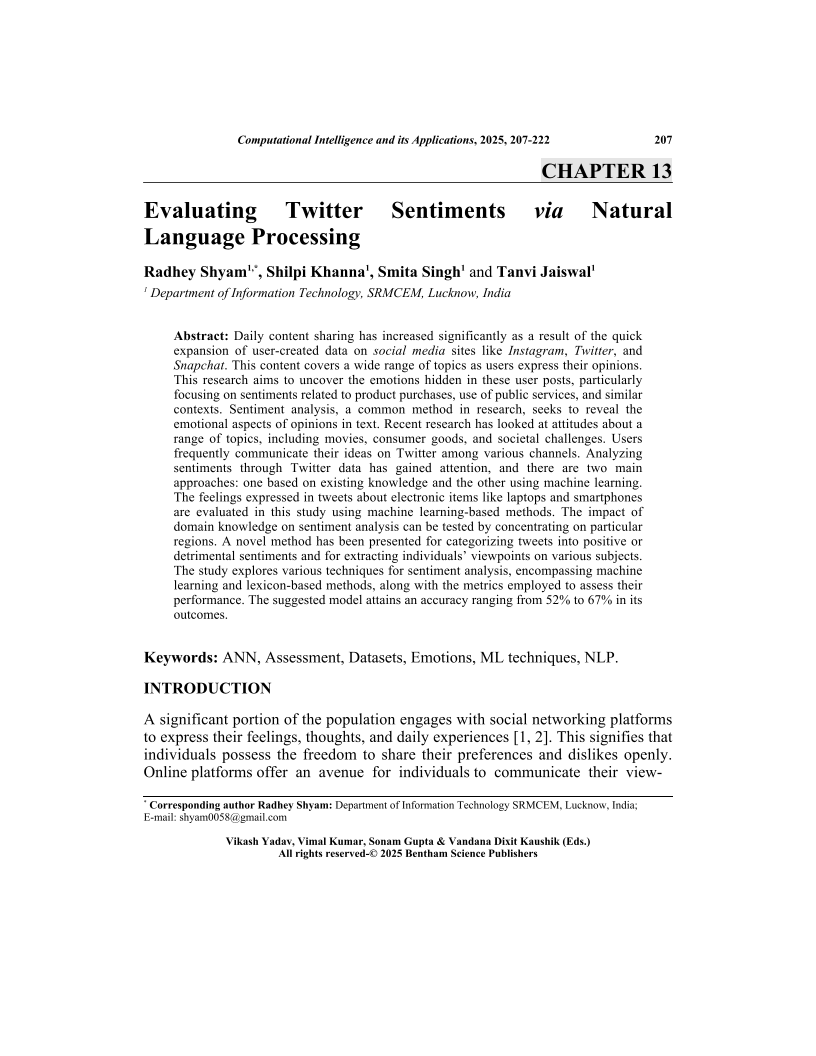
Daily content sharing has increased significantly as a result of the quick expansion of user-created data on social media sites like Instagram, Twitter, and Snapchat. This content covers a wide range of topics as users express their opinions. This research aims to uncover the emotions hidden in these user posts, particularly focusing on sentiments related to product purchases, use of public services, and similar contexts. Sentiment analysis, a common method in research, seeks to reveal the emotional aspects of opinions in text. Recent research has looked at attitudes about a range of topics, including movies, consumer goods, and societal challenges. Users frequently communicate their ideas on Twitter among various channels. Analyzing sentiments through Twitter data has gained attention, and there are two main approaches: one based on existing knowledge and the other using machine learning. The feelings expressed in tweets about electronic items like laptops and smartphones are evaluated in this study using machine learning-based methods. The impact of domain knowledge on sentiment analysis can be tested by concentrating on particular regions. A novel method has been presented for categorizing tweets into positive or detrimental sentiments and for extracting individuals' viewpoints on various subjects. The study explores various techniques for sentiment analysis, encompassing machine learning and lexicon-based methods, along with the metrics employed to assess their performance. The suggested model attains an accuracy ranging from 52% to 67% in its outcomes.
-
From This Site
/content/books/9789815313321.chapter-13dcterms_subject,pub_keyword-contentType:Journal -contentType:Figure -contentType:Table -contentType:SupplementaryData105
