


Polymeric Biomaterials

- Authors: Ramdas B. Pandhare1, Kalyani A. Autade2, Rajashri B. Sumbe3, Sachin N. Kothawade4, Ashwini Gawade5
-
View Affiliations Hide Affiliations1 MES's College of Pharmacy, Sonai, Maharashtra, India 2 Department of Pharmaceutics, RSM's N. N. Sattha College of Pharmacy, Ahmednagar 414001, Maharashtra, India 3 Department of Pharmaceutics, RSM's N. N. Sattha College of Pharmacy, Ahmednagar-414001, Maharashtra, India 4 Department of Pharmaceutics, SCSSS's Sitabai Thite College of Pharmacy, Shirur-412210, DistPune, Maharashtra, India 5 Department of Pharmaceutical Sciences, School of Health Science and Technology, Dr. Vishwanath Karad MIT World Peace University, Kothrud, Pune-411038, Maharashtra, India
- Source: Polymers in Modern Medicine (Part 1) , pp 29-48
- Publication Date: December 2024
- Language: English


Polymeric Biomaterials, Page 1 of 1
< Previous page | Next page > /docserver/preview/fulltext/9789815274585/chapter-2-1.gif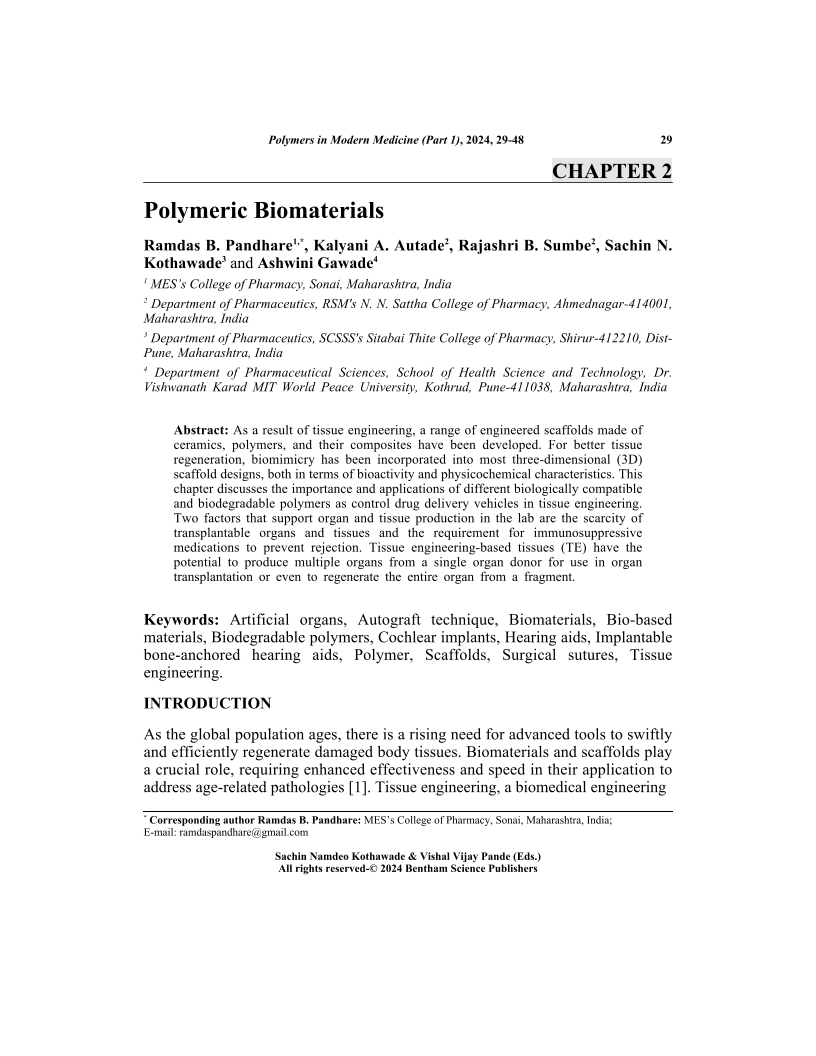
As a result of tissue engineering, a range of engineered scaffolds made of ceramics, polymers, and their composites have been developed. For better tissue regeneration, biomimicry has been incorporated into most three-dimensional (3D) scaffold designs, both in terms of bioactivity and physicochemical characteristics. This chapter discusses the importance and applications of different biologically compatible and biodegradable polymers as control drug delivery vehicles in tissue engineering. Two factors that support organ and tissue production in the lab are the scarcity of transplantable organs and tissues and the requirement for immunosuppressive medications to prevent rejection. Tissue engineering-based tissues (TE) have the potential to produce multiple organs from a single organ donor for use in organ transplantation or even to regenerate the entire organ from a fragment.
-
From This Site
/content/books/9789815274585.chapter-2dcterms_subject,pub_keyword-contentType:Journal -contentType:Figure -contentType:Table -contentType:SupplementaryData105
