


Introduction to Polymers in Modern Medicine
- Authors: Anuruddha R. Chabukswar1, Kunal G. Raut2, Sandesh S. Bole3, Yash D. Kale4, Swati Jagdale5, Sachin N. Kothawade6
-
View Affiliations Hide Affiliations1 Department of Pharmaceutical Sciences, School of Health Science and Technology, Dr. Vishwanath Karad MIT World Peace University, Kothrud, Pune 411038, Maharashtra, India 2 Department of Pharmaceutical Sciences, School of Health Science and Technology, Dr. Vishwanath Karad MIT World Peace University, Kothrud, Pune-411038, Maharashtra, India 3 Department of Pharmaceutics, RSM's N. N. Sattha College of Pharmacy, Ahmednagar-414001, Maharashtra, India 4 Department of Pharmaceutical Sciences, School of Health Science and Technology, Dr. Vishwanath Karad MIT World Peace University, Kothrud, Pune-411038, Maharashtra, India 5 Department of Pharmaceutical Sciences, School of Health Science and Technology, Dr. Vishwanath Karad MIT World Peace University, Kothrud, Pune-411038, Maharashtra, India 6 Department of Pharmaceutics, SCSSS's Sitabai Thite College of Pharmacy, Shirur-412210, DistPune, Maharashtra, India
- Source: Polymers in Modern Medicine (Part 1) , pp 1-28
- Publication Date: December 2024
- Language: English


Introduction to Polymers in Modern Medicine, Page 1 of 1
< Previous page | Next page > /docserver/preview/fulltext/9789815274585/chapter-1-1.gif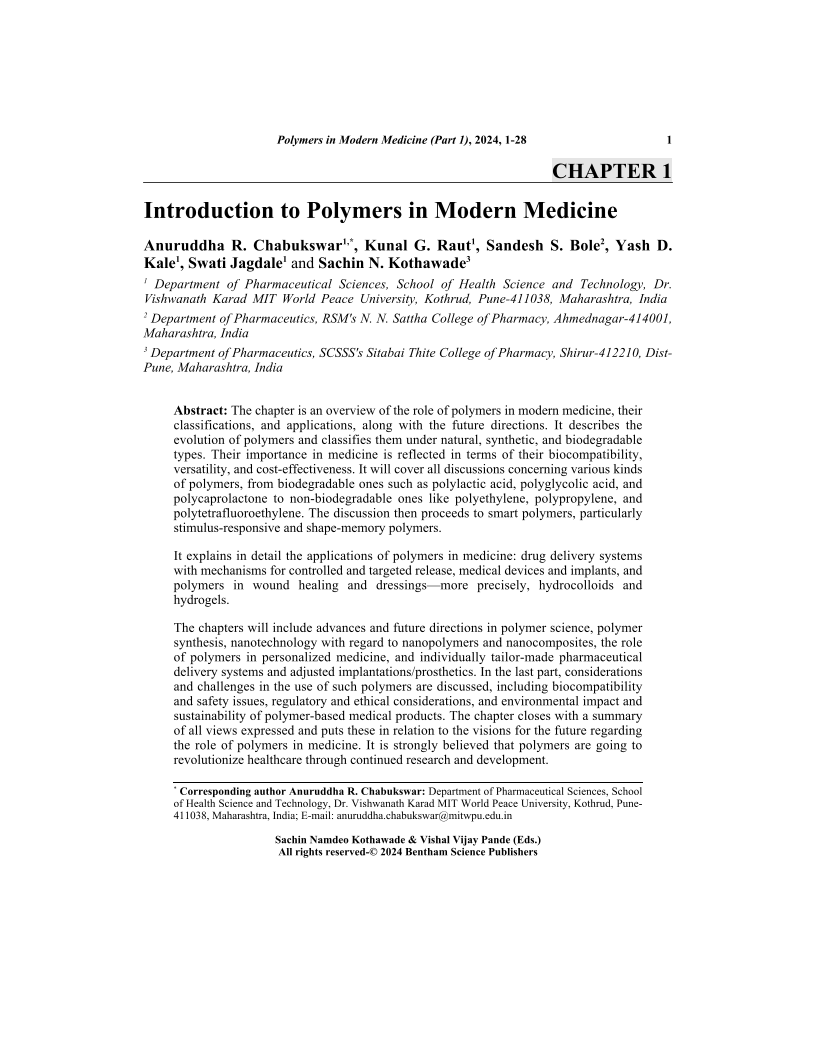
The chapter is an overview of the role of polymers in modern medicine, their classifications, and applications, along with the future directions. It describes the evolution of polymers and classifies them under natural, synthetic, and biodegradable types. Their importance in medicine is reflected in terms of their biocompatibility, versatility, and cost-effectiveness. It will cover all discussions concerning various kinds of polymers, from biodegradable ones such as polylactic acid, polyglycolic acid, and polycaprolactone to non-biodegradable ones like polyethylene, polypropylene, and polytetrafluoroethylene. The discussion then proceeds to smart polymers, particularly stimulus-responsive and shape-memory polymers.It explains in detail the applications of polymers in medicine: drug delivery systems with mechanisms for controlled and targeted release, medical devices and implants, and polymers in wound healing and dressingsmore precisely, hydrocolloids and hydrogels. The chapters will include advances and future directions in polymer science, polymer synthesis, nanotechnology with regard to nanopolymers and nanocomposites, the role of polymers in personalized medicine, and individually tailor-made pharmaceutical delivery systems and adjusted implantations/prosthetics. In the last part, considerations and challenges in the use of such polymers are discussed, including biocompatibility and safety issues, regulatory and ethical considerations, and environmental impact and sustainability of polymer-based medical products. The chapter closes with a summary of all views expressed and puts these in relation to the visions for the future regarding the role of polymers in medicine. It is strongly believed that polymers are going to revolutionize healthcare through continued research and development.
-
From This Site
/content/books/9789815274585.chapter-1dcterms_subject,pub_keyword-contentType:Journal -contentType:Figure -contentType:Table -contentType:SupplementaryData105
