


Current Advances in the use of Tumor Organoids in Lung Cancer Modeling and Precision Oncology
- Authors: Bharti Bisht1, Arkaprabha Basu2, Keshav S. Moharir3, Swati Tripathi4, Rohit Gundamaraju5, Jyotirmoi Aich6, Soumya Basu7, Manash K. Paul8
-
View Affiliations Hide Affiliations1 Department of Microbiology, Kasturba Medical College, Manipal Academy of Higher Education, Manipal, Karnataka, 576104, India 2 Harvard John A. Paulson School of Engineering and Applied Sciences, Harvard University, Cambridge, Boston, MA 02134, United States 3 Department of Pharmaceutics, Gurunanak College of Pharmacy, Nagpur, Maharashtra, India 4 Section of Electron Microscopy, National Institute of Physiological Sciences, Okazaki, Japan 5 Division of Gastroenterology, Department of Medicine, Washington University School of Medicine, St Louis, MO, USA 6 School of Biotechnology and Bioinformatics, Dr. D. Y. Patil Deemed to be University, CBD Belapur, Navi Mumbai, Maharashtra, 400 614, India 7 Cancer and Translational Research Centre, Dr. D. Y. Patil Biotechnology and Bioinformatics Institute, Dr. D. Y. Patil Vidyapeeth, Pune, Maharashtra, 411 033, India 8 Department of Radiation Biology and Toxicology, Manipal School of Life Sciences, Manipal Academy of Higher Education, Manipal, Karnataka, 576104, India
- Source: Organoid Technology: Disease Modelling, Drug Discovery, and Personalized Medicine , pp 201-220
- Publication Date: July 2025
- Language: English


Current Advances in the use of Tumor Organoids in Lung Cancer Modeling and Precision Oncology, Page 1 of 1
< Previous page | Next page > /docserver/preview/fulltext/9789815238693/chapter-8-1.gif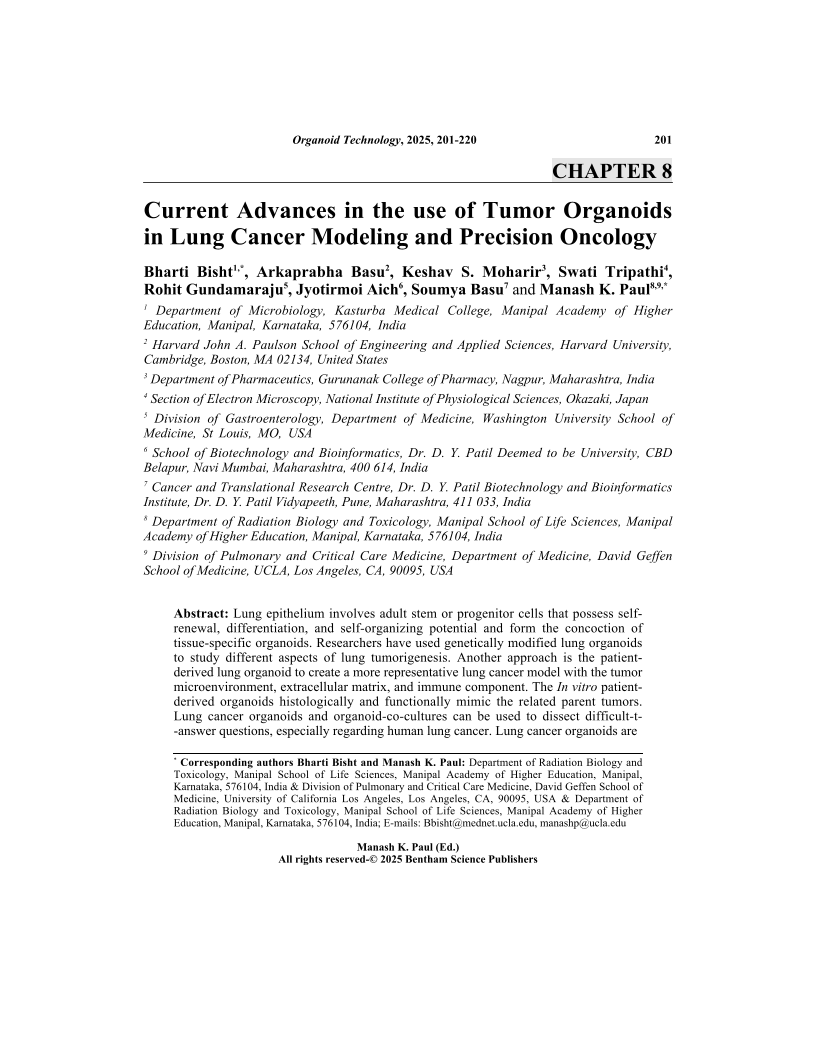
Lung epithelium involves adult stem or progenitor cells that possess selfrenewal, differentiation, and self-organizing potential and form the concoction of tissue-specific organoids. Researchers have used genetically modified lung organoids to study different aspects of lung tumorigenesis. Another approach is the patientderived lung organoid to create a more representative lung cancer model with the tumor microenvironment, extracellular matrix, and immune component. The In vitro patientderived organoids histologically and functionally mimic the related parent tumors. Lung cancer organoids and organoid-co-cultures can be used to dissect difficult-t- -answer questions, especially regarding human lung cancer. Lung cancer organoids are used not only for understanding tumor biology but also to undertake biomarker studies, and drug screening, evaluate immunotherapeutics, and target tumor microenvironment, and personalized medicine. Lung organoids can also be used to create organoid biobanks for future gene-specific pre-clinical trials and evaluation. This chapter will present an overview of the therapeutic areas in which lung cancer organoids are transforming therapeutic discovery and development, followed by a discussion of future prospects.
-
From This Site
/content/books/9789815238693.chapter-8dcterms_subject,pub_keyword-contentType:Journal -contentType:Figure -contentType:Table -contentType:SupplementaryData105
