


Organoids: New Research Tool in Cancer Diagnostics and Therapeutics
- By Pravin D. Potdar1
-
View Affiliations Hide Affiliations1 Former Head, Department of Molecular Medicine and Biology, Jaslok Hospital & Research Centre, Mumbai, 400053, Maharashtra, India
- Source: Organoid Technology: Disease Modelling, Drug Discovery, and Personalized Medicine , pp 159-200
- Publication Date: July 2025
- Language: English


Organoids: New Research Tool in Cancer Diagnostics and Therapeutics, Page 1 of 1
< Previous page | Next page > /docserver/preview/fulltext/9789815238693/chapter-7-1.gif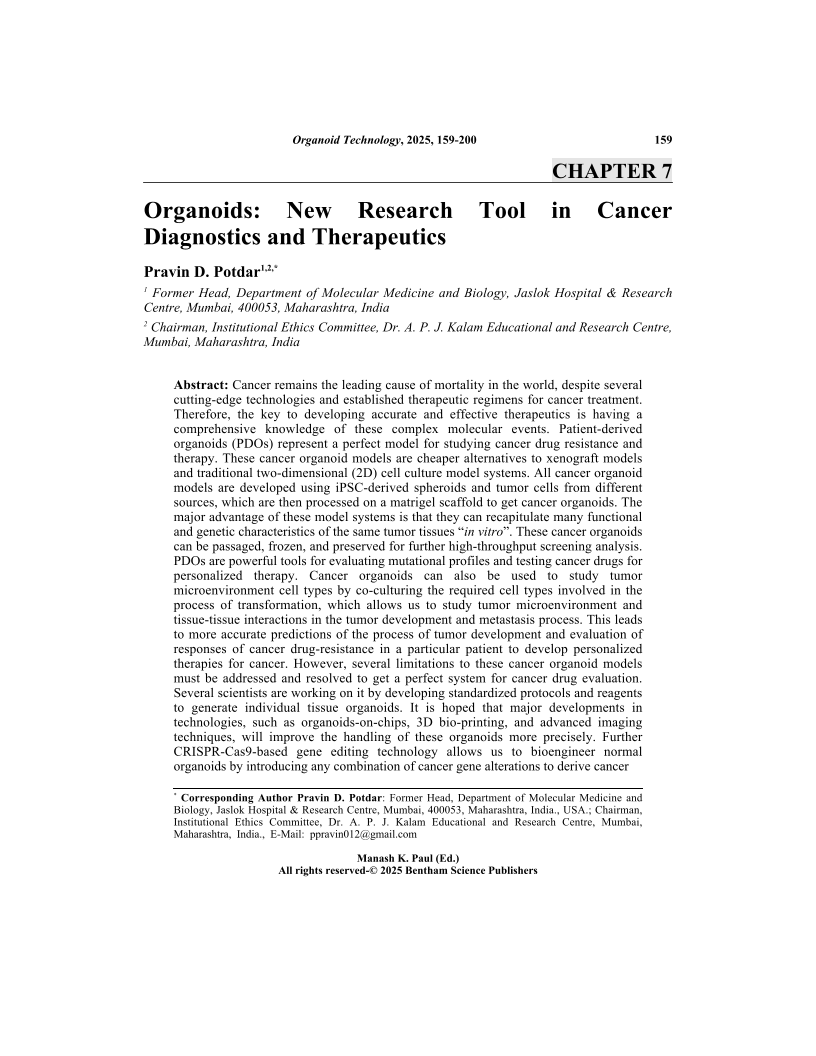
Cancer remains the leading cause of mortality in the world, despite several cutting-edge technologies and established therapeutic regimens for cancer treatment. Therefore, the key to developing accurate and effective therapeutics is having a comprehensive knowledge of these complex molecular events. Patient-derived organoids (PDOs) represent a perfect model for studying cancer drug resistance and therapy. These cancer organoid models are cheaper alternatives to xenograft models and traditional two-dimensional (2D) cell culture model systems. All cancer organoid models are developed using iPSC-derived spheroids and tumor cells from different sources, which are then processed on a matrigel scaffold to get cancer organoids. The major advantage of these model systems is that they can recapitulate many functional and genetic characteristics of the same tumor tissues "in vitro". These cancer organoids can be passaged, frozen, and preserved for further high-throughput screening analysis. PDOs are powerful tools for evaluating mutational profiles and testing cancer drugs for personalized therapy. Cancer organoids can also be used to study tumor microenvironment cell types by co-culturing the required cell types involved in the process of transformation, which allows us to study tumor microenvironment and tissue-tissue interactions in the tumor development and metastasis process. This leads to more accurate predictions of the process of tumor development and evaluation of responses of cancer drug-resistance in a particular patient to develop personalized therapies for cancer. However, several limitations to these cancer organoid models must be addressed and resolved to get a perfect system for cancer drug evaluation. Several scientists are working on it by developing standardized protocols and reagents to generate individual tissue organoids. It is hoped that major developments in technologies, such as organoids-on-chips, 3D bio-printing, and advanced imaging techniques, will improve the handling of these organoids more precisely. Further CRISPR-Cas9-based gene editing technology allows us to bioengineer normal organoids by introducing any combination of cancer gene alterations to derive cancer organoids. In this review, we focused on the development and improvement of various normal and cancer organoids for targeted tissues such as the lung, breast, colon, liver, and kidney and their use as model systems for cancer drug discovery and personalized therapy. We have also highlighted some of the uses of the latest technologies, such as microfluidics chips and 3D bioprinting, for deriving better cancer organoids-based in vitro models for future research on cancer therapeutics.
-
From This Site
/content/books/9789815238693.chapter-7dcterms_subject,pub_keyword-contentType:Journal -contentType:Figure -contentType:Table -contentType:SupplementaryData105
