


Bioengineering Organoids for Disease Modeling and Drug Discovery
- Authors: Kaplana Mandal1, Shalaka Wahane2, Muhammad Nihad3, Anubhab Mukherjee4, Bharti Bisht5, Chrianjay Mukhopadhyay6, Bipasha Bose7, Manash K. Paul8
-
View Affiliations Hide Affiliations1 Terasaki Institute for Biomedical Innovation, 11570 Olympic Blvd, Los Angeles 90064, CA, USA 2 Departments of Neurobiology and Neurosurgery, David Geffen School of Medicine, University of California, Los Angeles, Los Angeles, CA, 90095-1763, USA 3 Stem Cells and Regenerative Medicine Centre, Yenepoya Research Centre, Yenepoya (Deemed to be University), Mangalore, Karnataka, 575018, India 4 Esperer Onco Nutrition Pvt Ltd, 4BA, 4th Floor, B Wing, Gundecha Onclave, Khairani Road, Sakinaka, Andheri East, Mumbai, Maharashtra, 400072, India 5 Department of Microbiology, Kasturba Medical College, Manipal Academy of Higher Education, Manipal, Karnataka, 576104, India 6 Department of Microbiology, Kasturba Medical College, Manipal Academy of Higher Education, Manipal, Karnataka, 576104, India 7 Stem Cells and Regenerative Medicine Centre, Yenepoya Research Centre, Yenepoya (Deemed to be University), Mangalore, Karnataka, 575018, India 8 Department of Radiation Biology and Toxicology, Manipal School of Life Sciences, Manipal Academy of Higher Education, Manipal, Karnataka, 576104, India
- Source: Organoid Technology: Disease Modelling, Drug Discovery, and Personalized Medicine , pp 1-58
- Publication Date: July 2025
- Language: English


Bioengineering Organoids for Disease Modeling and Drug Discovery, Page 1 of 1
< Previous page | Next page > /docserver/preview/fulltext/9789815238693/chapter-1-1.gif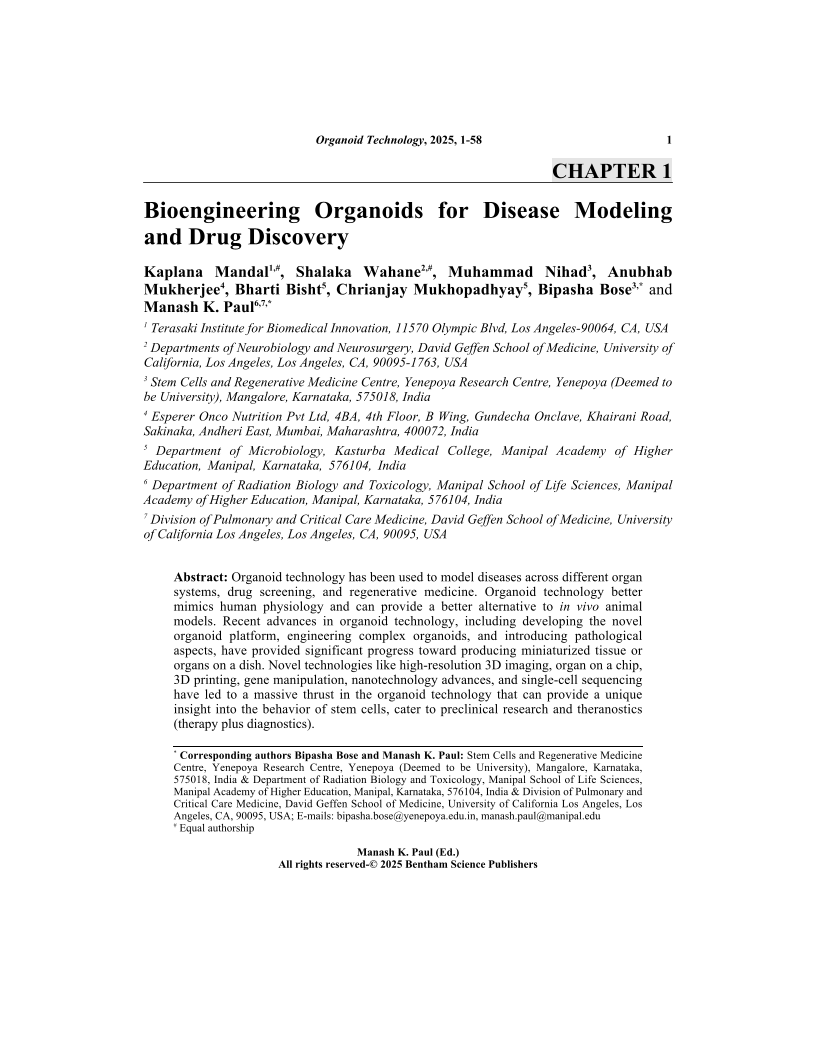
Organoid technology has been used to model diseases across different organ systems, drug screening, and regenerative medicine. Organoid technology better mimics human physiology and can provide a better alternative to in vivo animal models. Recent advances in organoid technology, including developing the novel organoid platform, engineering complex organoids, and introducing pathological aspects, have provided significant progress toward producing miniaturized tissue or organs on a dish. Novel technologies like high-resolution 3D imaging, organ on a chip, 3D printing, gene manipulation, nanotechnology advances, and single-cell sequencing have led to a massive thrust in the organoid technology that can provide a unique insight into the behavior of stem cells, cater to preclinical research and theranostics (therapy plus diagnostics).
-
From This Site
/content/books/9789815238693.chapter-1dcterms_subject,pub_keyword-contentType:Journal -contentType:Figure -contentType:Table -contentType:SupplementaryData105
