


Transition Metal Dichalcogenide Hybrids for Visible-light-driven Photocatalytic Dye Degradation
- Authors: M. Karpuraranjith1, Y. F. Chen2, S. Rajaboopathi3, R. Manigandan4, K. Srinivas5, SPR. Poonkodi6
-
View Affiliations Hide Affiliations1 School of Electronic Science and Technology and State Key Laboratory of Electronic Thin Films and Integrated Devices, University of Electronic Science and Technology of China, Chengdu 610054, PR China 2 School of Electronic Science and Technology and State Key Laboratory of Electronic Thin Films and Integrated Devices, University of Electronic Science and Technology of China, Chengdu 610054, PR China 3 Department of Chemistry, Government Arts College for Women, Sivagangai 630561, Tamil Nadu, India 4 School of Electronic Science and Technology and State Key Laboratory of Electronic Thin Films and Integrated Devices, University of Electronic Science and Technology of China, Chengdu 610054, PR China 5 School of Electronic Science and Technology and State Key Laboratory of Electronic Thin Films and Integrated Devices, University of Electronic Science and Technology of China, Chengdu 610054, PR China 6 Department of Chemistry, Government Arts College for Women, Sivagangai-630561, Tamil Nadu, India
- Source: Advances in Dye Degradation: Volume 2 , pp 77-89
- Publication Date: July 2024
- Language: English


Transition Metal Dichalcogenide Hybrids for Visible-light-driven Photocatalytic Dye Degradation, Page 1 of 1
< Previous page | Next page > /docserver/preview/fulltext/9789815238150/chapter-4-1.gif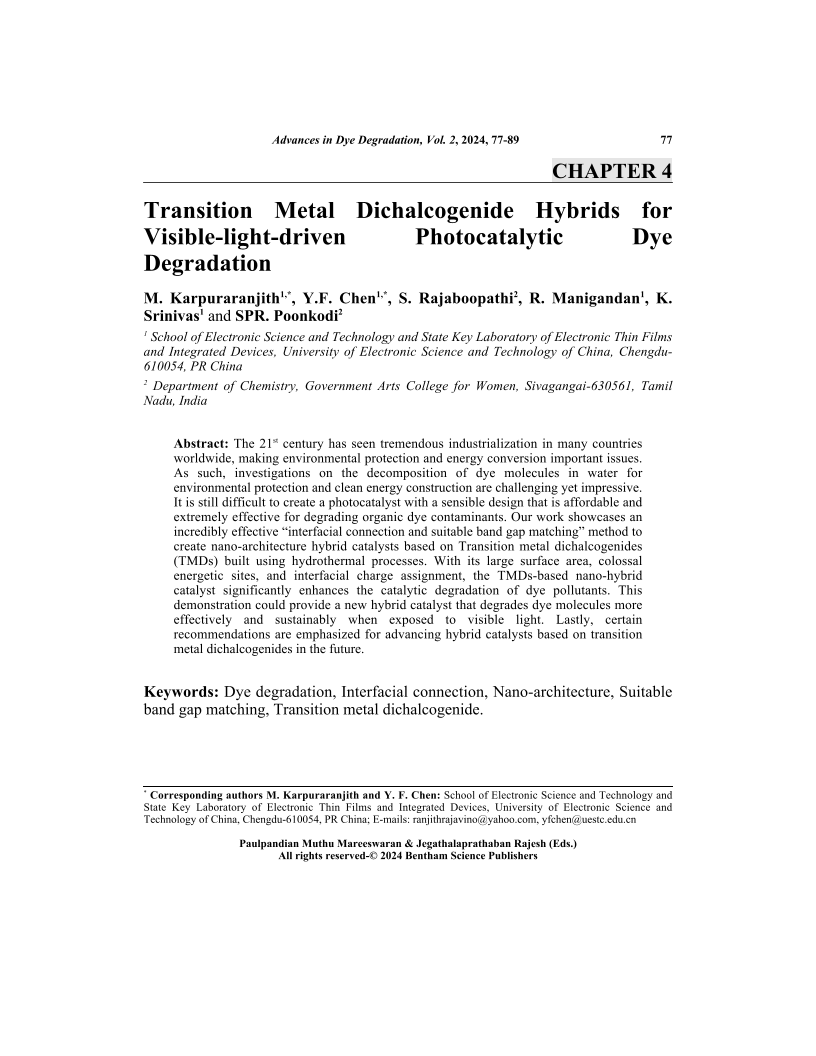
The 21st century has seen tremendous industrialization in many countries worldwide, making environmental protection and energy conversion important issues. As such, investigations on the decomposition of dye molecules in water for environmental protection and clean energy construction are challenging yet impressive. It is still difficult to create a photocatalyst with a sensible design that is affordable and extremely effective for degrading organic dye contaminants. Our work showcases an incredibly effective "interfacial connection and suitable band gap matching" method to create nano-architecture hybrid catalysts based on Transition metal dichalcogenides (TMDs) built using hydrothermal processes. With its large surface area, colossal energetic sites, and interfacial charge assignment, the TMDs-based nano-hybrid catalyst significantly enhances the catalytic degradation of dye pollutants. This demonstration could provide a new hybrid catalyst that degrades dye molecules more effectively and sustainably when exposed to visible light. Lastly, certain recommendations are emphasized for advancing hybrid catalysts based on transition metal dichalcogenides in the future.
-
From This Site
/content/books/9789815238150.chapter-4dcterms_subject,pub_keyword-contentType:Journal -contentType:Figure -contentType:Table -contentType:SupplementaryData105
