


Photocatalytic Dye Degradation Using Metal Organic Frameworks
- Authors: Nainamalai Devarajan1, Paulpandian Muthu Mareeswaran2
-
View Affiliations Hide Affiliations1 Solid State and Structural Chemistry Unit, Indian Institute of Science, Bangalore, Karnataka 560012, India 2 Department of Chemistry, College of Engineering, Anna University, Chennai 600025, Tamil Nadu, India
- Source: Advances in Dye Degradation: Volume 2 , pp 22-53
- Publication Date: July 2024
- Language: English


Photocatalytic Dye Degradation Using Metal Organic Frameworks, Page 1 of 1
< Previous page | Next page > /docserver/preview/fulltext/9789815238150/chapter-2-1.gif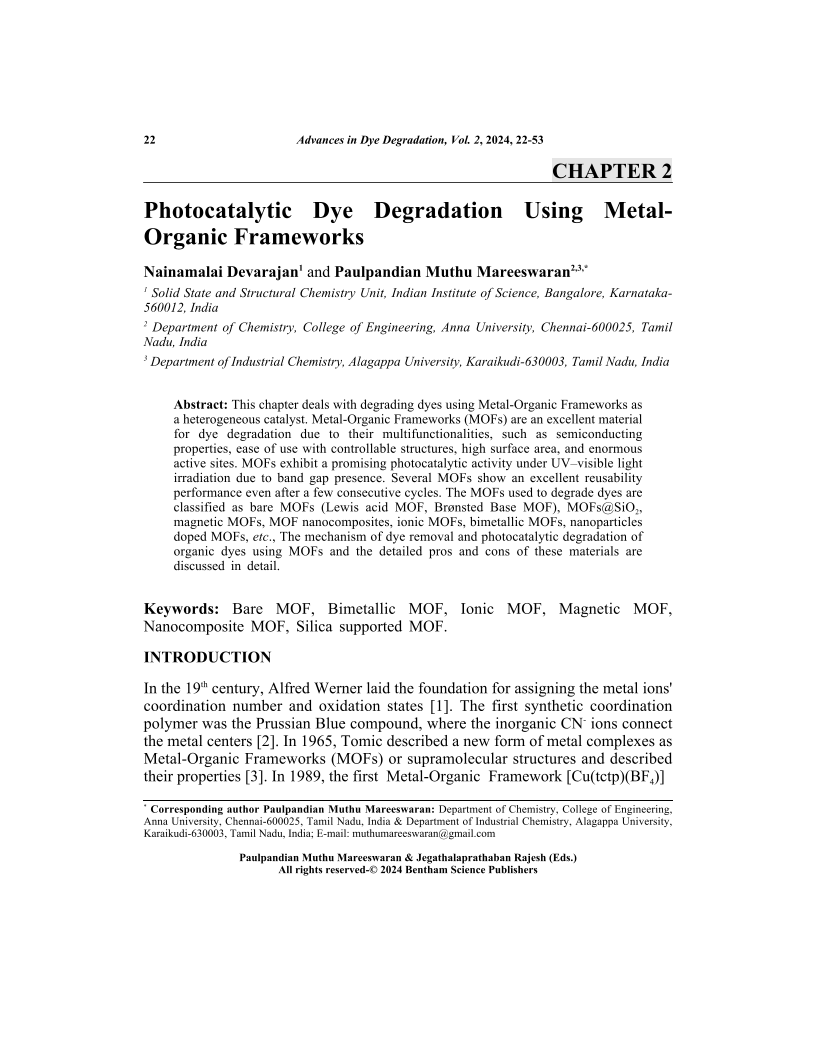
This chapter deals with degrading dyes using Metal-Organic Frameworks as a heterogeneous catalyst. Metal-Organic Frameworks (MOFs) are an excellent material for dye degradation due to their multifunctionalities, such as semiconducting properties, ease of use with controllable structures, high surface area, and enormous active sites. MOFs exhibit a promising photocatalytic activity under UVvisible light irradiation due to band gap presence. Several MOFs show an excellent reusability performance even after a few consecutive cycles. The MOFs used to degrade dyes are classified as bare MOFs (Lewis acid MOF, Brønsted Base MOF), MOFs@SiO2 , magnetic MOFs, MOF nanocomposites, ionic MOFs, bimetallic MOFs, nanoparticles doped MOFs, etc., The mechanism of dye removal and photocatalytic degradation of organic dyes using MOFs and the detailed pros and cons of these materials are discussed in detail.
-
From This Site
/content/books/9789815238150.chapter-2dcterms_subject,pub_keyword-contentType:Journal -contentType:Figure -contentType:Table -contentType:SupplementaryData105
