


Acute Respiratory Infections: Diagnosis, Epidemiology, Management, and Prevention
- Authors: Oluwasanmi Oladapo Adenaiye1, Kathleen Marie McPhaul2, Donald K. Milton3
-
View Affiliations Hide Affiliations1 Public Health Aerobiology and Biomarker Laboratory, Institute for Applied EnvironmentalHealth, University of Maryland School of Public Health, College Park, Maryland, USA 2 Public Health Aerobiology and Biomarker Laboratory, Institute for Applied EnvironmentalHealth, University of Maryland School of Public Health, College Park, Maryland, USA 3 Public Health Aerobiology and Biomarker Laboratory, Institute for Applied EnvironmentalHealth, University of Maryland School of Public Health, College Park, Maryland, USA
- Source: Modern Occupational Diseases: Diagnosis, Epidemiology, Management and Prevention , pp 145-163
- Publication Date: September 2022
- Language: English


Acute Respiratory Infections: Diagnosis, Epidemiology, Management, and Prevention, Page 1 of 1
< Previous page | Next page > /docserver/preview/fulltext/9789815049138/chap8-1.gif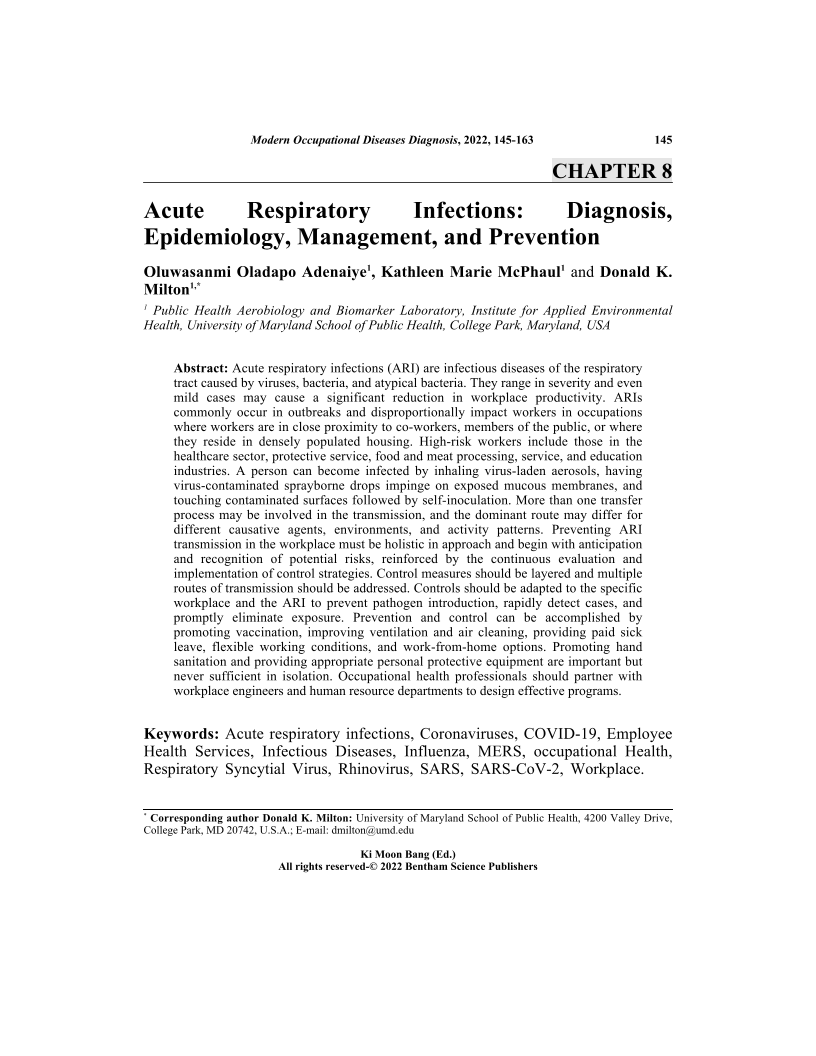
nbsp;Acute respiratory infections (ARI) are infectious diseases of the respiratory tract caused by viruses, bacteria, and atypical bacteria. They range in severity and even mild cases may cause a significant reduction in workplace productivity. ARIs commonly occur in outbreaks and disproportionally impact workers in occupations where workers are in close proximity to co-workers, members of the public, or where they reside in densely populated housing. High-risk workers include those in the healthcare sector, protective service, food and meat processing, service, and education industries. A person can become infected by inhaling virus-laden aerosols, having virus-contaminated sprayborne drops impinge on exposed mucous membranes, and touching contaminated surfaces followed by self-inoculation. More than one transfer process may be involved in the transmission, and the dominant route may differ for different causative agents, environments, and activity patterns. Preventing ARI transmission in the workplace must be holistic in approach and begin with anticipation and recognition of potential risks, reinforced by the continuous evaluation and implementation of control strategies. Control measures should be layered and multiple routes of transmission should be addressed. Controls should be adapted to the specific workplace and the ARI to prevent pathogen introduction, rapidly detect cases, and promptly eliminate exposure. Prevention and control can be accomplished by promoting vaccination, improving ventilation and air cleaning, providing paid sick leave, flexible working conditions, and work-from-home options. Promoting hand sanitation and providing appropriate personal protective equipment are important but never sufficient in isolation. Occupational health professionals should partner with workplace engineers and human resource departments to design effective programs.
-
From This Site
/content/books/9789815049138.chap8dcterms_subject,pub_keyword-contentType:Journal -contentType:Figure -contentType:Table -contentType:SupplementaryData105
