


Overview of Traditional Uses, Phytochemistry and Pharmacology of Peganum Harmala L.
- Authors: Akshita Sharma1, Ajay Sharma2, Sharmila Wahengbam3, Raymond Cooper4, Hardev Singh5, Garima Bhardwaj6
-
View Affiliations Hide Affiliations1 Department of Chemistry, Chandigarh University, NH 95, Chandigarh- Ludhiana Highway, Gharuan, Mohali, Punjab, India 2 Department of Chemistry, Chandigarh University, NH-95, Chandigarh- Ludhiana Highway, Gharuan, Mohali, Punjab, India 3 Department of Chemistry, Chandigarh University, NH-95, Chandigarh- Ludhiana Highway, Gharuan, Mohali, Punjab, India 4 Department of Applied Biology and Chemical Technology, The Hong Kong PolytechnicUniversity, Hong Kong 5 Department of Chemistry, Chandigarh University, NH-95, Chandigarh- Ludhiana Highway, Gharuan, Mohali, Punjab, India 6 Department of Chemistry, Sant Longowal Institute of Engineering and Technology, Longowal, Sangrur, Punjab, India
- Source: Frontiers in Natural Product Chemistry: Volume 9 , pp 95-124
- Publication Date: March 2022
- Language: English


Overview of Traditional Uses, Phytochemistry and Pharmacology of Peganum Harmala L., Page 1 of 1
< Previous page | Next page > /docserver/preview/fulltext/9789815040586/chapter-5-1.gif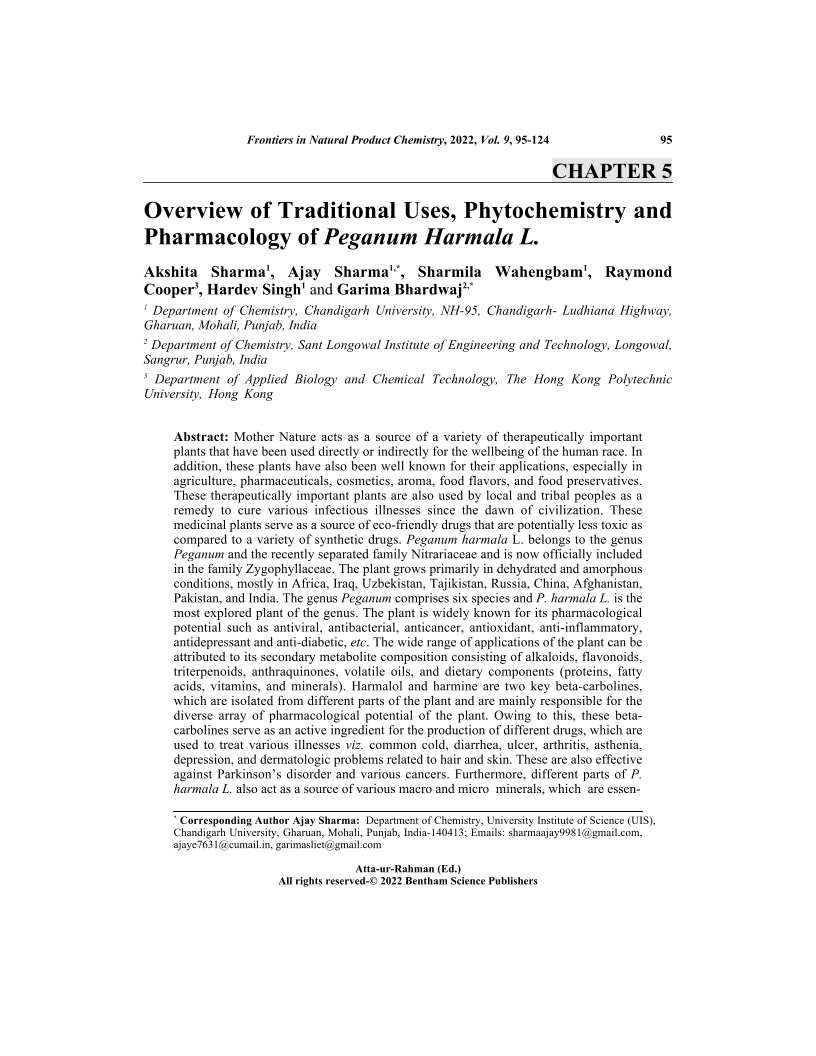
Mother Nature acts as a source of a variety of therapeutically important plants that have been used directly or indirectly for the wellbeing of the human race. In addition, these plants have also been well known for their applications, especially in agriculture, pharmaceuticals, cosmetics, aroma, food flavors, and food preservatives. These therapeutically important plants are also used by local and tribal peoples as a remedy to cure various infectious illnesses since the dawn of civilization. These medicinal plants serve as a source of eco-friendly drugs that are potentially less toxic as compared to a variety of synthetic drugs. Peganum harmala L. belongs to the genus Peganum and the recently separated family Nitrariaceae and is now officially included in the family Zygophyllaceae. The plant grows primarily in dehydrated and amorphous conditions, mostly in Africa, Iraq, Uzbekistan, Tajikistan, Russia, China, Afghanistan, Pakistan, and India. The genus Peganum comprises six species and P. harmala L. is the most explored plant of the genus. The plant is widely known for its pharmacological potential such as antiviral, antibacterial, anticancer, antioxidant, anti-inflammatory, antidepressant and anti-diabetic, etc. The wide range of applications of the plant can be attributed to its secondary metabolite composition consisting of alkaloids, flavonoids, triterpenoids, anthraquinones, volatile oils, and dietary components (proteins, fatty acids, vitamins, and minerals). Harmalol and harmine are two key beta-carbolines, which are isolated from different parts of the plant and are mainly responsible for the diverse array of pharmacological potential of the plant. Owing to this, these betacarbolines serve as an active ingredient for the production of different drugs, which are used to treat various illnesses viz. common cold, diarrhea, ulcer, arthritis, asthenia, depression, and dermatologic problems related to hair and skin. These are also effective against Parkinson’s disorder and various cancers. Furthermore, different parts of P. harmala L. also act as a source of various macro and micro minerals, which are essential for the smooth functioning of the human body. The aim of the present chapter is to summarize the various traditional uses, pharmacological properties and phytochemistry of P. harmala L.
-
From This Site
/content/books/9789815040586.chapter-5dcterms_subject,pub_keyword-contentType:Journal -contentType:Figure -contentType:Table -contentType:SupplementaryData105
