


Fungi Role in Soil Fertility
- Authors: Arnav Walia1, Debarati Paul2, Soma Mukherjee3, Madhusudhan Reddy D.4
-
View Affiliations Hide Affiliations1 Amity Institute of Biotechnology, AUUP, Noida, India 2 Amity Institute of Biotechnology, AUUP, Noida, India 3 University of Holy Cross, 4123 Woodland Dr, New Orleans, LA70131, USA 4 Department of Microbiology, Palamuru University, Mahabubnagar, Telangana, India
- Source: Sustainable Utilization of Fungi in Agriculture and Industry , pp 35-51
- Publication Date: July 2022
- Language: English


Fungi Role in Soil Fertility, Page 1 of 1
< Previous page | Next page > /docserver/preview/fulltext/9789815040340/chap3-1.gif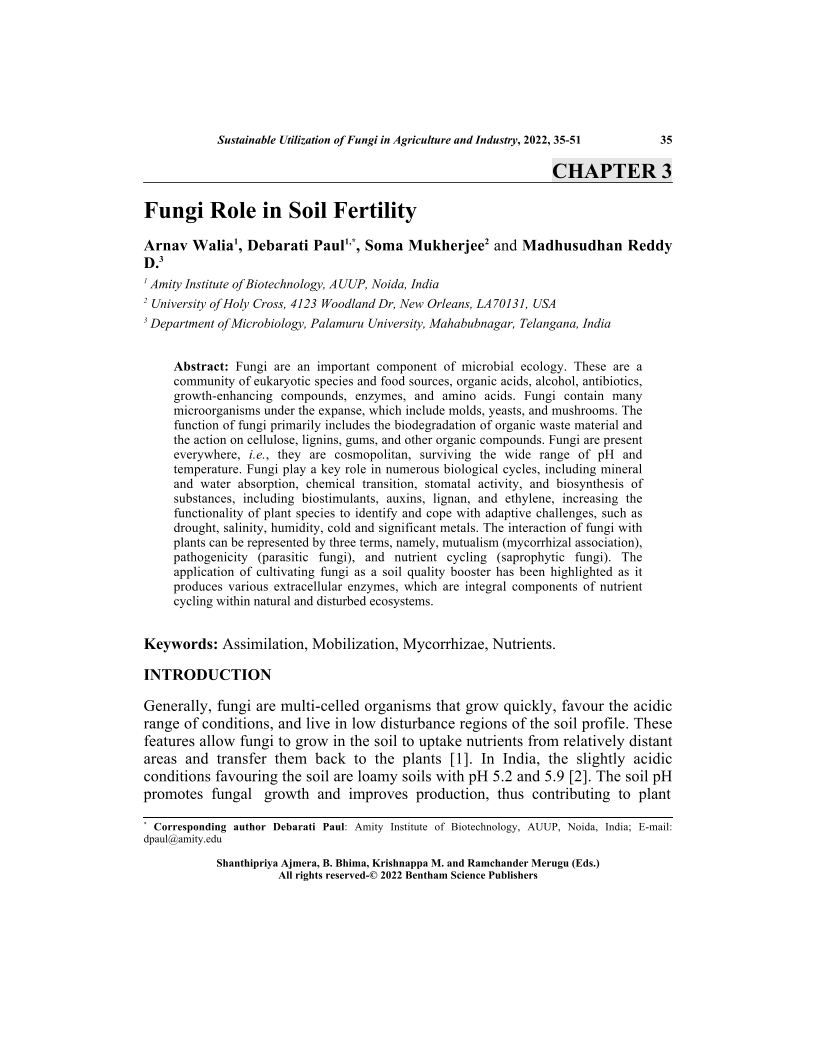
Fungi are an important component of microbial ecology. These are a community of eukaryotic species and food sources, organic acids, alcohol, antibiotics, growth-enhancing compounds, enzymes, and amino acids. Fungi contain many microorganisms under the expanse, which include molds, yeasts, and mushrooms. The function of fungi primarily includes the biodegradation of organic waste material and the action on cellulose, lignins, gums, and other organic compounds. Fungi are present everywhere, i.e., they are cosmopolitan, surviving the wide range of pH and temperature. Fungi play a key role in numerous biological cycles, including mineral and water absorption, chemical transition, stomatal activity, and biosynthesis of substances, including biostimulants, auxins, lignan, and ethylene, increasing the functionality of plant species to identify and cope with adaptive challenges, such as drought, salinity, humidity, cold and significant metals. The interaction of fungi with plants can be represented by three terms, namely, mutualism (mycorrhizal association), pathogenicity (parasitic fungi), and nutrient cycling (saprophytic fungi). The application of cultivating fungi as a soil quality booster has been highlighted as it produces various extracellular enzymes, which are integral components of nutrient cycling within natural and disturbed ecosystems.
-
From This Site
/content/books/9789815040340.chap3dcterms_subject,pub_keyword-contentType:Journal -contentType:Figure -contentType:Table -contentType:SupplementaryData105
