


Nanoformulations and Their Therapeutic Advantages
- Authors: D. Nedra Karunaratne1, Thusini D. Wijerathne2, Nuwanthi P. Katuwavila3, Geethi K. Pamunuwa4
-
View Affiliations Hide Affiliations1 Department of Chemistry, University of Peradeniya, Peradeniya, Sri Lanka 2 Department of Chemistry, University of Peradeniya, Peradeniya, Sri Lanka 3 Faculty of Engineering and Science, National School of Business Management, Mahenwatte, Pitipana, Homagama, Sri Lanka 4 Department of Horticulture and Landscape Gardening, Faculty of Agriculture and Plantation Management, Wayamba University of Sri Lanka, Makandura, Gonawila, Sri Lanka
- Source: Nanotherapeutics for the Treatment of Hepatocellular Carcinoma , pp 123-165
- Publication Date: March 2022
- Language: English


Nanoformulations and Their Therapeutic Advantages, Page 1 of 1
< Previous page | Next page > /docserver/preview/fulltext/9789815039740/chapter-3-1.gif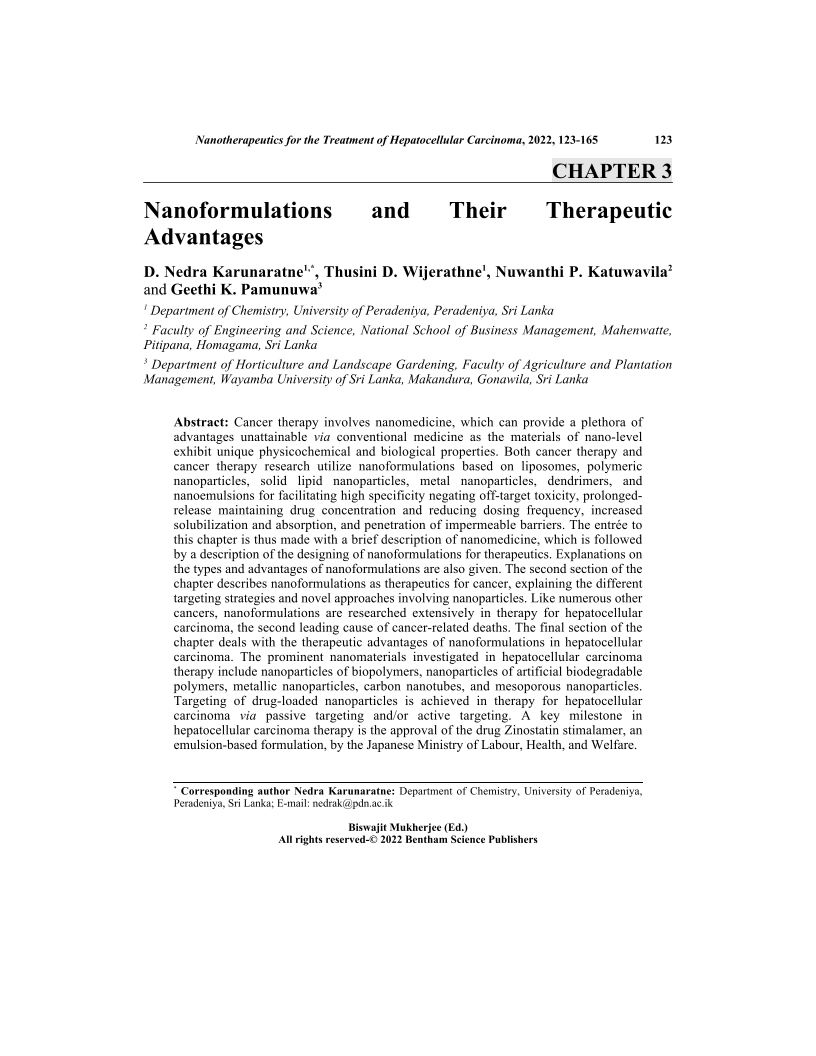
Cancer therapy involves nanomedicine, which can provide a plethora ofadvantages unattainable via conventional medicine as the materials of nano-levelexhibit unique physicochemical and biological properties. Both cancer therapy andcancer therapy research utilize nanoformulations based on liposomes, polymericnanoparticles, solid lipid nanoparticles, metal nanoparticles, dendrimers, andnanoemulsions for facilitating high specificity negating off-target toxicity, prolongedreleasemaintaining drug concentration and reducing dosing frequency, increasedsolubilization and absorption, and penetration of impermeable barriers. The entrée tothis chapter is thus made with a brief description of nanomedicine, which is followedby a description of the designing of nanoformulations for therapeutics. Explanations onthe types and advantages of nanoformulations are also given. The second section of thechapter describes nanoformulations as therapeutics for cancer, explaining the differenttargeting strategies and novel approaches involving nanoparticles. Like numerous othercancers, nanoformulations are researched extensively in therapy for hepatocellularcarcinoma, the second leading cause of cancer-related deaths. The final section of thechapter deals with the therapeutic advantages of nanoformulations in hepatocellularcarcinoma. The prominent nanomaterials investigated in hepatocellular carcinomatherapy include nanoparticles of biopolymers, nanoparticles of artificial biodegradablepolymers, metallic nanoparticles, carbon nanotubes, and mesoporous nanoparticles.Targeting of drug-loaded nanoparticles is achieved in therapy for hepatocellularcarcinoma via passive targeting and/or active targeting. A key milestone inhepatocellular carcinoma therapy is the approval of the drug Zinostatin stimalamer, anemulsion-based formulation, by the Japanese Ministry of Labour, Health, and Welfare.
-
From This Site
/content/books/9789815039740.chapter-3dcterms_subject,pub_keyword-contentType:Journal -contentType:Figure -contentType:Table -contentType:SupplementaryData105
