


Progressive Experimental Screening Tools and Techniques for Parkinson's Disease: An Update
- Authors: Nitin Rawat1, Hemprabha Tainguriya2, Monika Kadian3, Anil Kumar4
-
View Affiliations Hide Affiliations1 Pharmacology Department, University Institute of Pharmaceutical Sciences, UGC Centre of Advanced Studies (UGC CAS), Panjab University, Chandigarh 160014, India 2 Pharmacology Department, University Institute of Pharmaceutical Sciences, UGC Centre of Advanced Studies (UGC-CAS), Panjab University, Chandigarh 160014, India 3 Pharmacology Department, University Institute of Pharmaceutical Sciences, UGC Centre of Advanced Studies (UGC-CAS), Panjab University, Chandigarh 160014, India 4 Pharmacology Department, University Institute of Pharmaceutical Sciences, UGC Centre of Advanced Studies (UGC-CAS), Panjab University, Chandigarh 160014, India
- Source: Animal Models for Neurological Disorders , pp 78-93
- Publication Date: December 2021
- Language: English


Progressive Experimental Screening Tools and Techniques for Parkinson's Disease: An Update, Page 1 of 1
< Previous page | Next page > /docserver/preview/fulltext/9789815039689/chapter-4-1.gif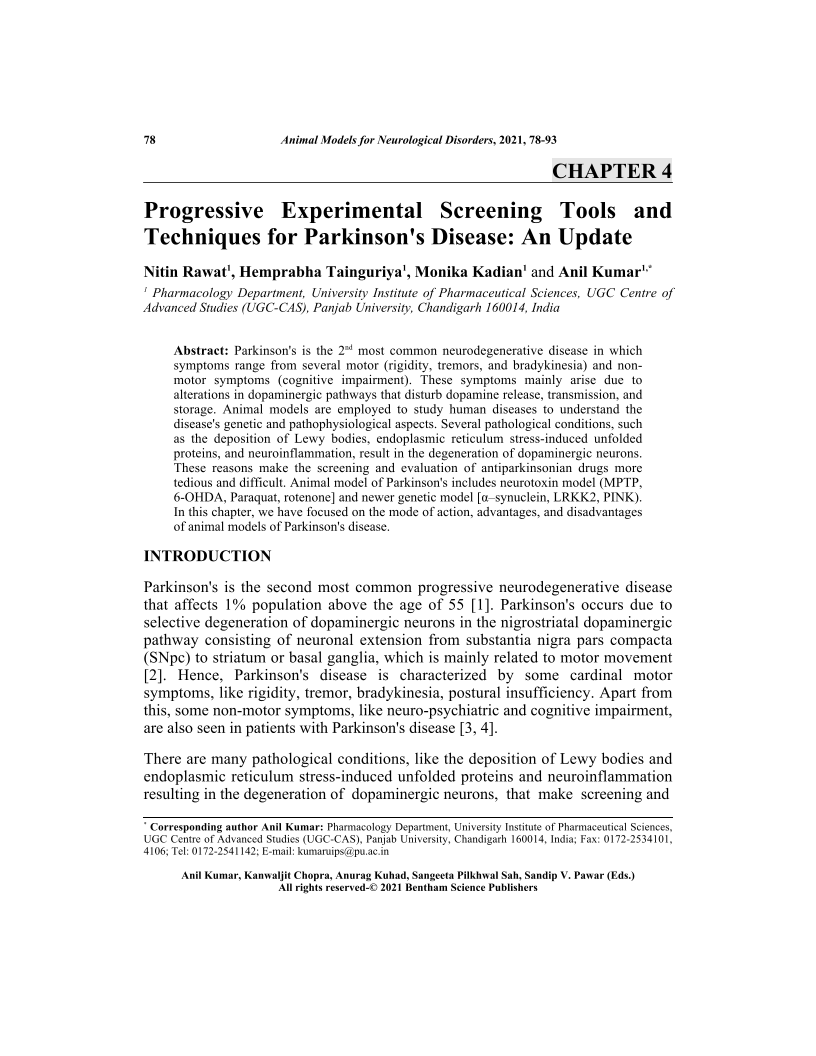
Parkinson's is the 2nd most common neurodegenerative disease in which symptoms range from several motor (rigidity, tremors, and bradykinesia) and nonmotor symptoms (cognitive impairment). These symptoms mainly arise due to alterations in dopaminergic pathways that disturb dopamine release, transmission, and storage. Animal models are employed to study human diseases to understand the disease's genetic and pathophysiological aspects. Several pathological conditions, such as the deposition of Lewy bodies, endoplasmic reticulum stress-induced unfolded proteins, and neuroinflammation, result in the degeneration of dopaminergic neurons. These reasons make the screening and evaluation of antiparkinsonian drugs more tedious and difficult. Animal model of Parkinson's includes neurotoxin model (MPTP, 6-OHDA, Paraquat, rotenone] and newer genetic model [αsynuclein, LRKK2, PINK). In this chapter, we have focused on the mode of action, advantages, and disadvantages of animal models of Parkinson's disease.
-
From This Site
/content/books/9789815039689.chapter-4dcterms_subject,pub_keyword-contentType:Journal -contentType:Figure -contentType:Table -contentType:SupplementaryData105
