


Structure-Activity Relationship of Flavonoids: Recent Updates
- Authors: Shruti Khare1, Rikeshwer Prasad Dewangan2, Ajay Kumar3
-
View Affiliations Hide Affiliations1 Advance Institute of Biotech & Paramedical Sciences, Kanpur 209217, (U.P.), India 2 Department of Pharmaceutical Chemistry, School of Pharmaceutical Education and Research, Jamia Hamdard (Deemed to be University), New Delhi, India 3 Department of Pharmacology, Government Pharmacy College, BRD Medical College campus, Gorakhpur, U.P. India
- Source: The Chemistry inside Spices & Herbs: Research and Development: Volume 1 , pp 237-259
- Publication Date: April 2022
- Language: English


Structure-Activity Relationship of Flavonoids: Recent Updates, Page 1 of 1
< Previous page | Next page > /docserver/preview/fulltext/9789815039566/chapter-8-1.gif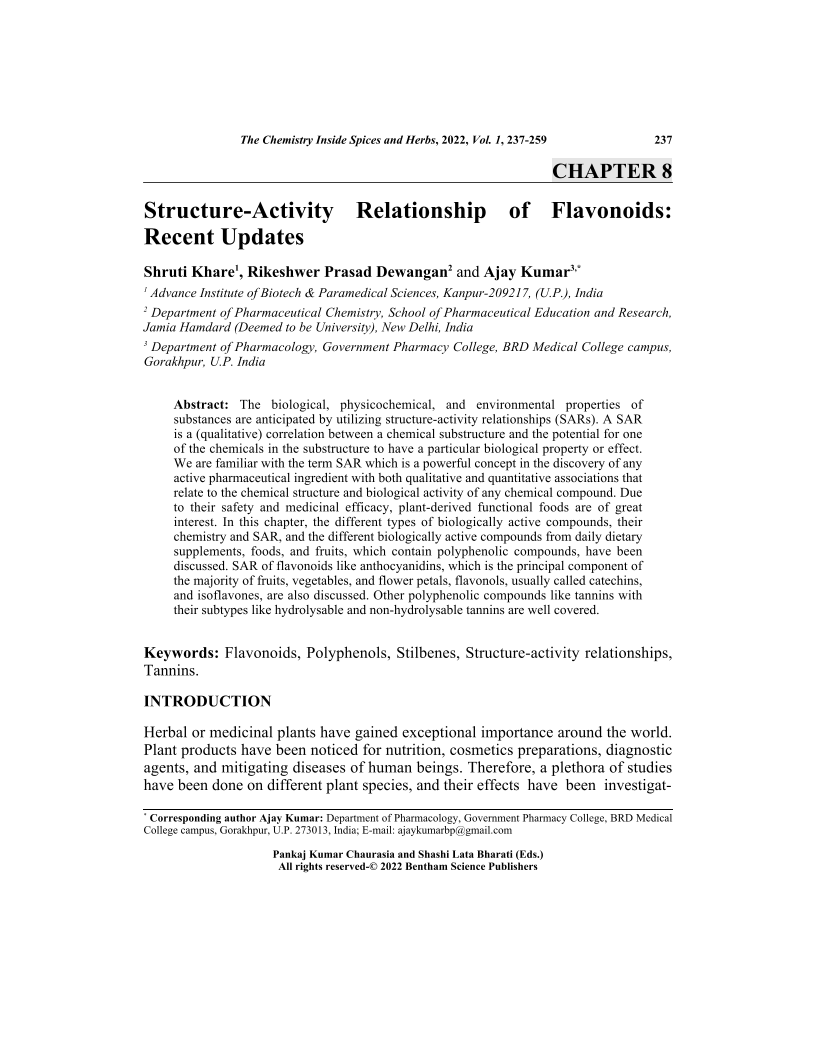
<div>The biological, physicochemical, and environmental properties of</div><div>substances are anticipated by utilizing structure-activity relationships (SARs). A SAR</div><div>is a (qualitative) correlation between a chemical substructure and the potential for one</div><div>of the chemicals in the substructure to have a particular biological property or effect.</div><div>We are familiar with the term SAR which is a powerful concept in the discovery of any</div><div>active pharmaceutical ingredient with both qualitative and quantitative associations that</div><div>relate to the chemical structure and biological activity of any chemical compound. Due</div><div>to their safety and medicinal efficacy, plant-derived functional foods are of great</div><div>interest. In this chapter, the different types of biologically active compounds, their</div><div>chemistry and SAR, and the different biologically active compounds from daily dietary</div><div>supplements, foods, and fruits, which contain polyphenolic compounds, have been</div><div>discussed. SAR of flavonoids like anthocyanidins, which is the principal component of</div><div>the majority of fruits, vegetables, and flower petals, flavonols, usually called catechins,</div><div>and isoflavones, are also discussed. Other polyphenolic compounds like tannins with</div><div>their subtypes like hydrolysable and non-hydrolysable tannins are well covered.</div>
-
From This Site
/content/books/9789815039566.chapter-8dcterms_subject,pub_keyword-contentType:Journal -contentType:Figure -contentType:Table -contentType:SupplementaryData105
