


Implication of Dehydroepiandrosterone on Dementia Related to Oxidative Stress
- Authors: Adriane Bello Klein1, Alexandre Castro2, Alex Sander da Rosa Araujo3, Daiane da Rocha Janner4, Maria Helena Vianna Metello Jacob5
-
View Affiliations Hide Affiliations1 Federal University of Rio Grande do Sul (UFRGS), Institute of Basic Health Sciences, Physiology, R. Sarmento Leite, 500 CEP 90035 190- Porto Alegre, RS, Brazil 2 Federal University of Rio Grande do Sul (UFRGS), Institute of Basic Health Sciences, Physiology, R. Sarmento Leite, 500 CEP 90035-190- Porto Alegre, RS, Brazil 3 Federal University of Rio Grande do Sul (UFRGS), Institute of Basic Health Sciences, Physiology, R. Sarmento Leite, 500 CEP 90035-190- Porto Alegre, RS, Brazil 4 Federal University of Rio de Janeiro (UFRJ), Carlos Chagas Filho Institute of Biophysics Neurogenesis Lab, Av. Carlos Chagas Filho, 373CEP 21941-902, Rio de Janeiro, RJ, Brazil 5 Montfort Hospital Institut du Savoir, 745, Montreal Road, K1K 0T1 Ottawa, ON, Canada
- Source: Frontiers in Clinical Drug Research - Dementia: Volume 2 , pp 140-172
- Publication Date: November 2021
- Language: English


Implication of Dehydroepiandrosterone on Dementia Related to Oxidative Stress, Page 1 of 1
< Previous page | Next page > /docserver/preview/fulltext/9789815039474/chapter-3-1.gif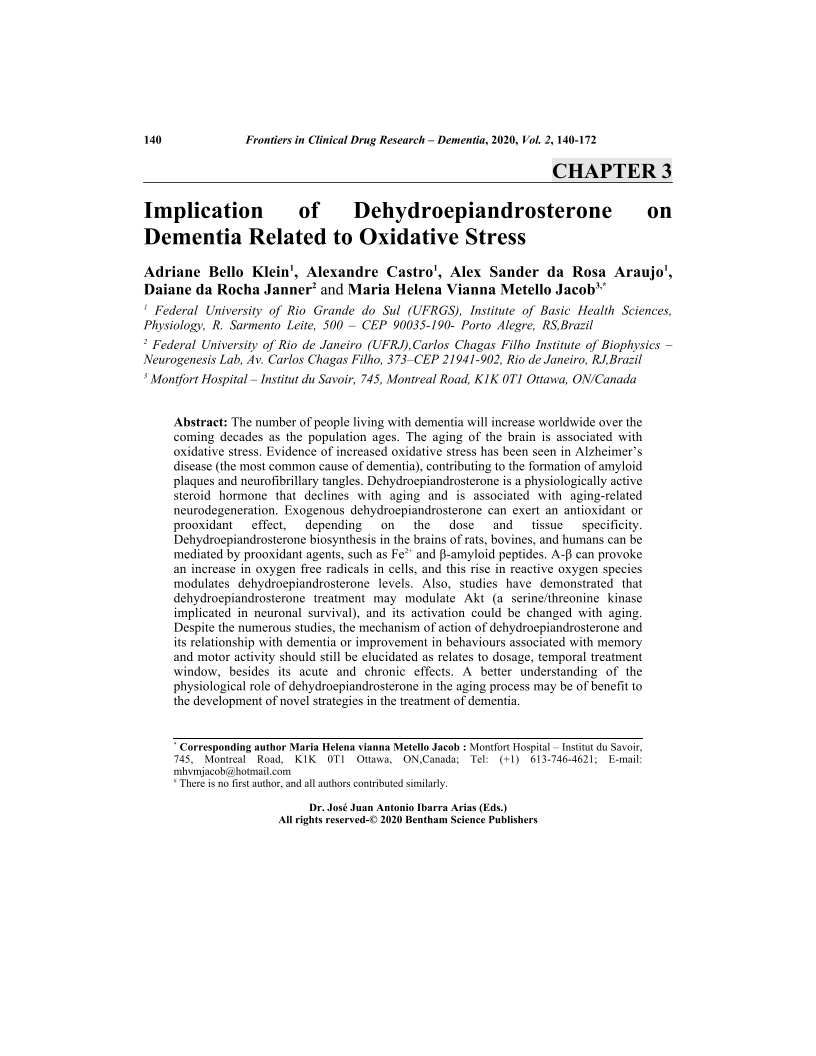
The number of people living with dementia will increase worldwide over the coming decades as the population ages. The aging of the brain is associated with oxidative stress. Evidence of increased oxidative stress has been seen in Alzheimers disease (the most common cause of dementia), contributing to the formation of amyloid plaques and neurofibrillary tangles. Dehydroepiandrosterone is a physiologically active steroid hormone that declines with aging and is associated with aging-related neurodegeneration. Exogenous dehydroepiandrosterone can exert an antioxidant or prooxidant effect, depending on the dose and tissue specificity. Dehydroepiandrosterone biosynthesis in the brains of rats, bovines, and humans can be mediated by prooxidant agents, such as Fe2+ and β-amyloid peptides. A-β can provoke an increase in oxygen free radicals in cells, and this rise in reactive oxygen species modulates dehydroepiandrosterone levels. Also, studies have demonstrated that dehydroepiandrosterone treatment may modulate Akt (a serine/threonine kinase implicated in neuronal survival), and its activation could be changed with aging. Despite the numerous studies, the mechanism of action of dehydroepiandrosterone and its relationship with dementia or improvement in behaviours associated with memory and motor activity should still be elucidated as relates to dosage, temporal treatment window, besides its acute and chronic effects. A better understanding of the physiological role of dehydroepiandrosterone in the aging process may be of benefit to the development of novel strategies in the treatment of dementia.
-
From This Site
/content/books/9789815039474.chapter-3dcterms_subject,pub_keyword-contentType:Journal -contentType:Figure -contentType:Table -contentType:SupplementaryData105
