


Smartphone Based Biosensors on Lateral Flow Assay Coupled to SERS: Point-of-Care Applications
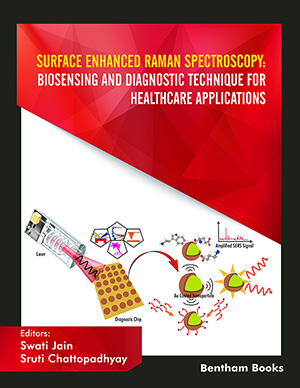
- Authors: Rajasekhar Chokkareddy1, Suvardhan Kanchi2, Surendra Thakur3, Venkatasubba Naidu Nuthalapati4
-
View Affiliations Hide Affiliations1 Department of Chemistry, Aditya College of Engineering and Technology, Andhra Pradesh, India 2 Department of Chemistry, Durban University of Technology, Durban, South Africa Department of Chemistry, Sambhram Institute of Technology, Jalahalli East, Bengaluru, India 3 SkillsCoLab, Durban University of Technology, Durban, South Africa 4 Department of Chemistry, Sri Venkateswara University, Tirupati, Andhra Pradesh, India
- Source: Surface Enhanced Raman Spectroscopy: Biosensing and Diagnostic Technique for Healthcare Applications , pp 191-212
- Publication Date: December 2021
- Language: English


Smartphone Based Biosensors on Lateral Flow Assay Coupled to SERS: Point-of-Care Applications, Page 1 of 1
< Previous page | Next page > /docserver/preview/fulltext/9789815039115/chapter-7-1.gif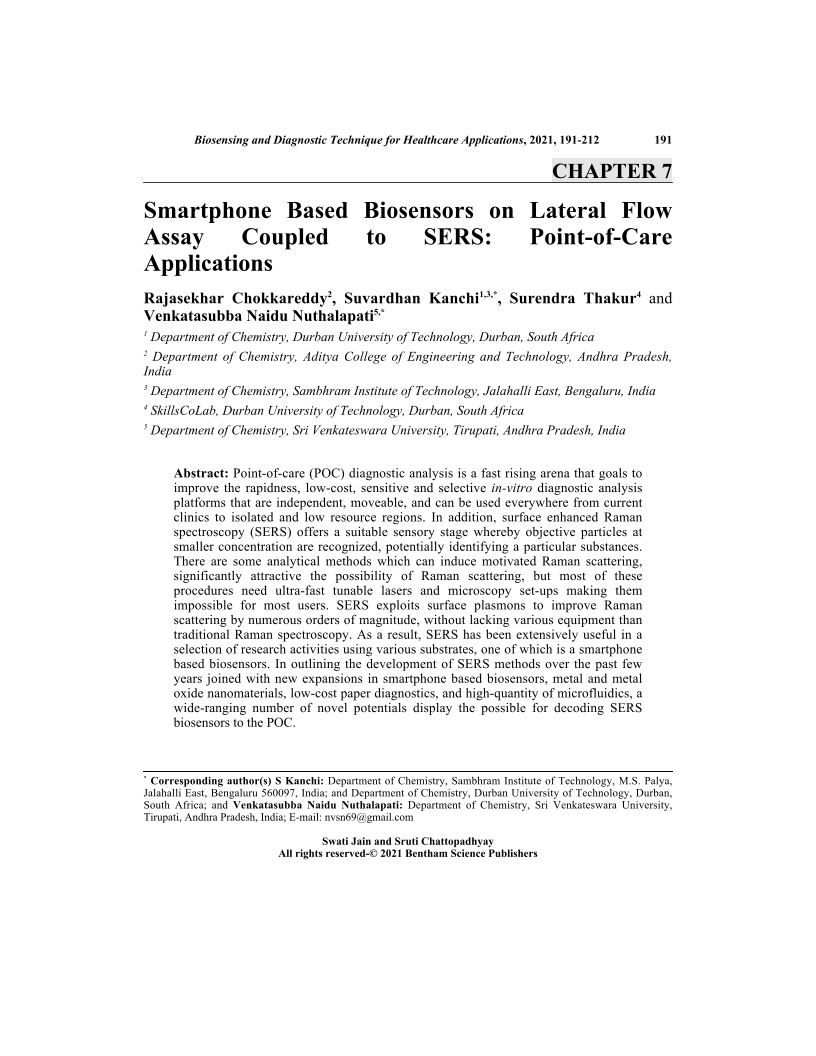
<div>Point-of-care (POC) diagnostic analysis is a fast rising arena that goals to</div><div>improve the rapidness, low-cost, sensitive and selective in-vitro diagnostic analysis</div><div>platforms that are independent, moveable, and can be used everywhere from current</div><div>clinics to isolated and low resource regions. In addition, surface enhanced Raman</div><div>spectroscopy (SERS) offers a suitable sensory stage whereby objective particles at</div><div>smaller concentration are recognized, potentially identifying a particular substances.</div><div>There are some analytical methods which can induce motivated Raman scattering,</div><div>significantly attractive the possibility of Raman scattering, but most of these</div><div>procedures need ultra-fast tunable lasers and microscopy set-ups making them</div><div>impossible for most users. SERS exploits surface plasmons to improve Raman</div><div>scattering by numerous orders of magnitude, without lacking various equipment than</div><div>traditional Raman spectroscopy. As a result, SERS has been extensively useful in a</div><div>selection of research activities using various substrates, one of which is a smartphone</div><div>based biosensors. In outlining the development of SERS methods over the past few</div><div>years joined with new expansions in smartphone based biosensors, metal and metal</div><div>oxide nanomaterials, low-cost paper diagnostics, and high-quantity of microfluidics, a</div><div>wide-ranging number of novel potentials display the possible for decoding SERS</div><div>biosensors to the POC.</div>
-
From This Site
/content/books/9789815039115.chapter-7dcterms_subject,pub_keyword-contentType:Journal -contentType:Figure -contentType:Table -contentType:SupplementaryData105
