


Molecular Mechanism of Therapeutic Actions of Some Nanoparticles in Some Diseases
- Authors: Bello Aminu Bello1, Ibrahim Khalil Adam2, Sani S. Usman3, Yahaya Saidu Gwarzo4, Luqman Shah5, Fatima Sulaiman Abdullahi6
-
View Affiliations Hide Affiliations1 Department of Biochemistry, Federal University Dutse, P.M.B.7156 Dutse, Jigawa State,Nigeria 2 Department of Biochemistry, Federal University Dutse, P.M.B.7156 Dutse, Jigawa State,Nigeria 3 Department of Biological Sciences, Federal University Kashere, P.M.B. 0182 Kashere, Gombe,Nigeria 4 Department of Biochemistry, Federal University Dutse, P.M.B.7156 Dutse, Jigawa State,Nigeria 5 Department of Food Science and Technology, Federal University Dutsin MA, P.M.B. 5001, Katsina State,Pakistan 6 Department of Food Science and Technology, Federal University Dutsin-MA, P.M.B. 5001, Katsina State,Nigeria
- Source: Nanotherapeutic Strategies and New Pharmaceuticals Part II , pp 16-71
- Publication Date: December 2021
- Language: English


Molecular Mechanism of Therapeutic Actions of Some Nanoparticles in Some Diseases, Page 1 of 1
< Previous page | Next page > /docserver/preview/fulltext/9789815036725/chapter2-1.gif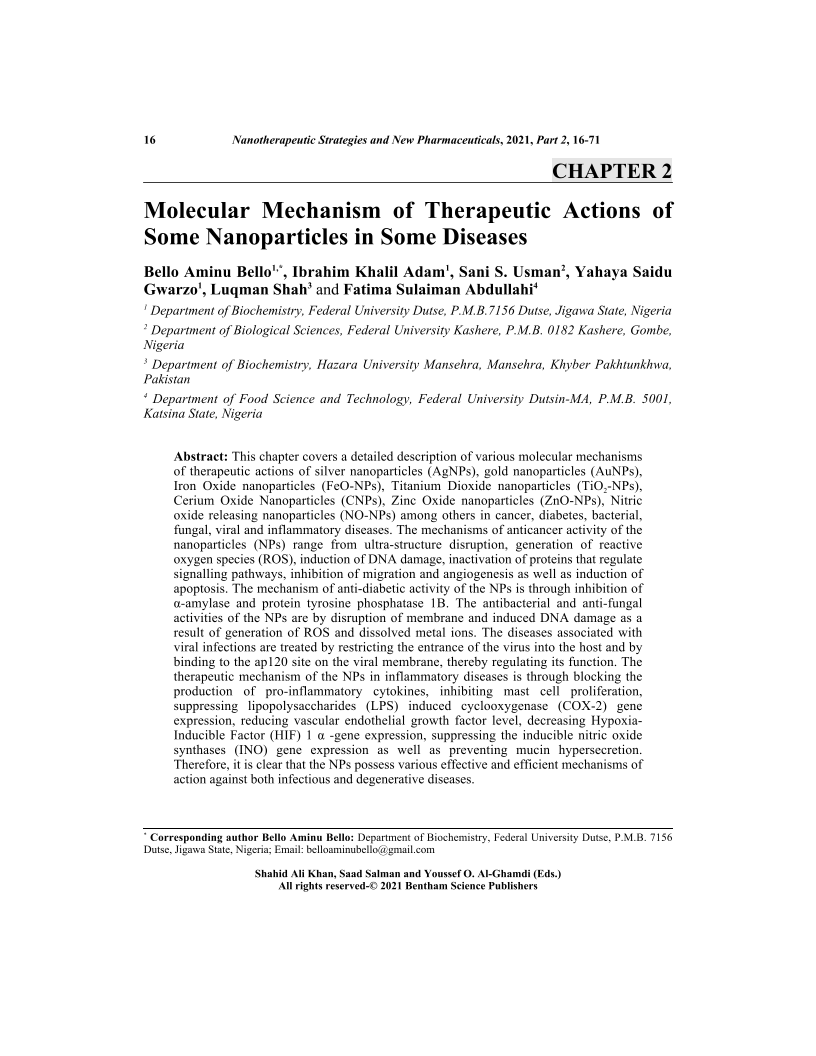
This chapter covers a detailed description of various molecular mechanisms of therapeutic actions of silver nanoparticles (AgNPs), gold nanoparticles (AuNPs), Iron Oxide nanoparticles (FeO-NPs), Titanium Dioxide nanoparticles (TiO2-NPs), Cerium Oxide Nanoparticles (CNPs), Zinc Oxide nanoparticles (ZnO-NPs), Nitric oxide releasing nanoparticles (NO-NPs) among others in cancer, diabetes, bacterial, fungal, viral and inflammatory diseases. The mechanisms of anticancer activity of the nanoparticles (NPs) range from ultra-structure disruption, generation of reactive oxygen species (ROS), induction of DNA damage, inactivation of proteins that regulate signalling pathways, inhibition of migration and angiogenesis as well as induction of apoptosis. The mechanism of anti-diabetic activity of the NPs is through inhibition of α-amylase and protein tyrosine phosphatase 1B. The antibacterial and anti-fungal activities of the NPs are by disruption of membrane and induced DNA damage as a result of generation of ROS and dissolved metal ions. The diseases associated with viral infections are treated by restricting the entrance of the virus into the host and by binding to the ap120 site on the viral membrane, thereby regulating its function. The therapeutic mechanism of the NPs in inflammatory diseases is through blocking the production of pro-inflammatory cytokines, inhibiting mast cell proliferation, suppressing lipopolysaccharides (LPS) induced cyclooxygenase (COX-2) gene expression, reducing vascular endothelial growth factor level, decreasing Hypoxia- Inducible Factor (HIF) 1 α -gene expression, suppressing the inducible nitric oxide synthases (INO) gene expression as well as preventing mucin hypersecretion. Therefore, it is clear that the NPs possess various effective and efficient mechanisms of action against both infectious and degenerative diseases.
-
From This Site
/content/books/9789815036725.chapter2dcterms_subject,pub_keyword-contentType:Journal -contentType:Figure -contentType:Table -contentType:SupplementaryData105
