


Gradient Fabrication

- Authors: Nasim Kiaie1, Mehdi Razavi2
-
View Affiliations Hide Affiliations1 Department of Biomedical Engineering, Amirkabir University of Technology, Tehran, 15875, Iran. 2 Department of Biomedical Engineering, Amirkabir University of Technology, Tehran, 15875, Iran.
- Source: Biomaterials for Tissue Engineering , pp 195-215
- Publication Date: October 2017
- Language: English


Gradient Fabrication, Page 1 of 1
< Previous page | Next page > /docserver/preview/fulltext/9781681085364/chapter-6-1.gif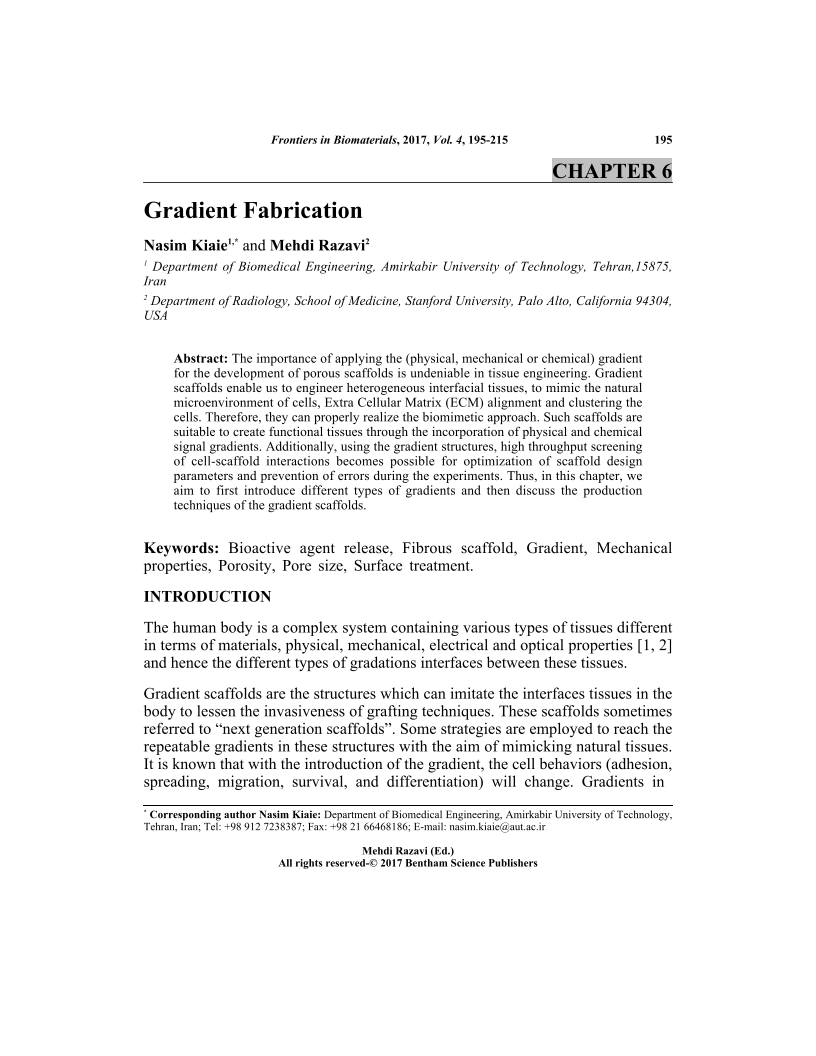
The importance of applying the (physical, mechanical or chemical) gradient for the development of porous scaffolds is undeniable in tissue engineering. Gradient scaffolds enable us to engineer heterogeneous interfacial tissues, to mimic the natural microenvironment of cells, Extra Cellular Matrix (ECM) alignment and clustering the cells. Therefore, they can properly realize the biomimetic approach. Such scaffolds are suitable to create functional tissues through the incorporation of physical and chemical signal gradients. Additionally, using the gradient structures, high throughput screening of cell-scaffold interactions becomes possible for optimization of scaffold design parameters and prevention of errors during the experiments. Thus, in this chapter, we aim to first introduce different types of gradients and then discuss the production techniques of the gradient scaffolds.
-
From This Site
/content/books/9781681085364.chapter-6dcterms_subject,pub_keyword-contentType:Journal -contentType:Figure -contentType:Table -contentType:SupplementaryData105
