


A Multi Agent Model for Reverse Perception Effect
- Authors: Nuno Trindade Magessi1, Luis Antunes2
-
View Affiliations Hide Affiliations1 BioISI/ MAS/ Faculdade de Cincias da Universidade de Lisboa, Lisboa, Portugal. 2 BioISI/ MAS/ Faculdade de Cincias da Universidade de Lisboa, Lisboa, Portugal.
- Source: Intelligent Computational Systems: A Multi-Disciplinary Perspective , pp 122-153
- Publication Date: August 2017
- Language: English


A Multi Agent Model for Reverse Perception Effect, Page 1 of 1
< Previous page | Next page > /docserver/preview/fulltext/9781681085029/chapter-4-1.gif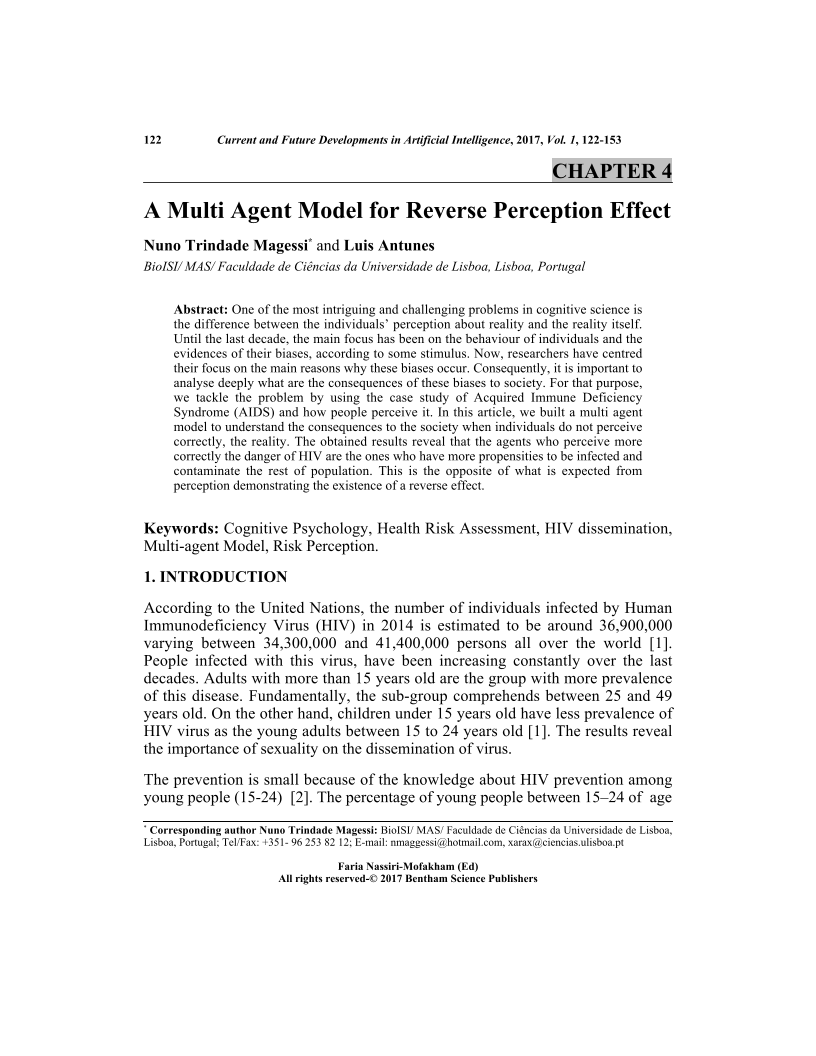
One of the most intriguing and challenging problems in cognitive science is the difference between the individuals perception about reality and the reality itself. Until the last decade, the main focus has been on the behaviour of individuals and the evidences of their biases, according to some stimulus. Now, researchers have centred their focus on the main reasons why these biases occur. Consequently, it is important to analyse deeply what are the consequences of these biases to society. For that purpose, we tackle the problem by using the case study of Acquired Immune Deficiency Syndrome (AIDS) and how people perceive it. In this article, we built a multi agent model to understand the consequences to the society when individuals do not perceive correctly, the reality. The obtained results reveal that the agents who perceive more correctly the danger of HIV are the ones who have more propensities to be infected and contaminate the rest of population. This is the opposite of what is expected from perception demonstrating the existence of a reverse effect.
-
From This Site
/content/books/9781681085029.chapter-4dcterms_subject,pub_keyword-contentType:Journal -contentType:Figure -contentType:Table -contentType:SupplementaryData105
