


Essential Roles of Renin-Angiotensin System in the Kidney

- Authors: Ingrid Kazue Mizuno Watanabe1, Zaira Palomino Jara2, Roberto Mesquita Soler3, Nestor Schor4, Flavia F. Jung5
-
View Affiliations Hide Affiliations1 Nephrology Division, Department of Medicine, Escola Paulista de Medicina, Federal University of So Paulo, So Paulo, Brazil. 2 Nephrology Division, Department of Medicine, Escola Paulista de Medicina, Federal University of So Paulo, So Paulo, Brazil. 3 Nephrology Division, Department of Medicine, Escola Paulista de Medicina, Federal University of So Paulo, So Paulo, Brazil. 4 Nephrology Division, Department of Medicine, Escola Paulista de Medicina, Federal University of So Paulo, So Paulo, Brazil. 5 Nephrology Division, Department of Medicine, Escola Paulista de Medicina, Federal University of So Paulo, So Paulo, Brazil.
- Source: New Aspects of the Renin Angiotensin System in Cardiovascular and Renal Diseases , pp 110-137
- Publication Date: November 2016
- Language: English


Essential Roles of Renin-Angiotensin System in the Kidney, Page 1 of 1
< Previous page | Next page > /docserver/preview/fulltext/9781681083131/chapter-6-1.gif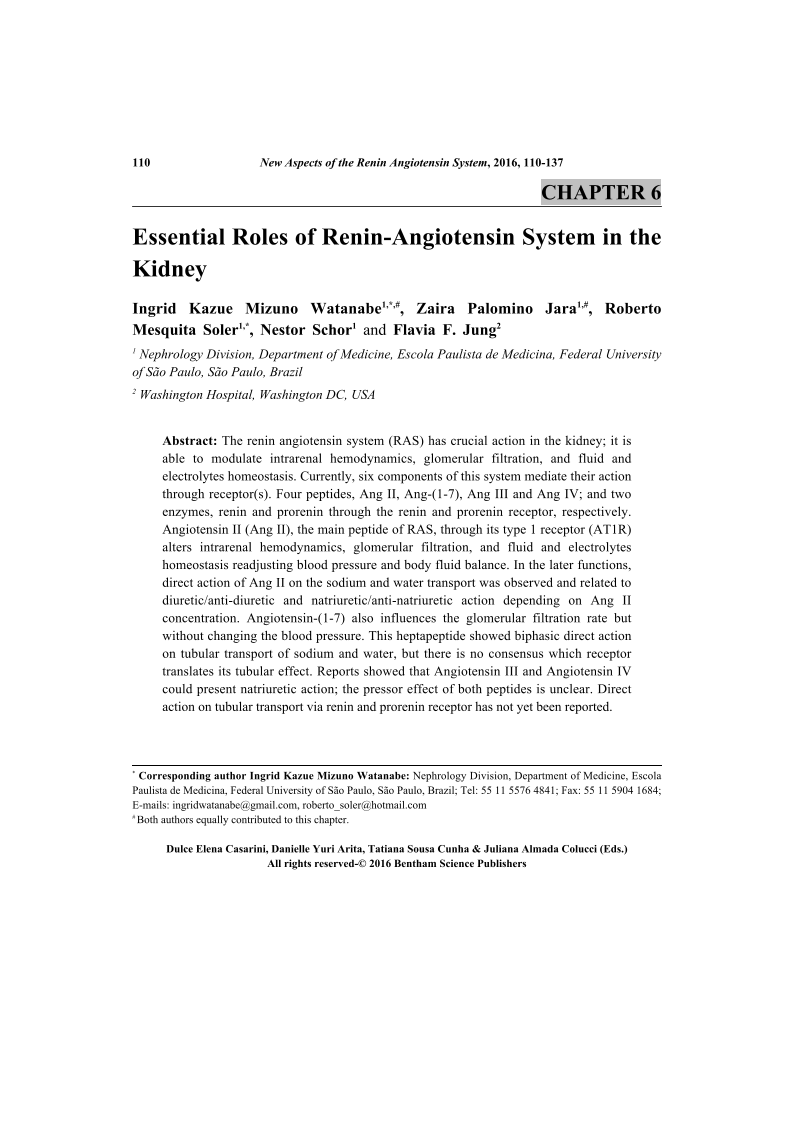
The renin angiotensin system (RAS) has crucial action in the kidney; it is able to modulate intrarenal hemodynamics, glomerular filtration, and fluid and electrolytes homeostasis. Currently, six components of this system mediate their action through receptor(s). Four peptides, Ang II, Ang-(1-7), Ang III and Ang IV; and two enzymes, renin and prorenin through the renin and prorenin receptor, respectively. Angiotensin II (Ang II), the main peptide of RAS, through its type 1 receptor (AT1R) alters intrarenal hemodynamics, glomerular filtration, and fluid and electrolytes homeostasis readjusting blood pressure and body fluid balance. In the later functions, direct action of Ang II on the sodium and water transport was observed and related to diuretic/anti-diuretic and natriuretic/anti-natriuretic action depending on Ang II concentration. Angiotensin-(1-7) also influences the glomerular filtration rate but without changing the blood pressure. This heptapeptide showed biphasic direct action on tubular transport of sodium and water, but there is no consensus which receptor translates its tubular effect. Reports showed that Angiotensin III and Angiotensin IV could present natriuretic action; the pressor effect of both peptides is unclear. Direct action on tubular transport via renin and prorenin receptor has not yet been reported.
-
From This Site
/content/books/9781681083131.chapter-6dcterms_subject,pub_keyword-contentType:Journal -contentType:Figure -contentType:Table -contentType:SupplementaryData105
