


Renin-Angiotensin System in Animal Models of Diabetes and Hypertension

- Authors: Roseli Peres Moreira, Nadia de Sousa da Cunha Bertoncello, Rodolfo Mattar Rosa, Isabela Bezerra Loyola, Juliana Dineia Perez Brandao, Juliana Almada Colucci6
-
View Affiliations Hide Affiliations6 Departamento de Medicina, Disciplina de Nefrologia, Universidade Federal de Sao Paulo Rua Botucatu, 740 Vila Clementino , Sao Paulo , SP 04023-90
- Source: New Aspects of the Renin Angiotensin System in Cardiovascular and Renal Diseases , pp 322-336
- Publication Date: November 2016
- Language: English


Renin-Angiotensin System in Animal Models of Diabetes and Hypertension, Page 1 of 1
< Previous page | Next page > /docserver/preview/fulltext/9781681083131/chapter-15-1.gif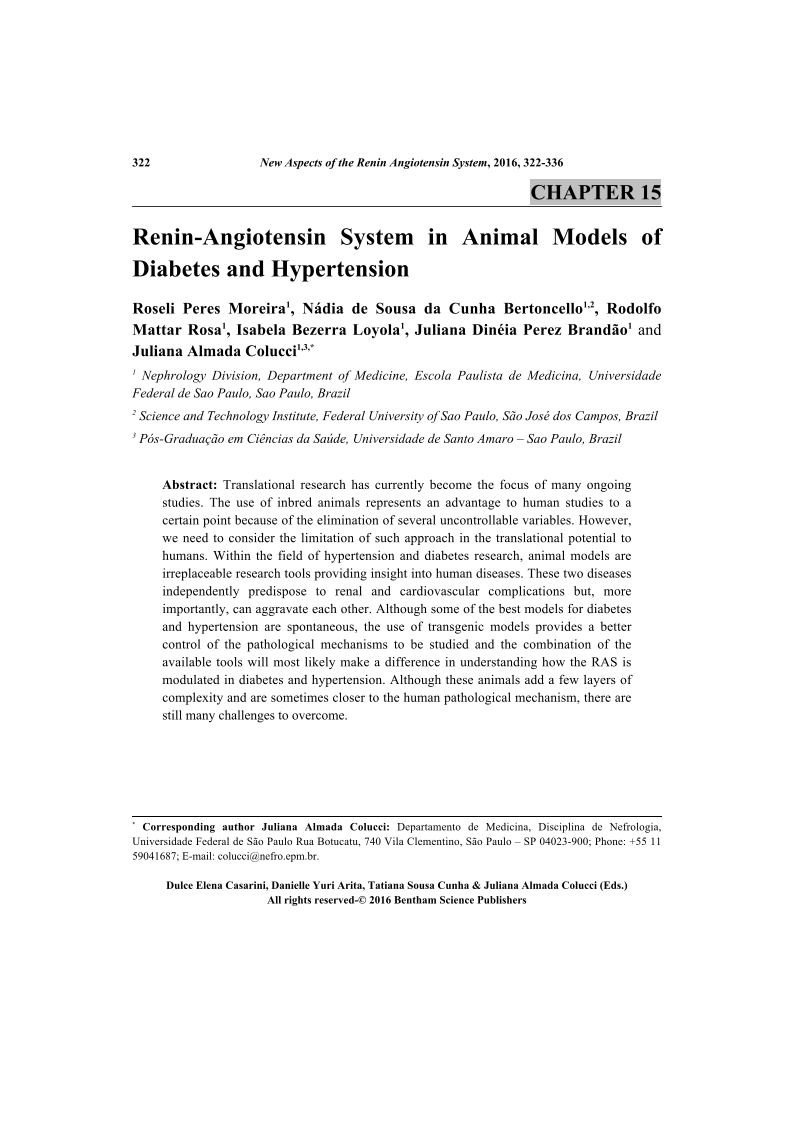
Translational research has currently become the focus of many ongoing studies. The use of inbred animals represents an advantage to human studies to a certain point because of the elimination of several uncontrollable variables. However, we need to consider the limitation of such approach in the translational potential to humans. Within the field of hypertension and diabetes research, animal models are irreplaceable research tools providing insight into human diseases. These two diseases independently predispose to renal and cardiovascular complications but, more importantly, can aggravate each other. Although some of the best models for diabetes and hypertension are spontaneous, the use of transgenic models provides a better control of the pathological mechanisms to be studied and the combination of the available tools will most likely make a difference in understanding how the RAS is modulated in diabetes and hypertension. Although these animals add a few layers of complexity and are sometimes closer to the human pathological mechanism, there are still many challenges to overcome.
-
From This Site
/content/books/9781681083131.chapter-15dcterms_subject,pub_keyword-contentType:Journal -contentType:Figure -contentType:Table -contentType:SupplementaryData105
