


Exercise and Renin Angiotensin System

- Authors: Tatiana Sousa Cunha1, Kleiton Augusto Santos Silva2, Andrea Sanches3, Sebastiao Donato Silva Jr.4, Vanessa Oliveira5, Lilia Firoozmand6, Fernanda Klein Marcondes7, Lisete C. Michelini8
-
View Affiliations Hide Affiliations1 Department of Physiology & Biophysics, Institute of Biomedical Sciences University of Sao Paulo Av. Prof. Lineu Prestes, 1524 05508-000 Sao Paulo, SP, Brazil. 2 Department of Physiology & Biophysics, Institute of Biomedical Sciences University of Sao Paulo Av. Prof. Lineu Prestes, 1524 05508-000 Sao Paulo, SP, Brazil. 3 Department of Physiology & Biophysics, Institute of Biomedical Sciences University of Sao Paulo Av. Prof. Lineu Prestes, 1524 05508-000 Sao Paulo, SP, Brazil. 4 Department of Physiology & Biophysics, Institute of Biomedical Sciences University of Sao Paulo Av. Prof. Lineu Prestes, 1524 05508-000 Sao Paulo, SP, Brazil. 5 Department of Physiology & Biophysics, Institute of Biomedical Sciences University of Sao Paulo Av. Prof. Lineu Prestes, 1524 05508-000 Sao Paulo, SP, Brazil. 6 Department of Physiology & Biophysics, Institute of Biomedical Sciences University of Sao Paulo Av. Prof. Lineu Prestes, 1524 05508-000 Sao Paulo, SP, Brazil. 7 Department of Physiology & Biophysics, Institute of Biomedical Sciences University of Sao Paulo Av. Prof. Lineu Prestes, 1524 05508-000 Sao Paulo, SP, Brazil. 8 Department of Physiology & Biophysics, Institute of Biomedical Sciences University of Sao Paulo Av. Prof. Lineu Prestes, 1524 05508-000 Sao Paulo, SP, Brazil.
- Source: New Aspects of the Renin Angiotensin System in Cardiovascular and Renal Diseases , pp 275-321
- Publication Date: November 2016
- Language: English


Exercise and Renin Angiotensin System, Page 1 of 1
< Previous page | Next page > /docserver/preview/fulltext/9781681083131/chapter-14-1.gif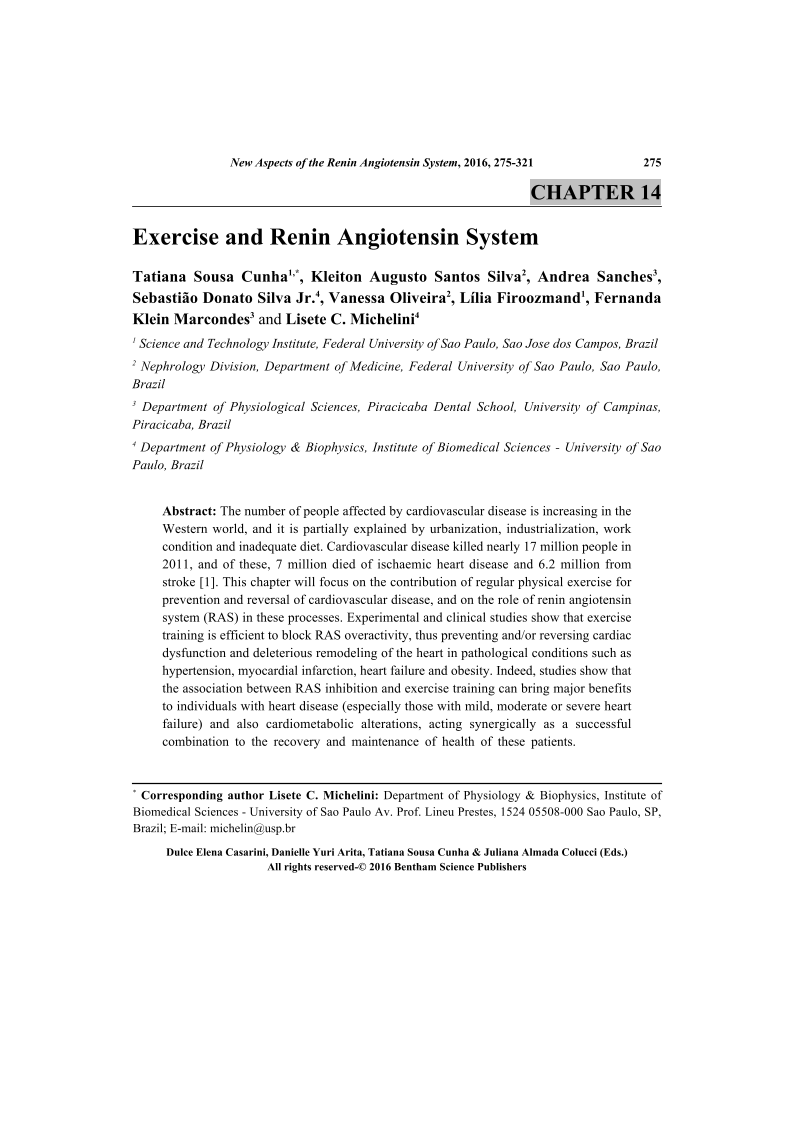
The number of people affected by cardiovascular disease is increasing in the Western world, and it is partially explained by urbanization, industrialization, work condition and inadequate diet. Cardiovascular disease killed nearly 17 million people in 2011, and of these, 7 million died of ischaemic heart disease and 6.2 million from stroke [1]. This chapter will focus on the contribution of regular physical exercise for prevention and reversal of cardiovascular disease, and on the role of renin angiotensin system (RAS) in these processes. Experimental and clinical studies show that exercise training is efficient to block RAS overactivity, thus preventing and/or reversing cardiac dysfunction and deleterious remodeling of the heart in pathological conditions such as hypertension, myocardial infarction, heart failure and obesity. Indeed, studies show that the association between RAS inhibition and exercise training can bring major benefits to individuals with heart disease (especially those with mild, moderate or severe heart failure) and also cardiometabolic alterations, acting synergically as a successful combination to the recovery and maintenance of health of these patients.
-
From This Site
/content/books/9781681083131.chapter-14dcterms_subject,pub_keyword-contentType:Journal -contentType:Figure -contentType:Table -contentType:SupplementaryData105
