


Sperm Chemotaxis in Mammals
- Authors: Laura C. Giojalas1, Héctor A. Guidobaldi2, Raúl Sánchez3
-
View Affiliations Hide Affiliations1 Centro de Biologa Celular y Molecular (UNC) e Instituto de Investigaciones Biolgicas y Tecnolgicas (UNC CONICET), Crdoba, Argentina. 2 Centro de Biologa Celular y Molecular (UNC) e Instituto de Investigaciones Biolgicas y Tecnolgicas (UNC CONICET), Crdoba, Argentina. 3 Centro de Biologa Celular y Molecular (UNC) e Instituto de Investigaciones Biolgicas y Tecnolgicas (UNC CONICET), Crdoba, Argentina.
- Source: Flagellar Mechanics and Sperm Guidance , pp 272-307
- Publication Date: November 2015
- Language: English
Preview this chapter:


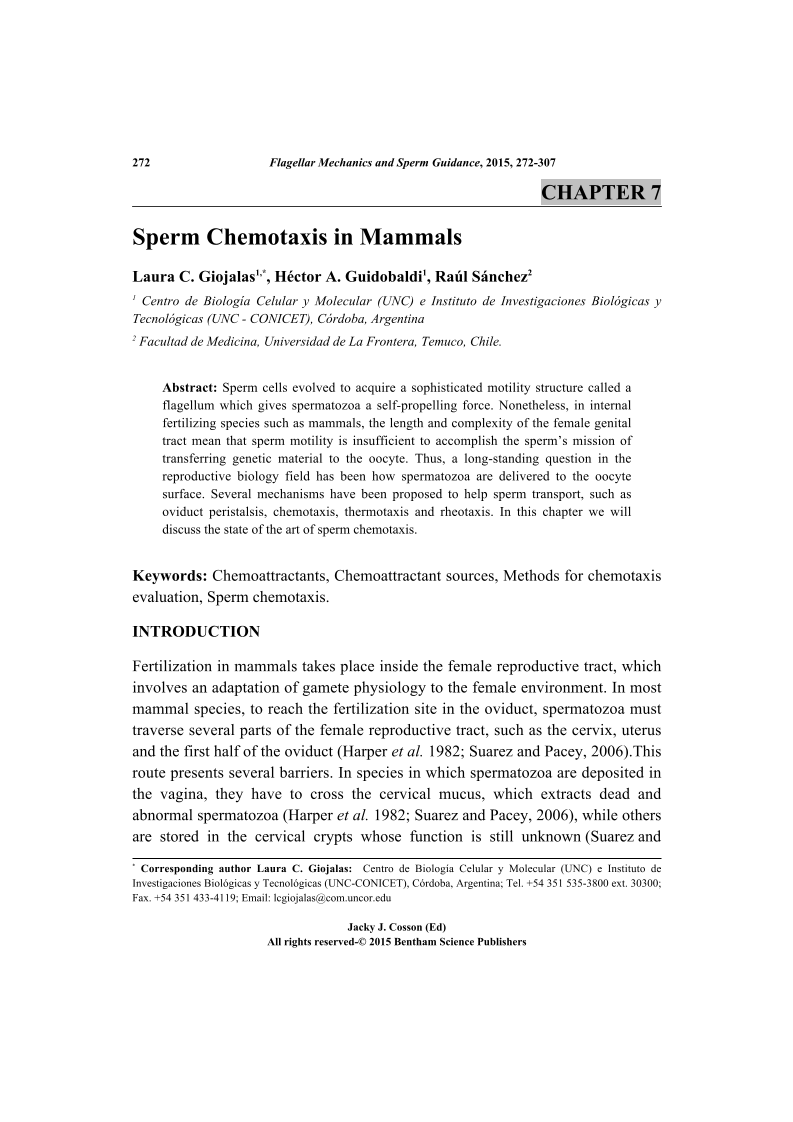
Sperm Chemotaxis in Mammals, Page 1 of 1
< Previous page | Next page > /docserver/preview/fulltext/9781681081281/chapter-7-1.gif
Sperm cells evolved to acquire a sophisticated motility structure called a flagellum which gives spermatozoa a self-propelling force. Nonetheless, in internal fertilizing species such as mammals, the length and complexity of the female genital tract mean that sperm motility is insufficient to accomplish the sperms mission of transferring genetic material to the oocyte. Thus, a long-standing question in the reproductive biology field has been how spermatozoa are delivered to the oocyte surface. Several mechanisms have been proposed to help sperm transport, such as oviduct peristalsis, chemotaxis, thermotaxis and rheotaxis. In this chapter we will discuss the state of the art of sperm chemotaxis.
Hardbound ISBN:
9781681081298
Ebook ISBN:
9781681081281
-
From This Site
/content/books/9781681081281.chapter-7dcterms_subject,pub_keyword-contentType:Journal -contentType:Figure -contentType:Table -contentType:SupplementaryData105
/content/books/9781681081281.chapter-7
dcterms_subject,pub_keyword
-contentType:Journal -contentType:Figure -contentType:Table -contentType:SupplementaryData
10
5
Chapter
content/books/9781681081281
Book
false
en
