


Anti-Apoptotic and Oncogenic Function of HSP27
- Authors: Yusuf Tutar1, Aykut Özgür, Esen Tutar, Kübra Açıkalın Coşkun, Lütfi Tutar
-
View Affiliations Hide Affiliations1 Cumhuriyet University, Faculty of Pharmacy, Department of Basic Sciences,Division of Biochemistry, Sivas, Turkey;
- Source: Frontiers in Protein and Peptide Sciences: Volume 1 , pp 75-90
- Publication Date: July 2014
- Language: English


Anti-Apoptotic and Oncogenic Function of HSP27, Page 1 of 1
< Previous page | Next page > /docserver/preview/fulltext/9781608058624/chapter-4-1.gif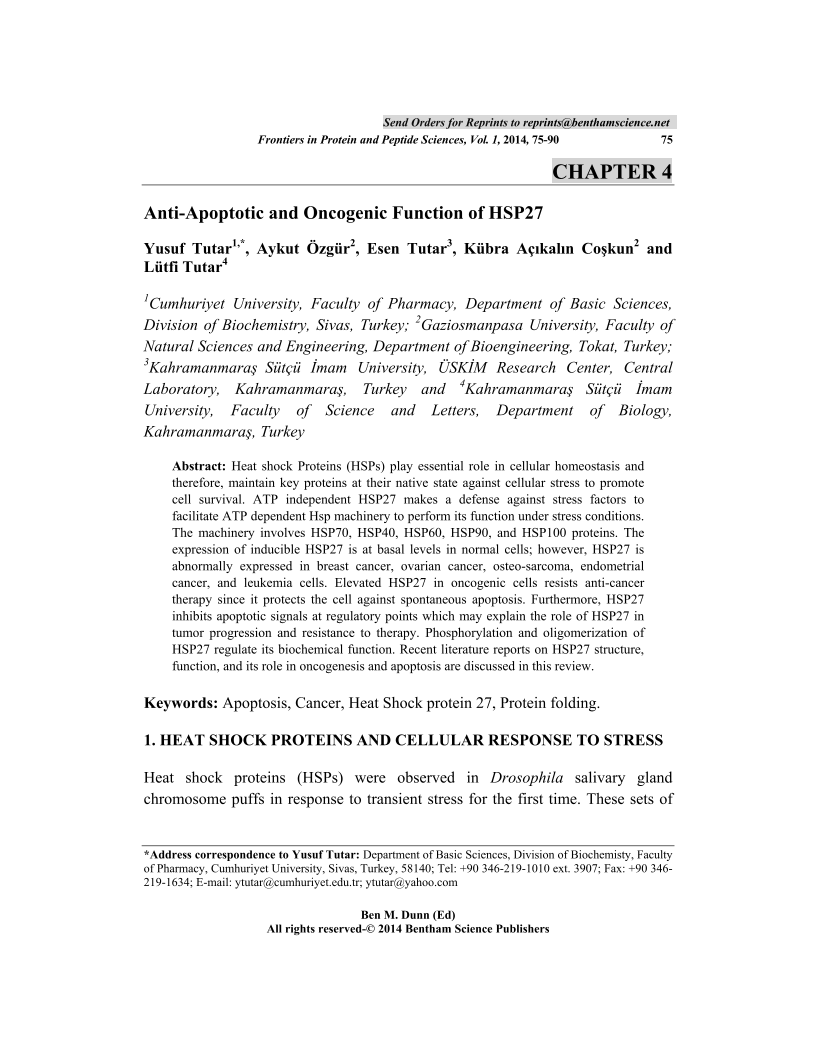
Heat shock Proteins (HSPs) play essential role in cellular homeostasis and therefore, maintain key proteins at their native state against cellular stress to promote cell survival. ATP independent HSP27 makes a defense against stress factors to facilitate ATP dependent Hsp machinery to perform its function under stress conditions. The machinery involves HSP70, HSP40, HSP60, HSP90, and HSP100 proteins. The expression of inducible HSP27 is at basal levels in normal cells; however, HSP27 is abnormally expressed in breast cancer, ovarian cancer, osteo-sarcoma, endometrial cancer, and leukemia cells. Elevated HSP27 in oncogenic cells resists anti-cancer therapy since it protects the cell against spontaneous apoptosis. Furthermore, HSP27 inhibits apoptotic signals at regulatory points which may explain the role of HSP27 in tumor progression and resistance to therapy. Phosphorylation and oligomerization of HSP27 regulate its biochemical function. Recent literature reports on HSP27 structure, function, and its role in oncogenesis and apoptosis are discussed in this review.
-
From This Site
/content/books/9781608058624.chapter-4dcterms_subject,pub_keyword-contentType:Journal -contentType:Figure -contentType:Table -contentType:SupplementaryData105
