


Molecular Modeling of Two CYP2C19 SNPs and its Implications for Personalized Drug Design
- Authors: Jing Fang Wang, Li-Na Ma, Dong-Qing Wei3,4, Chao Chen5, Yixue Li6, Kuo-Chen Chou7
-
View Affiliations Hide Affiliations3 National Micro-measurement Center, Xibei University, Xian 710069, China 4 Bioinformatics Center, Key Lab of Systems Biology,Shanghai Institutes for Biological Sciences, Graduate School of the ChineseAcademy of Sciences, Chinese Academy of Sciences, Shanghai 200031, China, 5 3National Micro-measurement Center, Xibei University, Xian 710069, China 6 2Bioinformatics Center, Key Lab of Systems Biology,Shanghai Institutes for Biological Sciences, Graduate School of the ChineseAcademy of Sciences, Chinese Academy of Sciences, Shanghai 200031, China 7 Gordon Life Science Institute, 13784 Torrey Del Mar Drive, San Diego, CA92130, USA
- Source: Frontiers in Protein and Peptide Sciences: Volume 1 , pp 63-74
- Publication Date: July 2014
- Language: English


Molecular Modeling of Two CYP2C19 SNPs and its Implications for Personalized Drug Design, Page 1 of 1
< Previous page | Next page > /docserver/preview/fulltext/9781608058624/chapter-3-1.gif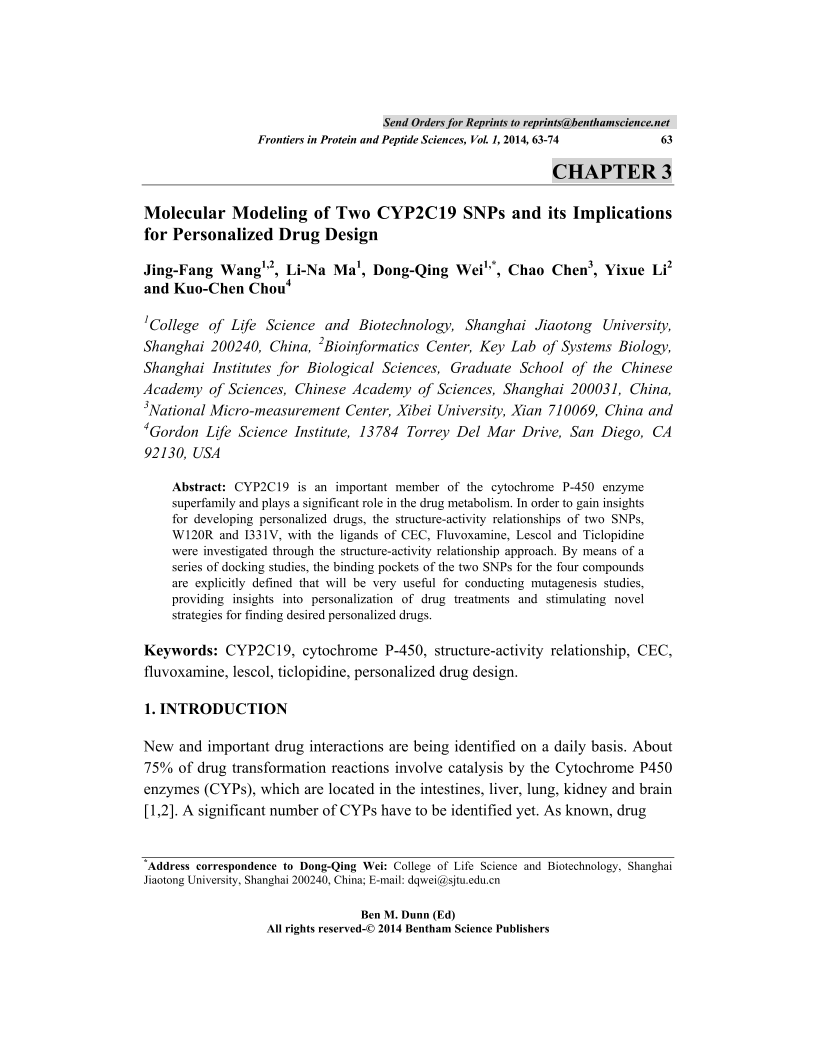
CYP2C19 is an important member of the cytochrome P-450 enzyme superfamily and plays a significant role in the drug metabolism. In order to gain insights for developing personalized drugs, the structure-activity relationships of two SNPs, W120R and I331V, with the ligands of CEC, Fluvoxamine, Lescol and Ticlopidine were investigated through the structure-activity relationship approach. By means of a series of docking studies, the binding pockets of the two SNPs for the four compounds are explicitly defined that will be very useful for conducting mutagenesis studies, providing insights into personalization of drug treatments and stimulating novel strategies for finding desired personalized drugs.
-
From This Site
/content/books/9781608058624.chapter-3dcterms_subject,pub_keyword-contentType:Journal -contentType:Figure -contentType:Table -contentType:SupplementaryData105
