


From Knowledge Networks to Biological Models
Biological Models
Abstract
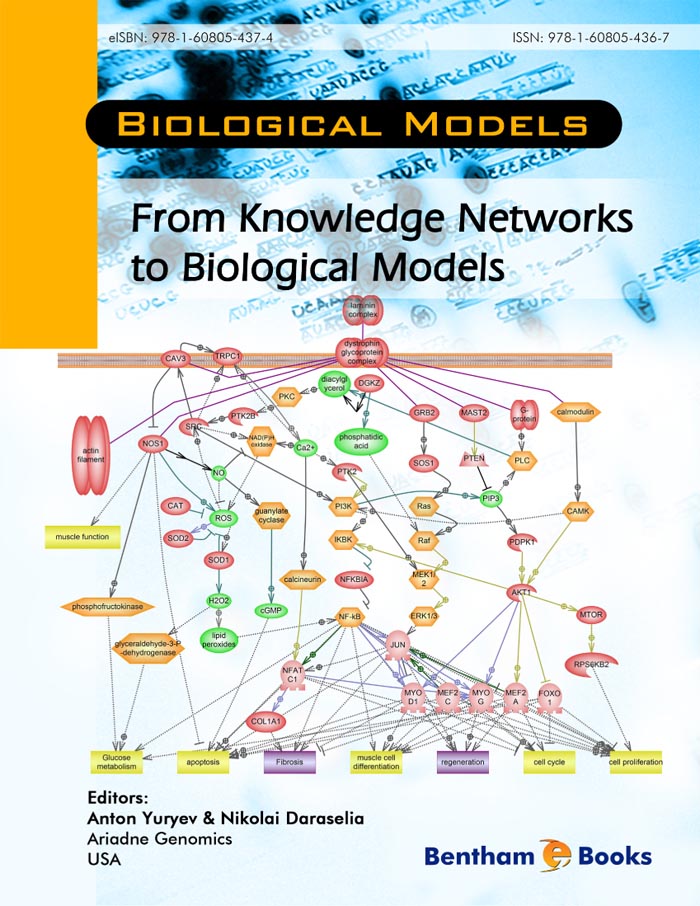
Most findings about molecular interactions and cellular regulatory events are published in peer-reviewed scientific literature in the form of scientific jargon. The computerized text-mining algorithms are used to convert free grammar of human language into a set of formalized relationships between biological concepts in order to use this wealth of information. The compendium of such interactions extracted from an entire set of biomedical literature is a called knowledge network. Knowledge networks are the first step in the process of digitizing molecular biological knowledge. The next step is building molecular models depicting principal molecular events that govern various biological processes. Data mining in knowledge networks is the essence of building new biological models. The purpose is to elucidate major pathways of information flow through a molecular physical interaction network that happens during a disease, a cell process or an experiment. Such models contain key proteins involved in the process and can be used for prioritizing disease targets, for understanding of drug action and prevention of drug-induced toxicities, for analysis of patient predispositions and design of personalized therapies, for design of diagnostic biomarkers and analysis of patient molecular data. This e-book contains detailed examples illustrating the path to the digital biology and computerized drug development for personalized medicine. It provides conceptual principals for building biological models and for applying the models to make predictions relevant for drug development and translational medicine.
The e-book will also be useful for researchers who use high-throughput technologies for molecular profiling of disease and drug action. It provides examples for analysis of gene expression microarrays to infer biological models, to find biomarkers for drug response and for applications of high-throughput molecular profiling technologies for personalized medicine. Scientists in academia, in pharmaceutical industry as well as graduate students will benefit from reading this book. The illustrations from the book can also be readily used in taught courses for molecular biology and pharmacology.
